








For over forty years, the Sunday ritual outside ‘Jalsa’ in Juhu has been a cinematic constant. Every week, thousands of fans have gathered on the pavement, waiting for the iconic wave of Amitabh Bachchan. It was a rite of passage for millions—a moment where the distance between a living legend and his audience evaporated in the humid Mumbai air.
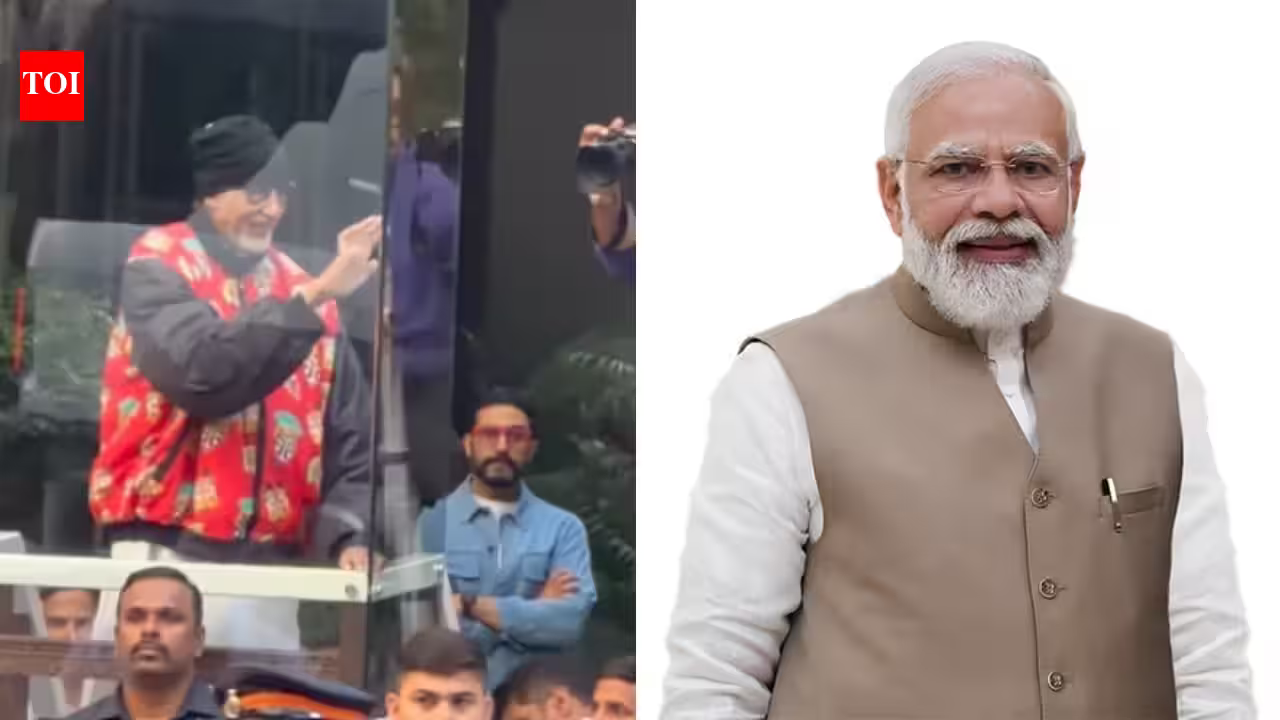
But on November 1, 2026, that distance was abruptly replaced by something cold, transparent, and profoundly unsettling: bulletproof glass. As the 84-year-old superstar stepped out, flanked by his son Abhishek, the sight wasn’t just a security measure; it was a visceral manifestation of a crumbling sense of safety in Bollywood. The glass shield didn’t just protect an icon; it signaled a grim reality that the “City of Dreams” has entered its most dangerous era in decades.
## The Shattering of a Cinematic Tradition
The image of Amitabh Bachchan behind reinforced glass has sent shockwaves through the corridors of power and the soundstages of Film City. For a generation of fans, the Sunday meet-and-greet was a symbol of accessibility. To see the patriarch of Indian cinema forced into a fortress-like posture in his own home is a testament to the current climate of fear.
The All Indian Cine Workers Association (AICWA), led by president Suresh Shyam Lal Gupta, didn’t mince words. In a direct appeal to Prime Minister Narendra Modi, the association framed this not as a celebrity crisis, but as a systemic collapse of public order. “At the age of 84, he never imagined he would have to protect himself like this in his own city,” the AICWA letter noted. This isn’t just about a superstar; it is about the normalization of violence in spaces that were once considered the pinnacle of safety.
## A Growing Hit List: When Hollywood Meets the Underworld
The alarm raised by the AICWA comes on the heels of a terrifying sequence of events that has left the industry paralyzed. The narrative of “glamour and stardom” has been violently hijacked by reports of shootings, knife attacks, and brazen extortion bids.
Consider the roster of incidents that have led the industry to this breaking point: the tragic murder of Baba Siddique in the heart of Bandra, the chilling gunfire outside Salman Khan’s Galaxy Apartments, a targeted knife attack on Saif Ali Khan, and shots fired near filmmaker Rohit Shetty’s residence. Even those on the fringes of global fame, like comedian Kapil Sharma, have found themselves in the crosshairs, with his cafe in Canada becoming the site of multiple firing incidents. These are not isolated anomalies; they represent a coordinated campaign of terror.
## The Tiger Shroff Incident: A Turning Point
Perhaps the most harrowing of these recent events was the shooting involving Tiger Shroff in Juhu. This wasn’t a late-night incident in a secluded alley; it occurred in broad daylight in one of the city’s most densely populated and high-profile neighborhoods. Two bystanders were hit by bullets, marking a horrifying escalation where the general public is no longer just a witness, but a casualty.
The AICWA pointedly remarked that Shroff—an actor with no known enemies or controversies—was targeted purely to project power. “He was targeted in broad daylight for one reason: to spread terror,” the association stated. The message from criminal syndicates is clear: if a high-profile, physically fit action star can be fired upon in public, the concept of a “protected zone” no longer exists in Mumbai.
## The Shadow of Extortion: Bollywood as the ‘Softest Target’
Beyond the headlines, a more sinister motive is taking root. Intelligence and industry insiders suggest that extortion has become the lifeblood of these criminal campaigns. By targeting the most visible figures in the country, gangs are effectively using the film fraternity as a billboard for their reach.
The report that actor Tusshar Kapoor allegedly faced an extortion demand of ₹5 crore is a chilling reminder of the scale of these operations. The AICWA is categorical in its assessment: “Gangsters know that Bollywood is the softest target and that it is known all over the world. By attacking famous film personalities, they want to make a name for themselves and to extort money on a large scale.” The industry, once an aspirational beacon, has become a lucrative piggy bank for the underworld, which is betting that the fear of bad publicity and physical harm will keep stars paying up in silence.
## A Crisis of Governance
The AICWA’s appeal to the Prime Minister is an implicit vote of no-confidence in the local administrative and law-enforcement response. The association argues that if the elite of the entertainment world—people with private security teams and high-level social capital—cannot be kept safe, the average citizen is effectively left to fend for themselves.
“Today, law and order has broken down in Mumbai,” the letter warns. It is a striking accusation, especially for a city that has long prided itself on its resilience and its ability to keep the “underworld” at arm’s length. The fear, according to the industry, is that the ghost of the 90s—an era of unchecked gang wars and systematic extortion—has returned with a vengeance, fueled by modern tactics and a sense of impunity.
## Beyond Assurances: The Demand for Visible Change
For an industry that survives on spectacle, the current spectacle is one of survival. The AICWA is demanding more than just empty government rhetoric or temporary police patrols. They are calling for a structural overhaul of how public safety is managed in Mumbai’s creative hubs.
As Amitabh Bachchan stands behind his bulletproof shield, he is not just protecting his own life—he is acting as a mirror for the industry’s vulnerability. The “history of Indian cinema,” as the association aptly puts it, will record this period not for the blockbusters it produced, but for the day the gates of Jalsa were closed, and the era of open-door stardom met its end. Whether the Prime Minister’s office intervenes with the requested “real and visible protection” remains to be seen. But one thing is certain: the industry has stopped waiting for the threats to go away. It is now demanding that the state reclaim the streets, before the next headline is written in blood.
Disclaimer: This content is auto-generated for informational purposes only.
Source: Read Original News