







The Australian Department of Foreign Affairs and Trade (DFAT) has confirmed that two Australians are among the 69 victims who perished in last week’s high-speed train collision in Spain.
The identities were confirmed late on Monday by a specialized legal body comprising police and forensics experts, which also verified the death of a Japanese citizen. While officials have not released the names of the deceased, the Australian government confirmed it is currently providing consular assistance to the affected families.
“We send our deepest condolences to the families at this difficult time,” a spokesperson for DFAT said in a statement on Wednesday. Foreign Minister Penny Wong also offered her sympathies to her Spanish counterpart, José Manuel Albares, describing the event as a “devastating” tragedy for the nation.
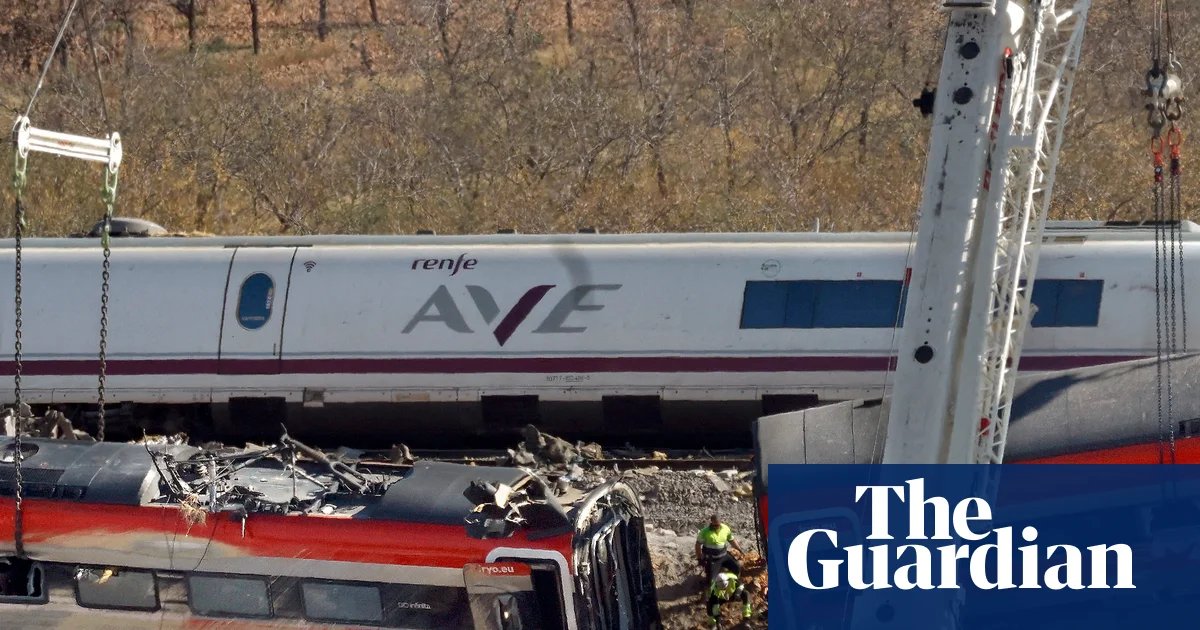
The accident, which occurred near the central village of Urda, about 130km south of Madrid, ranks as one of Europe’s deadliest rail disasters of the century. The collision involved a Renfe service that ploughed into the rear of a stationary train belonging to the private operator Iryo.
Preliminary investigations suggest that a critical failure in an automatic safety system halted trains across a 63km stretch of track. However, in a catastrophic oversight, a regional control center reportedly authorized the Renfe service to continue its journey while the other train remained stationary on the line.
The identification process has been a prolonged and harrowing ordeal for the victims’ families, with forensics teams working to identify the dead, in some cases relying on recovered body parts. Of the 69 victims confirmed to date, 54 are Spanish nationals, while 15 are foreign citizens, including four from the United States, two each from Australia and Japan, and one each from Argentina, Canada, France, Mexico, Portugal, Tunisia, and the Czech Republic.
Labor MP Jason Clare expressed the collective shock of the Australian public, telling ABC TV on Thursday: “It’s just horrific. These are accidents of a kind that people never, ever recover from.”
The tragedy has sparked a wave of public anger and scrutiny regarding Spain’s rail safety standards. This incident marks the second high-speed collision in the country this year, following a January crash in the southern region of Andalusia that claimed 46 lives. The recurring nature of these disasters has prompted questions about the reliability of the nation’s infrastructure, with Prime Minister Pedro Sánchez recently stating that public trust in the high-speed rail network has been “broken.”
As authorities continue their inquiry into the communication failures at the control center, the international community remains in mourning, awaiting the final reports that will determine how such a lapse in safety protocols was permitted to occur.
Disclaimer: This content is auto-generated for informational purposes only.
Source: Read Original News