









The Changing Economics of India’s Festive Gifting Market
The Indian festival season, particularly Diwali, serves as the primary economic engine for the country’s dry fruit and nut industry. With the market for these commodities estimated at approximately Rs 75,000 crore, the period surrounding the festival accounts for nearly one-third of total annual sales. However, this year’s festive cycle has introduced significant structural shifts. Consumers and corporate buyers are witnessing a notable transformation in traditional gift hampers as retailers grapple with unprecedented inflationary pressures, supply chain volatility, and shifting procurement strategies.
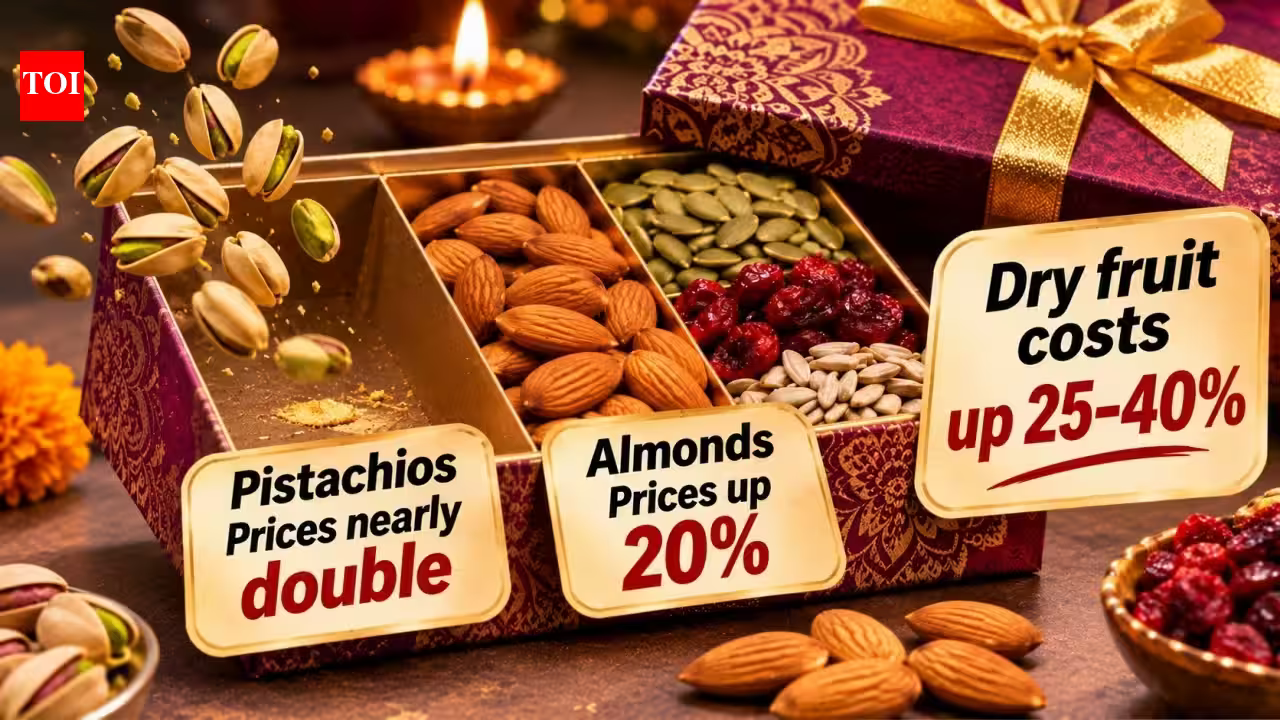
The traditional dry fruit box—a staple of Indian festive gifting—is undergoing a radical redesign. Driven by a 25% to 40% year-on-year increase in the cost of the overall dry fruit basket, retailers are no longer able to maintain the status quo. Instead, they are resorting to “shrinkflation” and product substitution to ensure that gift hampers remain accessible to price-sensitive buyers while maintaining corporate budget ceilings. This pivot is most visible in the near-total disappearance of pistachios from mainstream gift sets, replaced increasingly by seeds, berries, and other cost-effective ingredients.
Global Supply Disruptions and Commodity Inflation
The primary driver behind the current market volatility is a confluence of geopolitical tensions and environmental factors affecting global agricultural yields. Pistachios, in particular, have emerged as the most significant “spoiler” in this year’s gifting landscape. Price surges for this commodity are the direct result of a diminished harvest in California—which typically accounts for a massive share of the global supply—along with persistent supply constraints stemming from conflict in West Asia. These factors have constrained imports from traditional sources such as Iran and Afghanistan.
Beyond the specific case of pistachios, the broader nut industry is contending with the depreciation of the Indian Rupee against the dollar and rising international shipping expenses. When the cost of importing raw materials increases, the financial impact is magnified along the supply chain. Wholesalers and processors are forced to pass these costs to the retail sector, leaving companies with a narrow margin to absorb the hikes. Consequently, the industry is seeing a widespread re-evaluation of product composition, where the weight and quality of contents are adjusted to shield the consumer from the full force of retail price spikes.
Strategic Responses by Retailers and Processors
To manage these supply-side challenges, companies are adopting two distinct approaches: product substitution and downsizing. For mass-market hampers, businesses are opting to replace premium nuts like pistachios with seeds (such as pumpkin or sunflower seeds) and dried berries. These items serve as functional, aesthetically pleasing alternatives that allow hampers to maintain a “full” appearance while reducing the overall cost of goods sold.
Corporate gifting represents a specific segment where budgets are often fixed well in advance of the festive season. In these instances, when the cost of raw materials rises, companies cannot simply increase the price of the final product without losing the contract. Therefore, the industry has seen an unprecedented reduction in the total weight of gift packs. By trimming the grams of expensive items like almonds and cashews, companies maintain the appearance of traditional gifting while operating within rigid budgetary boundaries. Despite these tactical adjustments, the resilience of the market is notable; industry data indicates a 5-7% year-on-year growth in sales volumes, demonstrating that while the content of the boxes has changed, the cultural imperative for gifting remains stronger than ever.
The Rise of the Premium and Exotic Segment
While mass-market products are undergoing a downgrade in terms of ingredients, the premium segment of the Indian market is exhibiting a counter-trend. A growing class of affluent consumers and high-end corporate clients are exhibiting a preference for exotic and rare varieties. Demand for pecans, macadamias, and hazelnuts has seen an upward trajectory, as these products are perceived as status symbols that differentiate a gift from standard, mass-produced offerings.
This shift toward premiumization suggests that the Indian consumer base is bifurcating. On one end, there is a clear demand for affordable, value-oriented packs that substitute traditional nuts for cheaper alternatives. On the other end, there is an appetite for novelty and exclusivity. Processors are increasingly catering to this by introducing flavored cashews and customized blends. By moving away from commodity-based gifting and toward value-added, processed products, companies can command higher margins that are less sensitive to the volatility of raw nut prices. This evolution is likely to define the next phase of the dry fruit industry, moving away from simple bulk sales toward sophisticated, branded snacking experiences.
Market Outlook and Future Projections
The current situation highlights the inherent risks of relying on a limited portfolio of traditional imports. The Indian dry fruit industry is currently at a crossroads where climate change and global logistics are rendering legacy procurement models less effective. As weather-related disruptions become more frequent, businesses will likely look toward diversifying their supply sources and increasing local processing capabilities to mitigate the impact of global supply chain shocks.
The persistence of sales growth despite price hikes is a positive indicator for the long-term health of the sector. It confirms that dry fruits and nuts have transitioned from discretionary luxuries to essential elements of Indian social and professional etiquette. For retailers and wholesalers, the lesson of this festive season is clear: adaptability is the key to survival. Those who can successfully navigate the shift toward exotic varieties and innovative, cost-effective packaging will likely capture a larger share of the market in the coming years.
Looking ahead, the industry must prepare for a future where price instability may become the new standard. Whether through technological investments in processing or forming strategic partnerships to stabilize supply lines from emerging source markets, the focus for industry players will be on transparency and value delivery. As the Indian economy continues to grow, the appetite for high-quality, diverse, and innovative dry fruit products is poised to expand, providing a robust, if challenging, environment for long-term development.
Disclaimer: This content is auto-generated for informational purposes only.
Source: Read Original News