








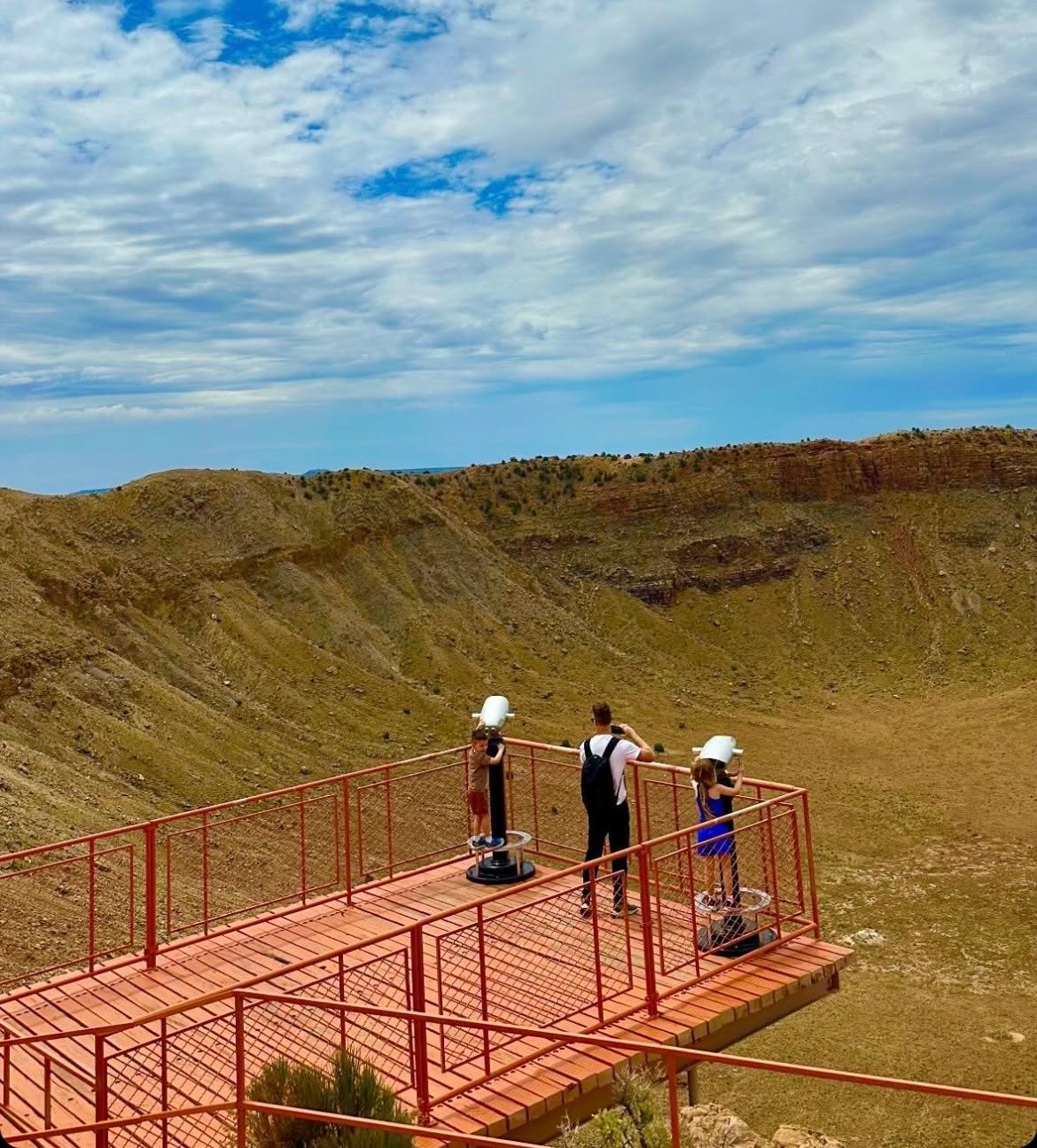
From the dusty plains of Northern Arizona, the site of a 50,000-year-old cosmic collision has transformed into a modern hub for science and exploration. Meteor Crater, also known as the Barringer Crater, has evolved from a simple roadside stop into a premier educational institution, proving that even a site defined by ancient history can leverage modern business strategies to remain relevant in a digital-first world.
## A Legacy of Lunar Training and Scientific Preservation
Founded as a commercial venture in 1955 by Earnest Chilson and B.G. Tremaine, the facility has spent nearly seven decades under a unique long-term management agreement with the Barringer family. While its origins were purely as a tourist attraction, its current mission has pivoted toward scientific engagement.
Central to this transformation is the crater’s enduring partnership with NASA. The site’s rugged, desolate landscape has served as a critical training ground for generations of astronauts, simulating the lunar surface for those preparing to step onto the Moon. As the agency gears up for the Artemis 4 mission, the crater remains a vital asset for training the next generation of space explorers. This intersection of historical geology and future-facing space travel provides a unique value proposition that continues to draw thousands of visitors to the Arizona desert annually.
## Bridging the Gap Between Tourism and Tech
In 2019, the organization rebranded as the “Meteor Crater and Barringer Space Museum,” signaling a strategic move away from being a fleeting roadside curiosity. This shift reflects a broader trend in the attractions industry, where physical landmarks are increasingly adopting digital storytelling and educational frameworks to compete for attention in an era dominated by AI-driven discovery and global connectivity.
To maintain its competitive edge, the facility has leaned into scientific transparency and community outreach. The creation of the Meteor Crater Education Alliance highlights this effort, bringing localized science programs to Northern Arizona students. By grounding its business model in the “integrity of scientific information,” the organization ensures that while it operates on tourism revenue, it maintains the prestige of a research facility.
## Preparing for the Future of Space Exploration
Looking toward 2028, Meteor Crater is set to expand its museum experience, targeting a new wave of visitors captivated by the growing race to Mars. As interest in extraterrestrial exploration reaches new heights, the management team at Meteor Crater is betting that the synergy between physical reality and digital curiosity will drive future growth.
However, the path has not been without hurdles. Like many businesses, the crater has weathered the significant operational challenges of the post-pandemic era, including rising costs, inflation, and the impact of regional environmental events like wildfires. Despite these obstacles, the site has remained profitable, a feat CEO Matthew Kent attributes to a steadfast commitment to stewardship and a business model that treats visitor admission as an investment in education.
In a world where artificial intelligence is rapidly changing how we consume information about the universe, Meteor Crater remains a rare example of a “brick-and-mortar” business that relies on the raw power of the physical world. By blending the preservation of a 50,000-year-old landmark with a future-forward vision for space exploration, the organization demonstrates that the most effective way to honor history is to use it as a foundation for the next chapter of human discovery. Whether it is through training the next crew of lunar explorers or teaching students about the origins of our universe, the crater remains a vital intersection where the past and the future of science collide.
Disclaimer: This content is auto-generated for informational purposes only.
Source: Read Original News