








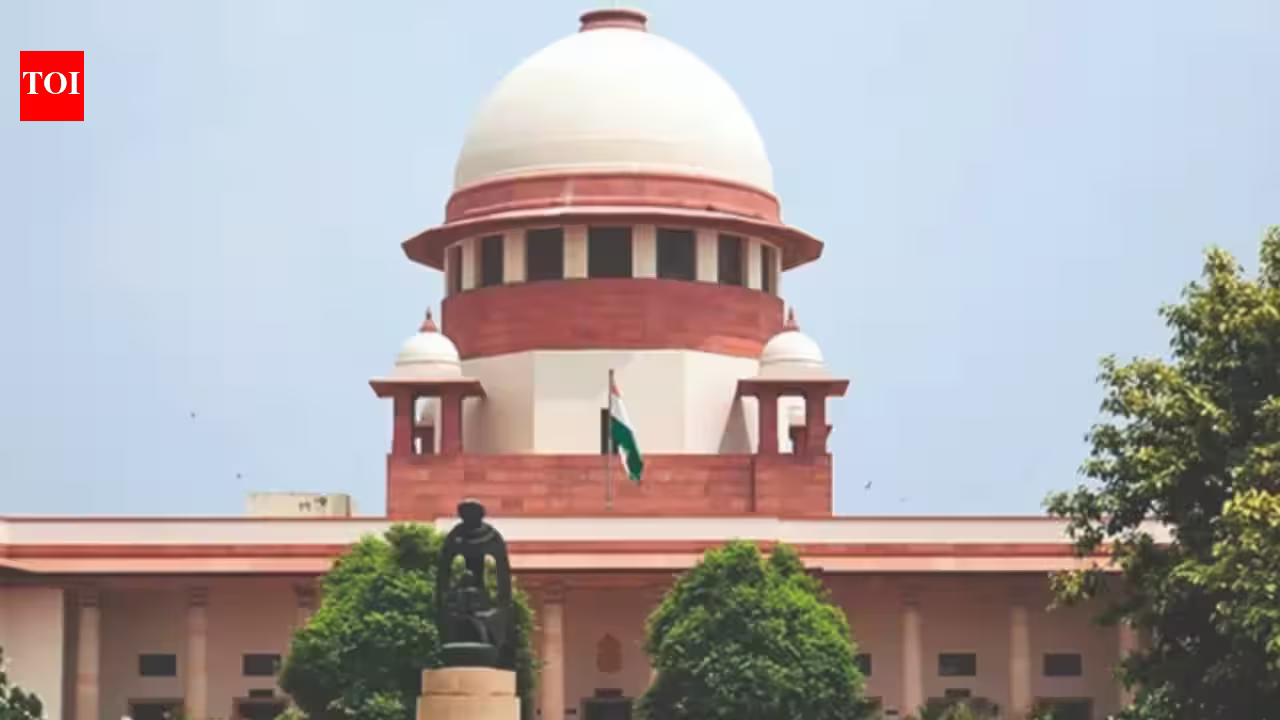
Supreme Court Refuses to Interfere in Delimitation, Says It Cannot Become ‘Third Chamber of Parliament’
NEW DELHI: In a significant clarification regarding the separation of powers under the Indian Constitution, the Supreme Court of India on Wednesday declined to intervene in the process of reserving parliamentary and assembly constituencies for Scheduled Castes (SC) and Scheduled Tribes (ST). A bench led by Chief Justice Surya Kant, along with Justices Joymalya Bagchi and V. Mohana, emphasized that the judiciary must respect the “Lakshman Rekha” that defines its boundaries vis-à-vis the legislature.
The bench was presiding over a plea challenging a notification that reserved the Kadipur assembly constituency in Uttar Pradesh for the SC community. The petitioners had sought a judicial review of the criteria and mechanisms used to designate specific territories for reserved candidates, questioning the absence of a periodic rotation policy.
The Limits of Judicial Review
During the proceedings, the bench made it clear that identifying and reserving constituencies is an exclusive prerogative of the legislature. Addressing the petitioner’s counsel, Senior Advocate Gagan Gupta, the Court maintained that the judiciary lacks the mandate to rewrite or tweak guidelines established under the Delimitation Act, 2002.
“We cannot become the third chamber of Parliament,” the bench remarked, stressing that the judiciary cannot mandate the Delimitation Commission to adopt a rotational reservation policy. The Court reiterated that such policy decisions are legislative exercises, and courts are constitutionally barred from substituting their own wisdom for that of the representative bodies elected by the people.
Legislative Supremacy and Constitutional Rights
The legal challenge had raised concerns regarding whether certain territorial constituencies should remain reserved for SC candidates across successive electoral cycles. However, the Supreme Court upheld the rationale previously established by the Allahabad High Court. It noted that under Articles 330 and 332 of the Constitution, which provide for the reservation of seats in the Lok Sabha and State Legislative Assemblies respectively, there is no inherent violation of the rights of general category candidates. The Court clarified that no candidate from the general category has a vested right to contest from a constituency that has been designated for the marginalized communities to ensure their political representation.
A Suggestion for Democratic Engagement
In a lighter, albeit poignant observation, the bench suggested that those unhappy with the current delimitation criteria should utilize democratic channels rather than seeking judicial intervention. Observing the current climate of public discourse, the Chief Justice noted that it is a “good season” for democratic protests, peaceful demonstrations, and public debate.
The Court advised the petitioners that if they believe the time is ripe for revising reservation criteria or implementing rotational policies, the appropriate course of action is to raise their voices and petition elected representatives directly. By taking the matter to a constitutional court, the bench noted, the petitioners had essentially “dialled a wrong number,” as the judiciary is not the forum for policy advocacy of this nature.
By dismissing the petition, the Supreme Court has reaffirmed its commitment to maintaining the independence of the legislative process, ensuring that the demarcation of constituencies remains within the domain of the legislative body tasked with the responsibility.
Disclaimer: This content is auto-generated for informational purposes only.
Source: Read Original News