









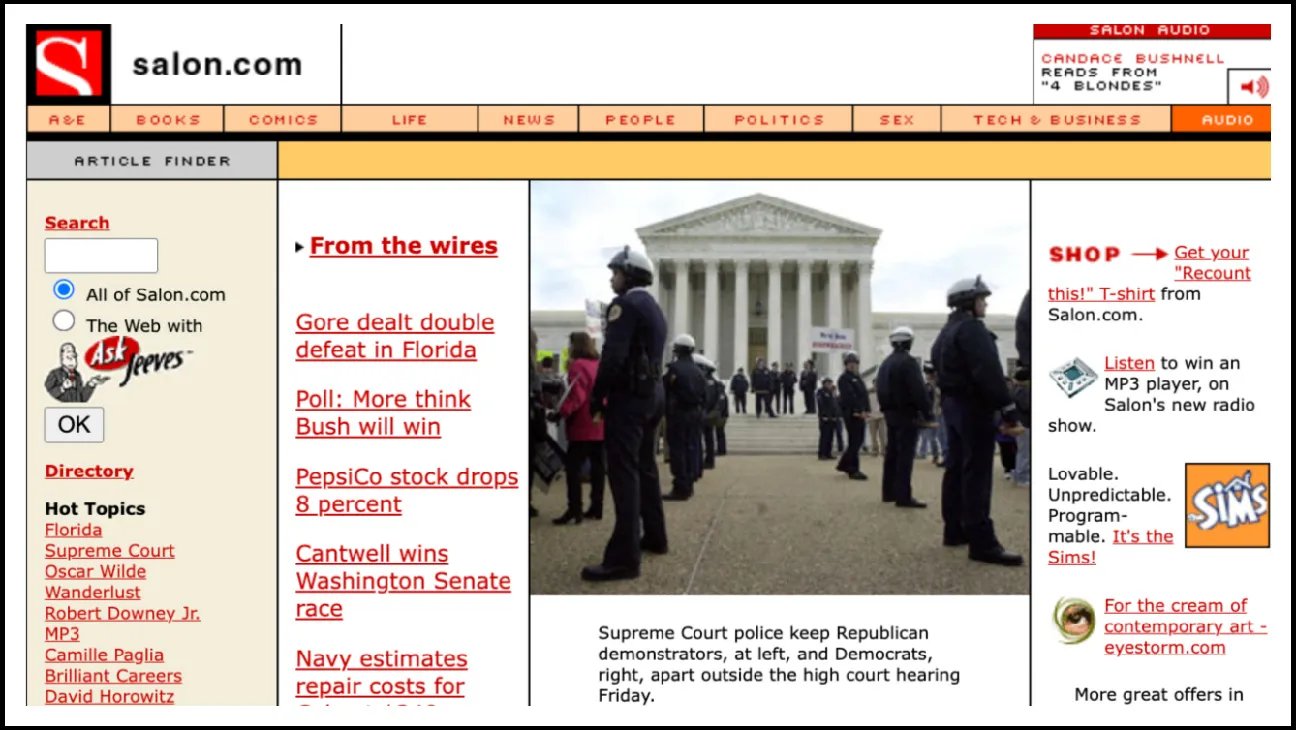
Salon, the pioneering left-leaning digital publication that helped define the internet’s early journalistic landscape, announced it is shutting down after a 31-year run. The closure, confirmed in a poignant farewell post on Thursday, marks the end of an era for one of the web’s original “digital native” outlets and serves as a stark warning regarding the precarious state of independent media in the era of artificial intelligence and shifting search algorithms.
The Collapse of the Digital Media Model
Launched in 1995 by former *San Francisco Examiner* editor David Talbot, Salon was a bold experiment in a world before social media and massive search engines. It operated as an online-only venture, bypassing the physical constraints of print to foster a unique brand of cultural and political commentary. Throughout its history, the site served as a launching pad for high-profile journalists, including CNN’s Jake Tapper, NBC News’ Steve Kornacki, and author Glenn Greenwald.
However, the company’s recent struggles highlight a harsh reality facing legacy digital publishers. In their announcement, leadership cited the shifting economics of online media as the primary driver for the closure. The industry has been rocked by declining traffic caused by fundamental changes in how users discover content. The transition away from referral traffic via social media—which began in earnest when platforms like Facebook pivoted to prioritize friend-and-family interactions over news links in 2016—has been further exacerbated by the rise of AI-driven search tools.
The “AI Overviews” Paradox
The shuttering of Salon is emblematic of a broader crisis in the tech ecosystem. Modern search engines are increasingly utilizing AI to provide direct, comprehensive summaries of information on search result pages. While these features are intended to save time for the user, they present an existential threat to publishers. By providing the content directly within the search interface, companies like Google allow users to bypass the traditional “click-through” model. For outlets like Salon, which rely on traffic to sustain advertising and subscription revenue, this reduction in outbound clicks creates a “zero-click” environment where content producers are effectively stripped of the traffic they need to survive.
Even for brands with immense cultural influence—including a notable appearance in the 2009 film Julie & Julia—longevity and editorial prestige are no longer sufficient to offset the costs of maintaining a digital operation when the digital discovery pipeline is fundamentally broken.
A Legacy in Flux
The site’s recent history has been as turbulent as the industry it inhabited. In 2023, the publication was acquired by Find.co, a marketing-focused firm that maintains a portfolio of crypto-centric websites and tech-oriented resources like Webopedia. While the parent company attempted to pivot the brand, the unsustainable nature of the traditional ad-supported model ultimately won out.
As for the future of Salon’s immense archive—a digital record of three decades of cultural and political thought—the outlook remains uncertain. While the site is currently being kept live, Erin Keane, the outlet’s chief content officer, indicated that the archival status is “for now.”
The closure serves as a final chapter for a pioneer that proved, in 1995, that the internet could be a home for serious journalism. Today, it stands as a testament to how quickly that same digital landscape can turn against the creators who helped build it. As AI search continues to evolve, the question remains whether the current digital ecosystem has any room left for the type of long-form, independent commentary that Salon once championed.
Disclaimer: This content is auto-generated for informational purposes only.
Source: Read Original News