






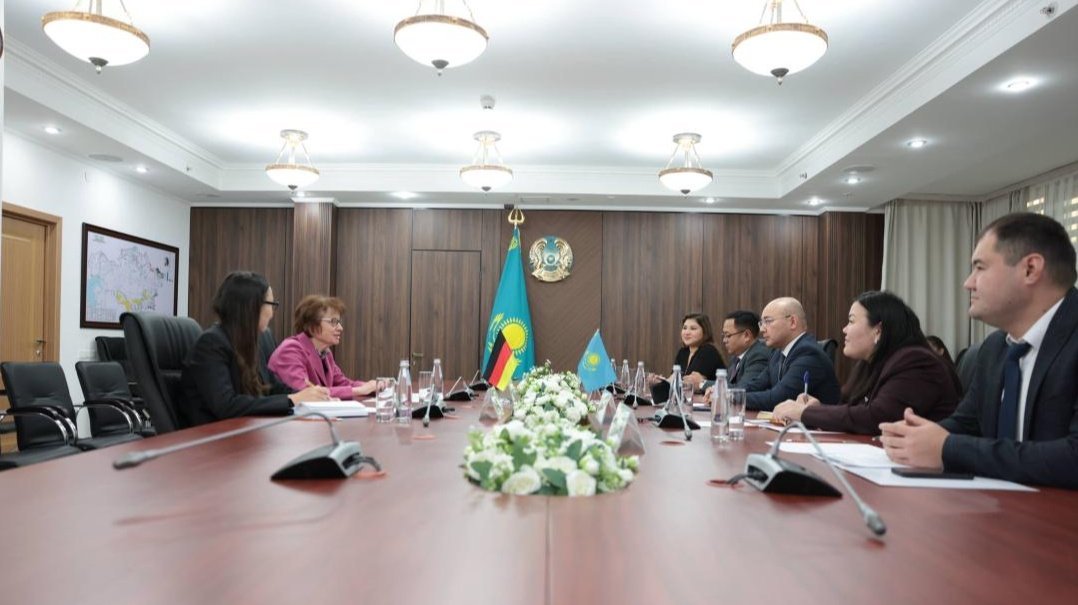
ASTANA — Kazakhstan and Germany are deepening their strategic partnership in environmental protection and climate action, signaling a shared commitment to sustainable development and the green energy transition. The focus on bilateral cooperation was cemented during a high-level meeting between Kazakhstan’s Minister of Ecology and Natural Resources, Alibek Kuantyrov, and the newly appointed German Ambassador to Kazakhstan, Heike Renate Peitsch.
The dialogue, held in the wake of Ambassador Peitsch’s appointment this past August, underscored the growing importance of the “Green Bridge” between Central Asia and Europe. A primary point of discussion was Kazakhstan’s ongoing preparations for the 31st Conference of the Parties (COP31) to the UN Framework Convention on Climate Change. As global pressure mounts to address climate instability, Kazakhstan is positioning itself as a proactive partner in international climate diplomacy, aligning its national strategies with the COP28 consensus to move away from fossil fuels in a just and orderly manner.
Central to the meeting were the active collaborative projects facilitated by the German Agency for International Cooperation (GIZ). These initiatives form the bedrock of the two nations’ environmental engagement, spanning critical areas such as climate resilience, sustainable land management, and energy efficiency. Of particular strategic importance is the joint effort to foster renewable energy development, with a specific focus on the burgeoning green hydrogen sector—an area where Kazakhstan looks to leverage its vast renewable potential to meet European demand for clean energy.
Environmental restoration efforts in the Aral Sea region also featured prominently in the discussions. The ecological tragedy of the Aral Sea remains a priority for the Kazakh government, and German technical expertise is playing an increasingly vital role in implementing sustainable land-use practices to mitigate the ongoing desertification and environmental degradation in the region.
Beyond climate and energy, the conversation shifted toward the conservation of biodiversity, an area where Kazakhstan has recently garnered international acclaim. Minister Kuantyrov briefed Ambassador Peitsch on the ambitious efforts to restore the population of the Turan tiger and the successful reintroduction of the Przewalski’s horse into the Kazakh steppes. These rewilding projects, which aim to restore the ecological balance of the Central Asian grasslands, serve as a testament to Kazakhstan’s commitment to preserving unique, endangered species.
The conservation of the Caspian Sea was also identified as a critical area for bilateral cooperation. Given the Caspian’s complex ecological challenges—ranging from fluctuating water levels to biodiversity loss—the exchange of scientific data and regulatory frameworks between Astana and Berlin is considered essential for the sea’s long-term protection.
This meeting builds upon a broader framework of environmental collaboration between the two countries, including recent plans to establish a joint water hub. This hub is envisioned as a central platform for technology exchange, the implementation of digital water-management solutions, and the development of pilot projects aimed at water security. As Central Asia faces increasing water scarcity, the integration of German digital expertise into Kazakhstan’s water infrastructure represents a practical step toward ensuring regional stability.
Both the Minister and the Ambassador reaffirmed their interest in transforming these high-level agreements into tangible, on-the-ground results. By strengthening the practical engagement between the two nations, Kazakhstan and Germany are establishing a roadmap that addresses the urgent demands of the climate crisis while promoting sustainable economic growth. As they look toward COP31, the partnership stands as a model for how technology-sharing and international cooperation can facilitate a transition to a more resilient, green future.
Disclaimer: This content is auto-generated for informational purposes only.
Source: Read Original News