








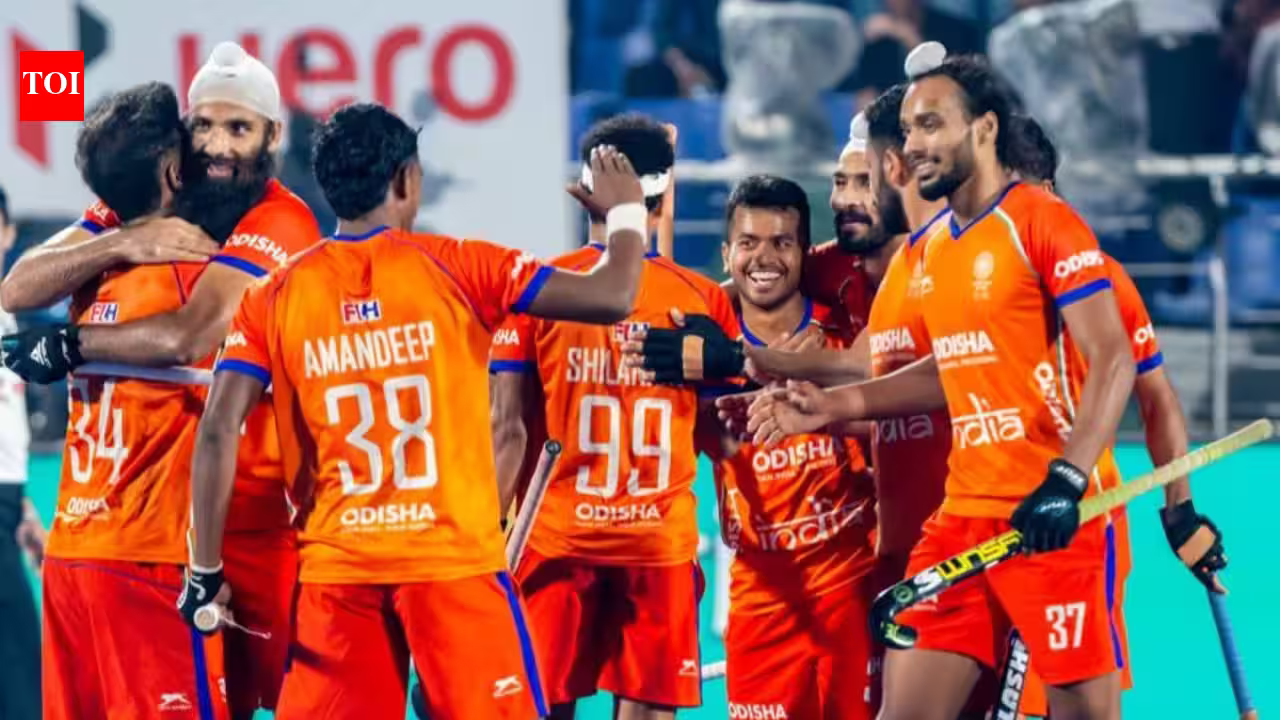
MOHALI – The Indian men’s hockey team, fresh off a triumphant victory at the Asian Champions Trophy, is signaling a seismic shift in its strategic architecture. With the euphoria of their record-breaking sixth continental crown still resonating, the national program has pivoted toward a cold, calculated objective: the 2028 Los Angeles Olympics.
Chief selector RP Singh has confirmed that the team is entering a period of deliberate, generational transition. In an era where the shelf life of an elite athlete is under constant scrutiny, the Indian setup is preparing to trim the roster of its long-serving stalwarts to make room for a new breed of tactical disruptors.
A Ruthless Approach to Renewal
The mandate from the selection committee is clear and uncompromising: the era of seniority-based immunity is officially over. RP Singh, speaking from the hub of these high-level discussions, emphasized that the upcoming months will be defined by a “performance-first” philosophy.
“We have to build the team for 2028,” Singh stated. “It could be four players, it could be six—maybe fewer, maybe more. Nothing is fixed. But we have to look ahead and prepare the next generation.”
For the fans, this means witnessing the end of an era for some of the most decorated names in the current squad. Singh acknowledged the emotional weight of these decisions, noting the difficulty of phasing out athletes who have donned the national jersey for over a decade. However, he maintains that sentimentality has no place in the pursuit of an Olympic podium.
“It hurts when players who have served the country for 10 or 12 years move out, but that is the reality of sport,” Singh added. “One player leaves and another gets an opportunity. It is a necessary evolution.”
The Dynamic Core: A Fluid Ecosystem
One of the most significant changes to the national team structure will be the abandonment of a rigid, static “core group.” Historically, national camps have often featured a fixed list of players. That model is now being replaced by a fluid, meritocratic system.
Singh confirmed that the new core group will be subject to a rigorous evaluation process every three to six months. This, he argues, will prevent complacency and ensure that the team remains a living, breathing entity that reacts to form, injury, and physical output.
“We want the core group to remain dynamic,” Singh explained. “If someone is no longer operating at the required level, we should have the flexibility to make changes. Selection will not be dictated by reputation, age, or past contributions. Whoever is fit, performing, and contributing to the team’s tactical framework will remain in contention.”
Bridging the Gap: International Exposure and the HIL
The success of this transition relies heavily on the quality of competition available to the incoming youth. India’s management has identified a clear roadmap for accelerating the growth of these young talents. A primary pillar of this strategy is the anticipated return of the Hockey India League (HIL), slated for a potential relaunch in January.
For the selectors, the HIL is not merely a domestic spectacle; it is a vital laboratory for development. It provides the pressure-cooker environment necessary to identify who can handle the rigors of high-stakes play before they are thrust onto the global stage.
Furthermore, Hockey India is intensifying its push for regular cross-continental matchups. Singh emphasized that the “European gauntlet”—frequent tours against powerhouses like the Netherlands, Belgium, Germany, and England—is non-negotiable.
“We need to expose our young players to the best in the world,” Singh asserted. “The gap between the sub-continental style and the European style is best closed on the pitch. Regular matches against elite opposition are the only way to ensure our transition is not just about changing faces, but about leveling up our global competitiveness.”
The Road to Los Angeles
The upcoming tour of New Zealand serves as the first major audition for the revamped squad. It is the beginning of a four-year cycle that will be defined by intense internal competition and a relentless pursuit of fitness.
As the team prepares to bid farewell to some of its iconic figures, the message from the management is one of guarded optimism. The transition is not meant to be a step back, but a strategic leap forward. By prioritizing raw potential and current form over legacy, the Indian men’s hockey team is positioning itself to be more than just a competitive side by the time the Olympic flame is lit in Los Angeles.
The blueprint is laid, the standards have been reset, and the clock is ticking. In the world of elite hockey, history is a great teacher, but it is never a substitute for form. For India, the future is now, and the scramble for the next Olympic squad has officially begun.
Disclaimer: This content is auto-generated for informational purposes only.
Source: Read Original News