







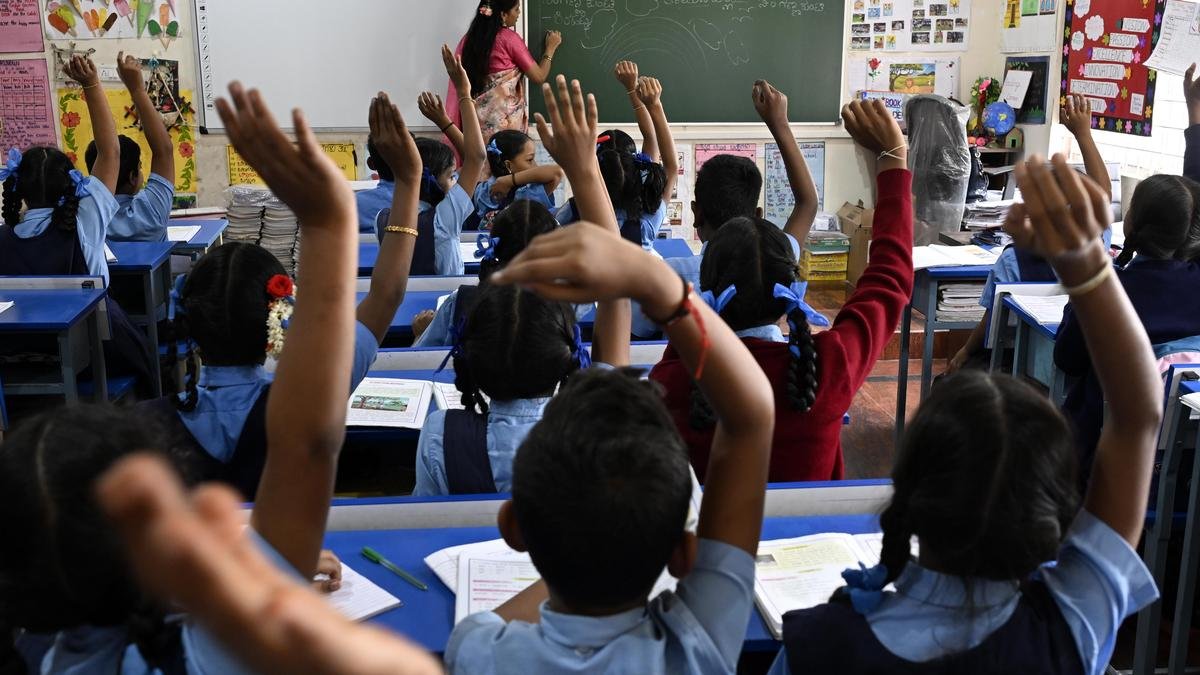
Karnataka is set to undergo a significant pedagogical transformation as it launches a state-wide initiative to integrate Artificial Intelligence (AI) into its government school system. Announced by Chief Minister D.K. Shivakumar during the “Namma Shaale, Namma Javabdari” (Our Schools, Our Responsibility) programme, the state will partner with the Head Held High Foundation to launch “JanAI,” a comprehensive training mission.
The ambitious project aims to train 5,000 government school teachers in basic AI literacy over a 12-month period, beginning in January 2027 and concluding in December 2027. This policy-driven move marks a pivotal shift in how the state views technology in the classroom, transitioning from viewing AI as a distant, futuristic concept to an essential tool for modern pedagogy.
Bridging the Digital Divide in Pedagogy
The JanAI initiative is designed with the primary objective of equipping educators with both foundational knowledge and practical skills. Recognizing that many teachers may be wary of or unfamiliar with AI, the programme is structured to be accessible even to those with no prior technical background.
For many institutions, the challenge lies in the rapid evolution of technology. By embedding AI literacy into the teacher development pipeline, the Department of School Education and Literacy aims to bridge the gap between traditional teaching methods and the demands of a 21st-century curriculum. The curriculum will move beyond theoretical concepts, focusing on how AI can assist in the day-to-day rigors of the profession, such as lesson planning, administrative productivity, and the creation of personalized learning materials.
From Prompting to Practical Application
A major pillar of the training involves “effective prompting”—the skill of communicating with AI models to elicit high-quality, relevant educational content. Educators will be taught how to use AI to generate quizzes, clarify complex topics, and create interactive learning aids that make classroom instruction more engaging.
However, the policy is equally concerned with the risks inherent in unregulated AI usage. As part of the teacher training modules, a significant portion of the curriculum will be dedicated to “Responsible AI.” This includes training teachers to:
- Identify Misinformation: Understanding that AI models can “hallucinate” or provide factually incorrect data.
- Recognize Bias: Learning to critique AI outputs for potential cultural, gender, or social biases.
- Data Ethics: Prioritizing student data protection, privacy, and digital safety in an era where information sharing is seamless.
Impact on Future Assessments
While the initiative currently focuses on teacher training, its long-term implications for the examination and assessment ecosystem are profound. As teachers become more proficient with AI, the nature of student assessment is likely to evolve. Schools may move away from rote memorization toward critical thinking and problem-solving, as teachers leverage AI to create more robust, analytical test questions.
Furthermore, this policy ensures that technology is adopted “meaningfully.” By training 5,000 teachers, the state is creating a ripple effect; these individuals will serve as “master trainers” who can share their expertise with colleagues, fostering a culture of continuous learning within the state’s education sector.
Policy Implications for the Future
The JanAI programme sets a precedent for how state governments in India can systematically prepare their workforce for the AI revolution. By institutionalizing this training under the Department of School Education and Literacy, the Karnataka government is ensuring that AI remains a supportive tool rather than a replacement for human mentorship.
As the state moves toward the 2027 implementation date, the success of this programme will likely serve as a blueprint for other regions. It emphasizes that in the age of AI, the teacher’s role is shifting from a sole provider of information to a facilitator of knowledge—one who acts as an ethical guardian of how technology is consumed and applied within the hallowed halls of learning.
Disclaimer: This content is auto-generated for informational purposes only.
Source: Read Original News