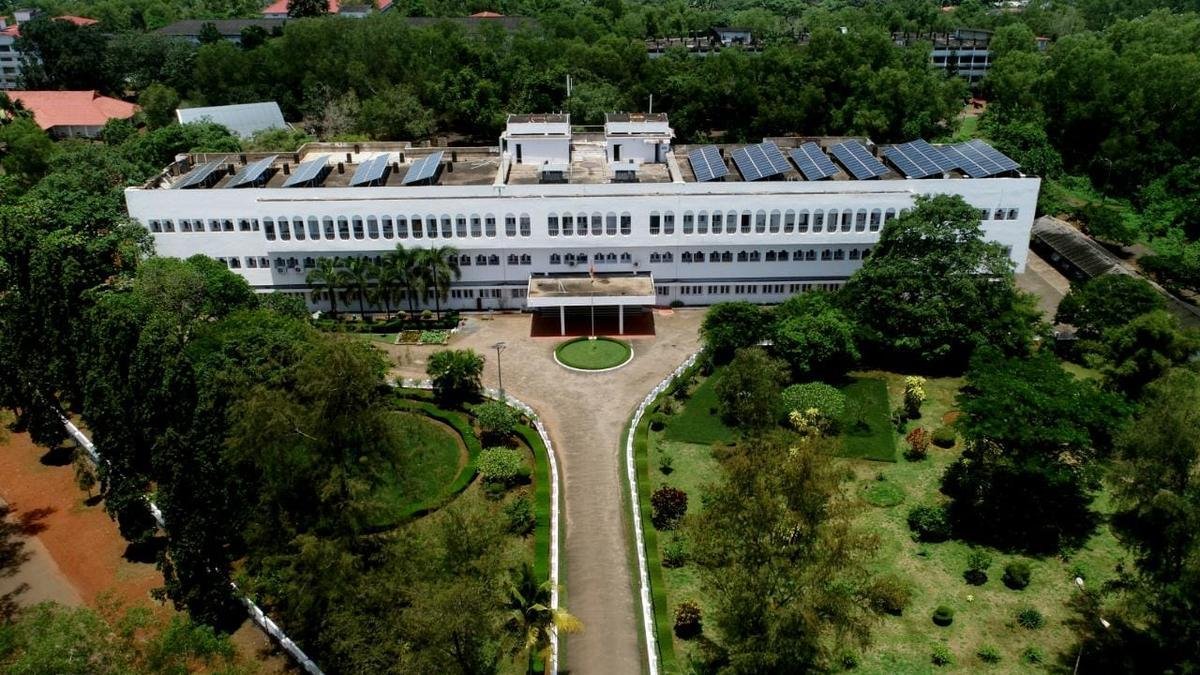










SRM University-AP has officially entered the global academic stage, securing the No. 1 position among both government and private universities in Andhra Pradesh according to the QS World University Rankings: Asia 2027. This milestone marks the university’s debut in an international ranking framework that is widely regarded by students, policy-makers, and educational institutions as a gold standard for institutional excellence.
In addition to its state-level leadership, the institution has solidified its standing on the national and regional maps, featuring among the top 51 universities in India, the top 25 private universities nationwide, and the top 100 institutions across Southern Asia.
## Understanding the QS Methodology
For students and prospective scholars, understanding why such rankings matter is essential. The QS World University Rankings evaluate institutions based on a rigorous set of metrics, including research impact, teaching quality, international engagement, and graduate employability.
The inclusion of “graduate employability” as a core pillar highlights a shift in modern higher education policy. It is no longer sufficient for universities to act as silos of theoretical knowledge; they are now increasingly expected to bridge the gap between classroom learning and the demands of the global workforce. For students, this ranking serves as a signal of institutional credibility, suggesting that a degree from such an institution is backed by robust research facilities and strong industry connections that improve career prospects.
## The Pillars of Institutional Success
Commenting on this achievement, Vice-Chancellor Ch. Satish Kumar attributed the ranking to the collective efforts of the entire academic ecosystem. He noted that the recognition reflects a strategic focus on quality education, impactful research, and innovation—three pillars that are critical for any university aiming to compete on a global scale.
“The university aims to contribute to knowledge creation and develop graduates capable of addressing national and global challenges,” Prof. Kumar stated. This focus on “global challenges” aligns with the contemporary policy shift in Indian higher education, which encourages universities to move away from rote learning and toward problem-solving, sustainable development, and interdisciplinary research.
## Investing in the Future of Learning
Pro-Chancellor P. Sathyanarayanan underscored that this achievement is the result of sustained investment in research and talent development. In the landscape of higher education, infrastructure and human capital are inseparable. Promoting international academic engagement—through student exchange programs, collaborative research, and cross-border faculty partnerships—remains a top priority for institutions that wish to remain competitive.
For educational policy-makers and university administrators, SRM University-AP’s rapid ascent demonstrates the benefits of prioritizing research-led teaching. By translating research into innovation, universities serve not just as degree-granting bodies, but as hubs for societal progress.
## What This Means for Students
For the student community, the emergence of newer, high-ranking institutions in regions like Andhra Pradesh provides broader access to world-class education without the traditional barriers of moving to established metropolitan hubs. As the institution continues to climb these indices, students can expect increased opportunities for industry-aligned curriculum design and exposure to international academic standards.
As the university looks toward its future, this recognition serves as both a benchmark and a mandate. Maintaining a high rank requires consistent improvement in teaching methodologies, the pursuit of patent-worthy research, and a commitment to nurturing the next generation of graduates. In a rapidly evolving global economy, institutions that can successfully blend local societal impact with international academic rigor, such as SRM University-AP, are set to define the future of education in India.
Disclaimer: This content is auto-generated for informational purposes only.
Source: Read Original News