









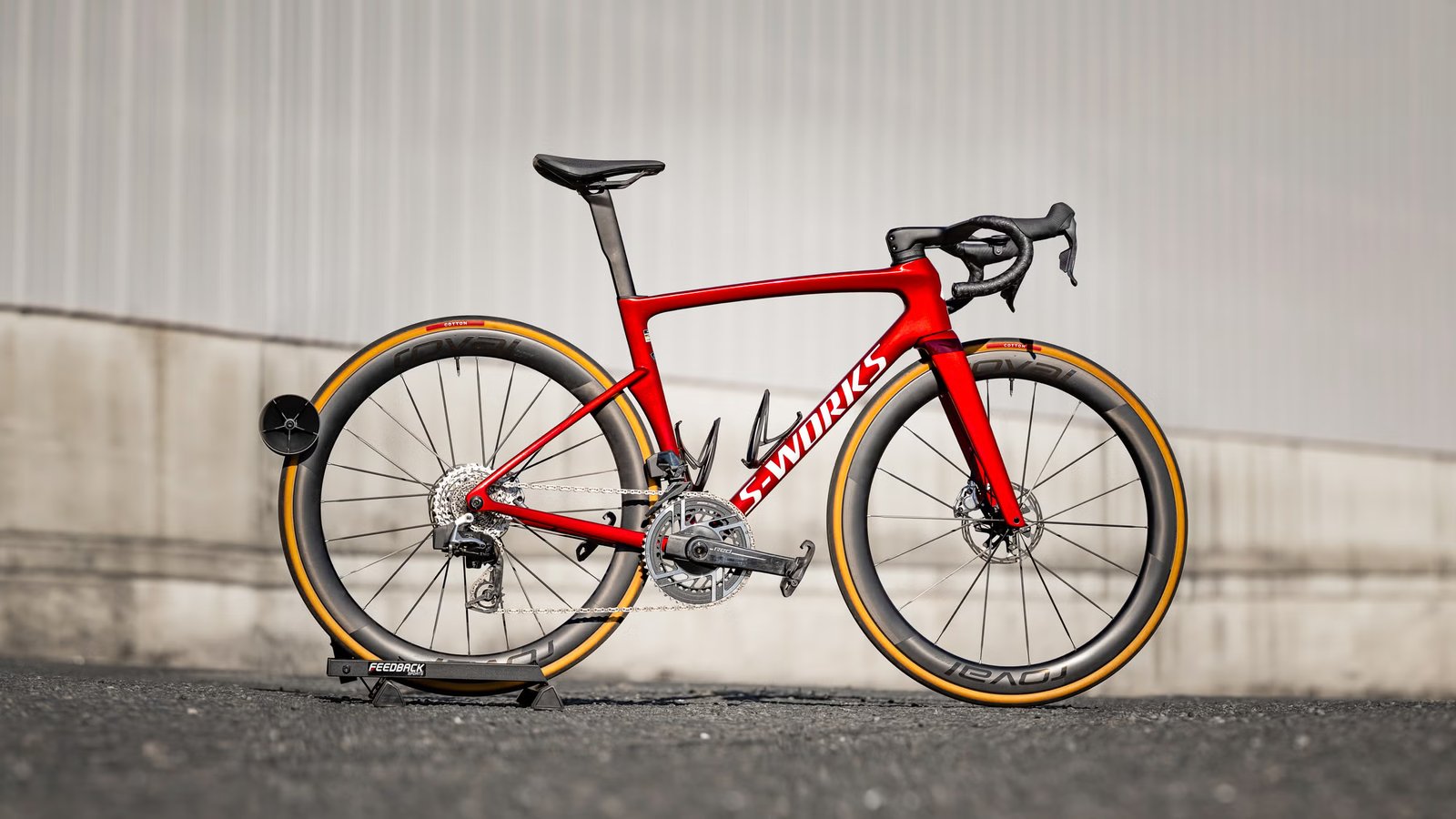
The modern landscape of high-performance road cycling is defined by a dichotomy between two industry giants: the Specialized Tarmac SL9 and the Factor ONE. While both platforms are engineered for competitive speed, they embody opposing design philosophies. The Tarmac SL9 serves as the gold standard for an “all-rounder,” balancing weight, stiffness, and aerodynamic efficiency. Conversely, the Factor ONE prioritizes raw aerodynamic data, resulting in a radical frame geometry that challenges traditional aesthetic expectations. This divergence highlights a significant tension in cycling technology: the gap between laboratory performance and the perceived utility of a machine.
The Aerodynamic Advantage vs. Real-World Physics
To understand the performance gap, one must examine wind tunnel metrics. The Specialized Tarmac SL9 registers 205 watts of drag at 45 km/h. While objectively impressive, it falls behind the Factor ONE, which achieves a baseline of 202 watts. With specific component optimizations—such as tailored wheelsets, specialized aero tires, and a 1x drivetrain configuration—the Factor ONE can further reduce this drag to 196.8 watts.
However, these figures must be contextualized by real-world riding conditions. The industry standard test speed of 45 km/h is significantly higher than the average speed of most dedicated cyclists. For a rider maintaining an average of 16.7 mph, the aerodynamic differences between these two platforms are virtually non-existent. Even when accelerating to a sustained 24 mph, the advantage provided by the Factor ONE is limited to approximately 5 watts. When factoring in the weight penalty, the narrative shifts; the Tarmac SL9 weighs approximately 6.5 kg, while the Factor ONE tips the scales at 7.57 kg. The question then becomes whether a marginal reduction in drag is worth a full kilogram of additional mass for the average consumer.
The Psychology of Consumer Perception
Despite the nuanced data regarding weight and drag, market reception remains heavily influenced by visual design. The Factor ONE’s unconventional silhouette signals to the consumer that it is a machine built for speed. This visual signaling creates a powerful brand identity. Even critics who characterize the bike as unattractive frequently concede that it appears faster than its peers. This suggests that in the high-end bicycle market, aesthetic “aggression” is synonymous with innovation.
Specialized faces a unique challenge in this area. Despite owning a dedicated wind tunnel and producing the highly advanced Tarmac SL9, the brand struggles with a perception of stalled innovation. Because the Tarmac adheres to a more traditional aesthetic, its technical achievements are often overlooked in favor of more striking designs. The brand is essentially suffering from its own success; by perfecting the all-rounder, it has lost the ability to market a specific “aero” category that captures the public imagination.
The Role of Halo Products in Brand Strategy
A core component of cycling industry marketing is the “halo bike”—a high-priced, cutting-edge machine that elevates the entire brand’s image. The Factor ONE fulfills this role perfectly. Even if the average consumer does not purchase a top-tier racing frame, the association of the brand with aerodynamic breakthroughs provides a halo effect for its more accessible models.
When a manufacturer like Factor eventually releases a bike with a more standard frame design and a lower price point, the foundation has already been laid. Consumers will likely assume the new, more affordable bike inherits the speed characteristics of its predecessor. This is the strategic vacuum that Specialized currently occupies. By retiring the Venge—an dedicated aero-focused platform—in favor of the highly versatile Tarmac, Specialized may have improved the actual racing experience while simultaneously weakening its visual narrative.
Future Directions for Performance Engineering
The decision to prioritize the Tarmac SL9 over a dedicated aero platform was based on the premise that modern engineering has made the Venge redundant. Internal testing indicated that the Tarmac could match or exceed the Venge’s performance across various metrics. However, this logic prioritizes pure engineering efficiency over the realities of consumer marketing.
If a manufacturer can produce a machine that is even marginally faster—even if the gains are minimal—there is a strong case to be made for its development as a halo product. The success of the Aethos, which proved there is a market for bikes that do not conform to rigid UCI competition standards, demonstrates that consumers are interested in specialized, high-performance tools. Whether or not it is technically necessary for racing, the cycling industry might benefit from re-introducing machines designed specifically to capture the “aero” market. Until then, the battle between the Factor ONE and the Tarmac SL9 will remain a lesson in the difference between objective data and the power of brand identity.
Disclaimer: This content is auto-generated for informational purposes only.
Source: Read Original News