







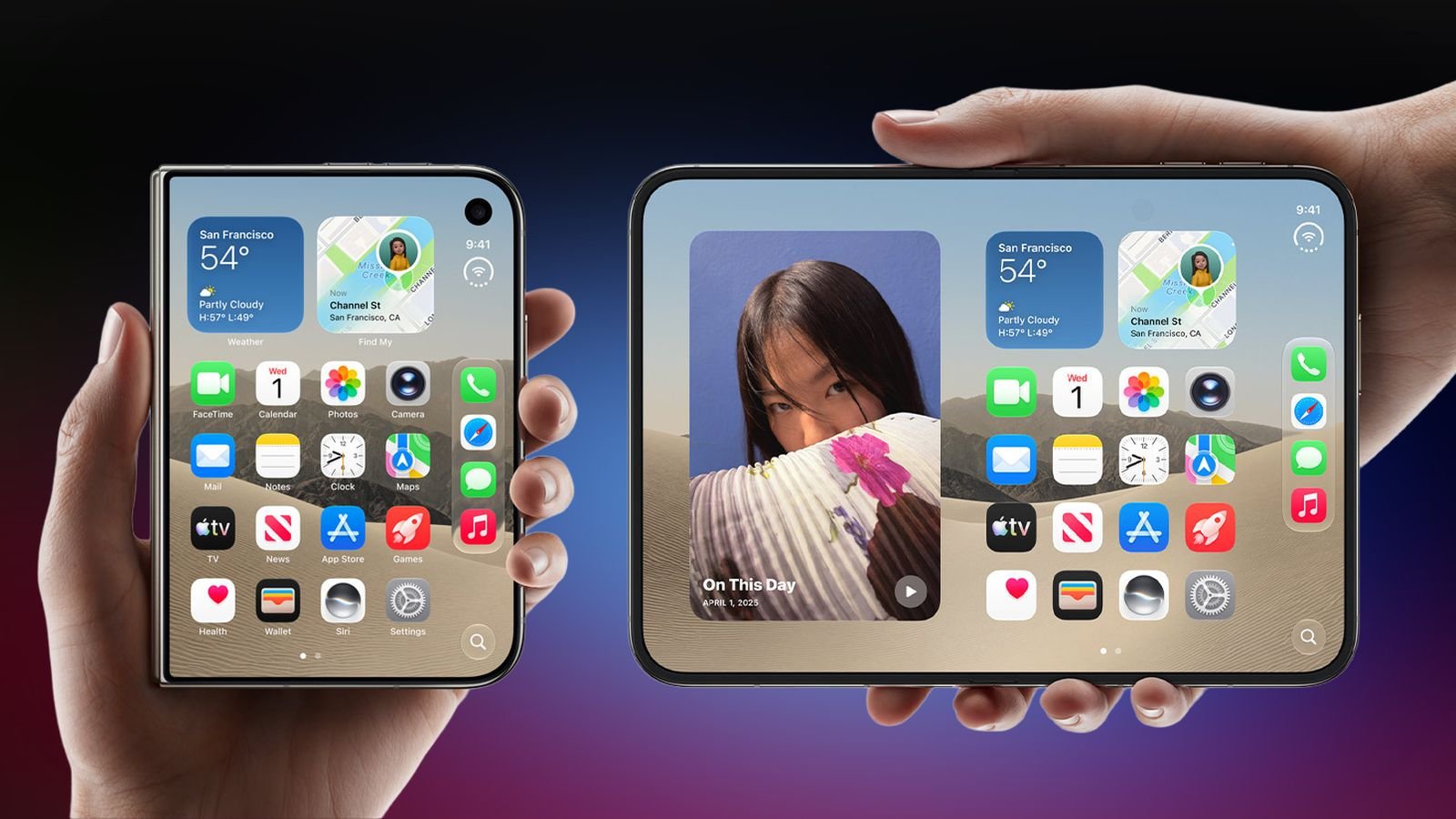
Understanding the iPhone Duo Market Entry
The recent launch of the iPhone Duo marks a significant shift in Apple’s hardware strategy, representing the company’s first foray into the foldable smartphone segment. As the device reaches early adopters, Apple has initiated a targeted survey campaign directed at recent purchasers. This data collection effort suggests that the company is actively seeking granular feedback to refine its future mobile hardware roadmap. By asking direct questions about physical design, screen visibility, and imaging performance, Apple is positioning itself to address technical pain points that are inherent to first-generation foldable technology.
The survey itself is structured to probe the motivations behind early adoption. Participants are queried on whether their purchase was driven by a genuine interest in foldable technology, opportunistic timing, or anticipation of future market fluctuations in smartphone pricing. This insight allows Apple to categorize its user base into those who are early-adopting enthusiasts and those who view the device as a pragmatic utility. Understanding these drivers is critical for Apple as it assesses whether the foldable form factor is ready for mass-market penetration or if it will remain a specialized category for power users.
Evaluating Display Dynamics and Crease Visibility
One of the most technically challenging aspects of the iPhone Duo is the integration of a foldable display panel. The survey focuses heavily on the user experience concerning the screen’s size when the device is closed—notably 5.4 inches—and the prominence of the display crease. The selection of a 5.4-inch outer display indicates that Apple prioritized portability, mirroring the physical footprint of the discontinued iPhone mini line. However, this compact size introduces limitations regarding typing comfort and touch precision for users accustomed to larger screens.
The crease issue is a standard engineering obstacle for current foldable displays. Users are being asked to quantify how distracting they find the crease during everyday tasks, such as scrolling through long-form content or watching high-definition media. Because the survey specifically targets this visual artifact, it is clear that internal research teams are evaluating the longevity and structural integrity of the display hinge mechanism. This feedback will likely inform future material science decisions, such as the implementation of more robust ultra-thin glass layers or refined hinge tension systems designed to minimize panel stress over thousands of folding cycles.
Performance Metrics of Under-Display Camera Technology
A notable inclusion in the survey is the inquiry regarding the under-display camera (UDC) technology. The iPhone Duo utilizes a 4MP under-screen camera to maintain a seamless, uninterrupted viewing area when the device is fully unfolded. Early technical reviews have cited this component as a point of contention, noting that the image quality is significantly lower than that of the traditional front-facing arrays found on standard flagship models.
The survey attempts to categorize the level of distraction caused by the UDC and assesses whether the technical compromise is acceptable to the user. By gathering data on how customers perceive the trade-off between a clean display aesthetic and photographic fidelity, Apple is essentially weighing the value of design minimalism against functional performance. The 4MP resolution limit creates specific challenges for low-light performance and color reproduction, and the feedback provided by users will dictate whether future iterations utilize higher-resolution sensors or alternate light-transmittance technologies to improve image quality without sacrificing the “full-screen” experience.
Addressing Current Engineering Gaps
Despite the technical breadth of the survey, there are conspicuous absences in the questioning. The survey does not explicitly poll users on the occurrence of reported display cracks or the integration of biometrics like Touch ID. Furthermore, the questionnaire omits questions regarding the user experience with applications that have not yet been fully optimized for the unique aspect ratios of the Duo’s internal display. These exclusions are curious, given that these areas represent some of the most frequent complaints voiced by the consumer community during the device’s initial two-week availability.
The omission of these specific topics suggests that Apple may already be gathering data on structural reliability and software optimization through other diagnostic channels. For instance, crash logs and automatic hardware diagnostics transmitted to Apple’s servers likely provide more accurate failure rates regarding display cracks than subjective user surveys. By focusing the survey on the user’s perception of “intended” features like the camera and the crease, Apple is clearly looking for guidance on design philosophy rather than basic quality control feedback.
Future Implications for Foldable Architecture
The final component of the survey—an open-ended inquiry asking users what they would add or change—serves as a barometer for user demand in the next generation of hardware. This data will be instrumental in prioritizing feature sets for the next version of the device. If users consistently advocate for a larger external display or a higher-resolution under-display camera, those features will inevitably move to the top of the engineering priority list.
Ultimately, this survey demonstrates a cautious approach to the expansion of the foldable product line. Apple is treating the iPhone Duo as a pilot program, allowing the company to measure the viability of foldable hardware before committing to a larger, more diverse portfolio of folding products. As the market for foldable devices continues to mature, the data derived from this initial deployment will serve as the foundation for future improvements in hinge durability, screen technology, and software integration, ensuring that the next iteration of the hardware addresses the real-world friction points identified by early adopters.
Disclaimer: This content is auto-generated for informational purposes only.
Source: Read Original News