







The cultural phenomenon that is Nitesh Tiwari’s Ramayana: Rise of a Legend shows no signs of slowing down. Since its historic opening, the film has effectively monopolized conversations from water coolers to social media feeds, asserting itself as a landmark achievement in Indian cinema. But in India, you know a cultural touchstone has truly “arrived” when it receives the ultimate badge of honor: a signature topical advertisement from Amul.
The beloved dairy cooperative, known for its “utterly butterly” wit, has officially joined the ranks of the Ramayana fandom. By releasing a crisp, clever topical that bridges the gap between mythological grandeur and humble breakfast staples, Amul has once again proved that no subject is too sacred—or too epic—for their iconic cartoon mascot to weigh in on.
The Art of the ‘Motion Epicture’
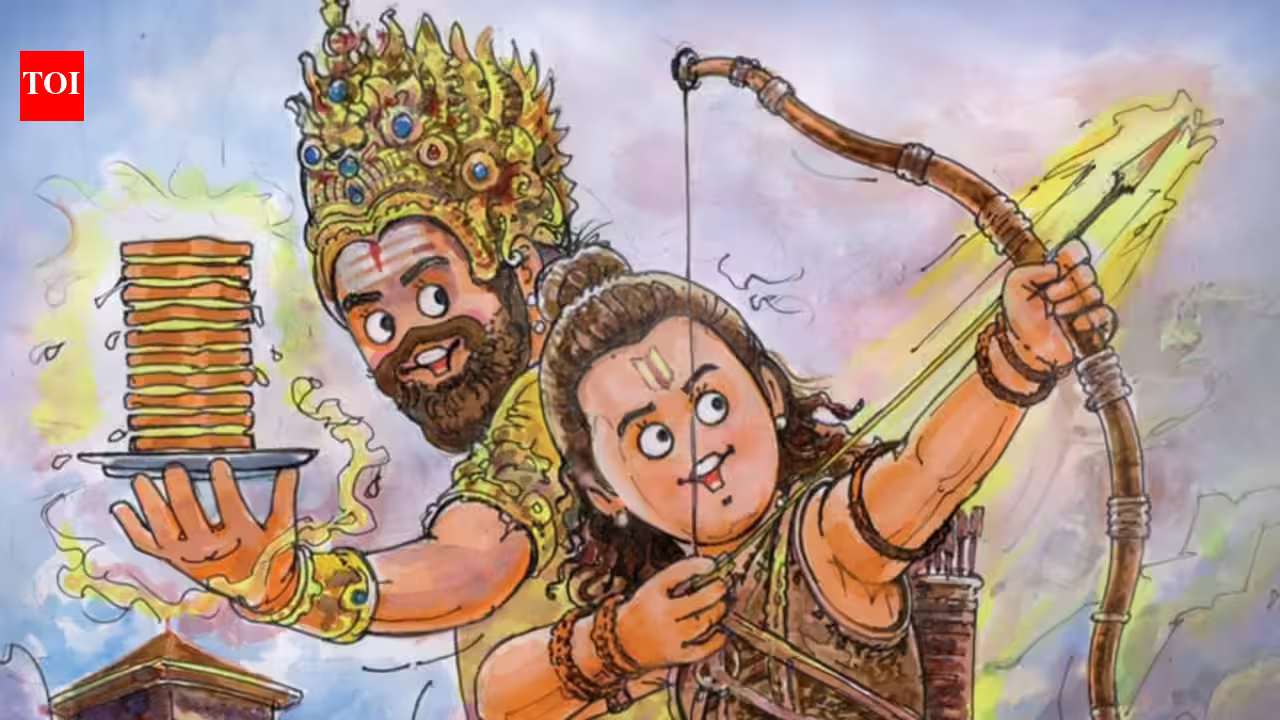
Amul’s latest creative offering is a masterclass in minimalist branding. The artwork features a whimsical, hand-drawn depiction of the epic’s central conflict. In a playful subversion of the film’s high-stakes narrative, we see a cartoon Ravana clutching a stack of freshly buttered bread, while Ram prepares to launch an arrow.
The real brilliance, however, lies in the headline. Stamped with the clever pun “Motion Epicture,” the topical serves as a dual-layered nod. It acknowledges the film’s massive scale as a cinematic spectacle while winking at the butter-slathered “epicurean” delight that the brand represents. It is a lighthearted juxtaposition that strips away the gravity of the battlefield, replacing it with the comforting domesticity that Amul has championed for decades. This blend of pop-culture commentary and clever wordplay is exactly why the brand’s topicals continue to thrive in an era of fleeting digital content.
A Box Office juggernaut in the Making
The tribute arrives at a moment when Ramayana: Rise of a Legend is rewriting the rulebook on theatrical performance. The film hasn’t just opened well; it has sustained a level of momentum that is rare in the modern multiplex era. By mounting an ancient epic with an unprecedented level of technical ambition, Nitesh Tiwari has managed to strike a delicate balance: satisfying the expectations of audiences who hold the source material dear, while delivering a visual feast that appeals to a global, modern sensibility.
From the opening credits, it was clear that this project was designed for scale. The audience response has been universal, cutting across demographics and generations. Whether it is the visual spectacle of the ancient world or the emotional resonance of the narrative, the film has captured the collective imagination. Amul’s participation in this conversation serves as an informal acknowledgment of the film’s dominance, cementing its status as a piece of living, breathing pop culture.
The Power of a Stellar Ensemble
Much of the discourse surrounding the film centers on its ambitious casting, which has been under the spotlight since the project’s inception. Bringing a story of this magnitude to life requires performances that can carry the weight of iconography, and the team behind Ramayana seems to have hit the mark.
Ranbir Kapoor’s portrayal of Lord Rama brings a nuanced gravity that grounds the film’s more fantastic elements, while Sai Pallavi has earned significant praise for her portrayal of Sita, offering a blend of grace and resilience. Perhaps most discussed is the casting of Yash as Ravana. The actor, whose screen presence has been a force of nature in previous projects, brings a palpable intensity to the antagonist’s role. Together, this ensemble—supported by the technical wizardry of Hans Zimmer and the melodic mastery of A.R. Rahman—has created a sonic and visual tapestry that feels both deeply rooted in tradition and fresh in execution.
Setting the Stage for the Future
One of the most fascinating aspects of Ramayana: Rise of a Legend is the long-term planning involved. This is not a standalone experiment; it is the first act of an expansive, multi-part vision. By introducing a vast array of characters and carefully planting narrative seeds, the film ensures that the audience is already looking toward the horizon for the second installment.
The success of Part 1 isn’t just measured in ticket sales; it is measured in the buy-in of the audience. When viewers are left debating the character arcs, the visual effects, and the thematic undertones of a film, it signifies a healthy franchise. As we look ahead to the next chapters of Nitesh Tiwari’s epic, it is clear that the bar has been set exceptionally high. The industry is watching closely, not just to see how the story concludes, but to see how the standards of Indian filmmaking continue to evolve under the pressure of such high expectations.
Why We Still Love the ‘Amul Touch’
In an age of algorithm-driven marketing and sterile promotional campaigns, the consistency of Amul’s topicals feels like a warm embrace. They don’t just advertise a product; they chronicle the history of Indian society through bread and butter.
By choosing to spotlight Ramayana, Amul reinforces its position as the country’s most reliable cultural thermometer. They remind us that even the most “serious” of films, when stripped of the marketing fluff, are meant to be enjoyed by the public. As the film continues its historic run in theaters worldwide, it serves as a reminder that stories, much like a good meal, are best shared. Whether you are watching the epic battle between good and evil on the silver screen or debating the plot over a slice of toast, the Ramayana phenomenon has officially become part of the daily Indian discourse—and that is a victory worth celebrating with a little bit of butter.
Disclaimer: This content is auto-generated for informational purposes only.
Source: Read Original News