









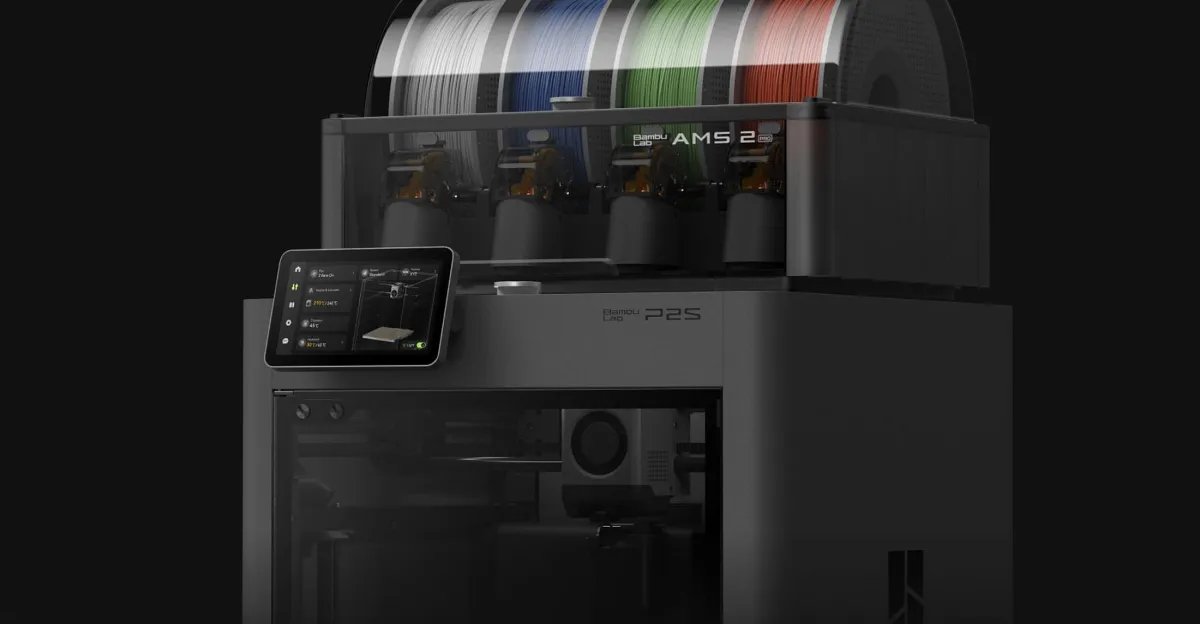
The Bambu Lab P2S Combo has emerged as a standout recommendation for anyone seeking to enter the world of 3D printing. After extensive testing, including over 6,700 hours of operation across multiple machines and the mass production of 40,000 individual components, it is clear that this system addresses many of the common pain points that have traditionally discouraged hobbyists.
Refining the Automated Workflow
The hallmark of the P2S Combo is its integration of the Automated Material System (AMS). Unlike many entry-level printers that require manual filament loading—a process that involves heating the nozzle and hand-feeding material through narrow tubes—the AMS enables seamless, automated transitions. This system is not merely for multi-color printing; its primary advantage lies in utility. By keeping filament rolls stored within a protective, enclosed housing, the P2S prevents the material from absorbing ambient moisture.
For the average user, this means that a roll of filament can remain loaded for months without degrading or turning brittle, effectively eliminating the need for constant maintenance and preparation. The printer handles the calibration, loading, and unloading cycles independently, allowing for a remote-controlled experience via the associated application.
The Competitive Landscape
While competitors like the Elegoo Centauri Carbon 2 offer multi-color capabilities at a more aggressive price point, they often fall short in long-term reliability and environmental sealing. My testing of the Elegoo lineup revealed that while the initial print quality is competitive, the lack of a sealed filament storage system necessitates frequent manual intervention to avoid moisture-related jams.
Furthermore, diagnosing hardware failures on rival machines proved significantly more complex. During my usage, the Elegoo system experienced issues that required internal disassembly and delicate manual adjustments of internal wiring—a barrier to entry that many casual users would find prohibitive. In contrast, the P2S design emphasizes modularity and ease of repair.
Design and Maintenance Efficiency
The P2S introduces several thoughtful physical design improvements that distinguish it from its predecessors, such as the P1P and P1S. These include:
– A dedicated magnetic build plate guide, ensuring accurate placement for every print.
– An automatic detection system that prevents the machine from attempting a job if the build plate is missing.
– Improved nozzle wiping mechanisms that reduce the likelihood of stray debris appearing in finished prints.
– A smoother enclosure floor, which facilitates cleaning by allowing debris to be easily swept out.
– A simplified, tool-less hotend replacement system that allows for maintenance to be completed in under a minute.
These small, incremental changes aggregate into a significantly more robust user experience. Even the camera and lighting systems on the P2S offer superior quality, providing clear visual confirmation of print status even in low-light conditions.
The Reality of Hardware Longevity
It is vital to maintain a realistic perspective on 3D printing technology. The P2S is not an appliance; it remains a piece of manufacturing hardware that experiences wear. Over time, internal components—such as those within the AMS—may require attention. While Bambu Lab has implemented support initiatives for specific manufacturing batches, such as free replacement parts for certain feeder units, the user should still expect to perform standard maintenance, such as lubricating traversal rods and cleaning surfaces.
Choosing the right filament is another crucial factor. While the P2S is highly capable, using high-quality material is essential. I have found that sticking to reputable brands and avoiding lightweight, low-quality spools significantly improves the success rate of the automatic feeding process.
Accessibility vs. Expert Requirements
The 3D printing market is currently caught between high-end professional equipment and hobbyist DIY machines. While the P2S is remarkably accessible, it still assumes that the operator possesses a willingness to troubleshoot the occasional knot in the filament or perform routine upkeep.
For someone looking for a “set it and forget it” experience, the P2S is the closest to that standard available today, but it is not infallible. It remains the top choice for those who value reliability and a refined user interface, yet it still caters to a demographic that appreciates the technical nature of the machine. The P2S provides the best balance of automation and control, making it the most sensible purchase for a newcomer who wants a high-quality machine that will grow with their skills.
Disclaimer: This content is auto-generated for informational purposes only.
Source: Read Original News