








Technical Evidence of the Master Quest Implementation
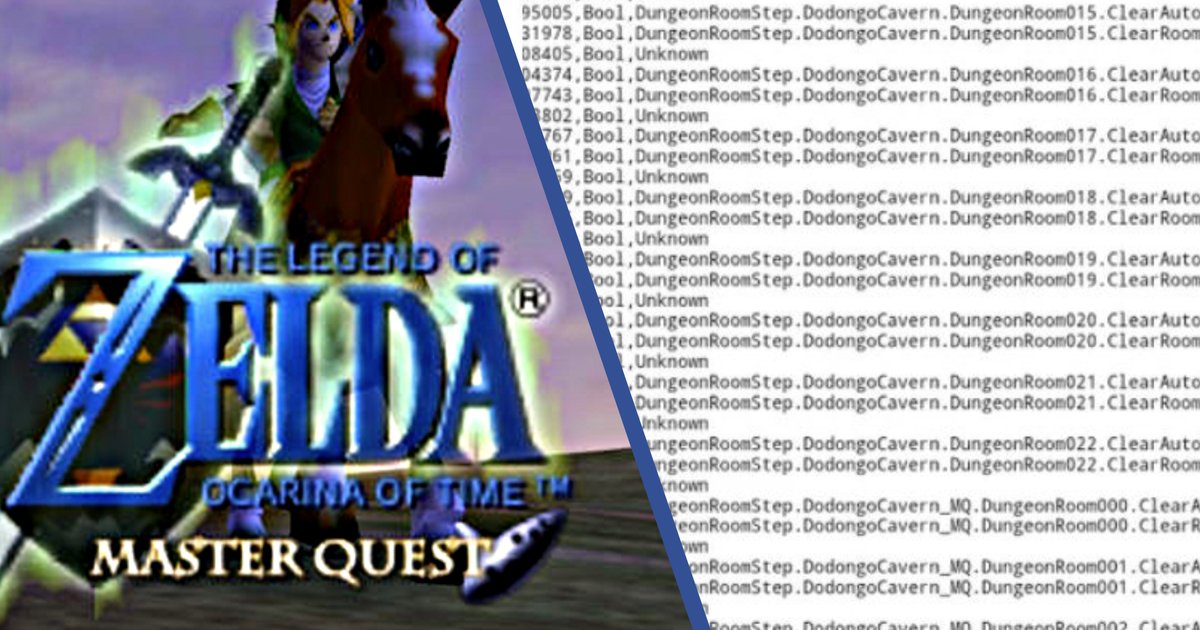
The recent release of the Legend of Zelda: Ocarina of Time remake for the Switch 2 has already generated significant interest within the developer and data-mining communities. Following the game’s November 5th launch, technical analysis of the game files has uncovered references suggesting the return of the highly requested Master Quest mode. Independent data miners, including MrCheeze, identified specific strings embedded in the game’s architecture that point toward a secondary, more challenging game state.
The identifiers discovered within the software files—such as “MQ”, “HasMQ”, “IsMQModeExist”, and “NewGameMQ”—strongly indicate that the framework for a Master Quest mode is integrated into the current build of the software. These strings appear to be part of the game’s internal logic, which governs how data is flagged and triggered when a user initiates a new game or selects a specific difficulty state. The presence of these tags suggests that while the mode may not be immediately accessible to the player, the underlying engine has been programmed to acknowledge and execute the specific alterations associated with the Master Quest experience.
Understanding the Core Changes of Master Quest
Master Quest is a specialized iteration of the original title, characterized by fundamentally altered dungeon architecture and increased difficulty. Unlike standard difficulty scaling, which typically adjusts enemy health or damage output, Master Quest often reconfigures the layout of rooms and the complexity of puzzle sequences. This requires the game engine to load different asset sets and spatial coordinates for these environments compared to the standard campaign.
Confirmed reports from technical analysts like OatmealDome verify that the internal data includes logic for a “mirrored” world state. This means that the entire map, including environments and traversal paths, is horizontally inverted. This design choice forces veteran players to reorient their spatial awareness, as familiar landmarks and routes appear as mirror images of their original configurations. Furthermore, the modification of specific dungeon entities, such as the presence of cows in unconventional locations like Jabu-Jabu’s Belly, serves as a distinct marker that the game is successfully reading the Master Quest configuration files rather than the standard game files.
Infrastructure for Downloadable Content
One of the most significant takeaways from the recent data analysis is the relationship between this mode and the game’s distribution model. According to technical observations, the Master Quest files appear to be linked to a DLC-based activation system. Rather than being a standard update or an unlockable feature achieved through in-game progression, the data suggests that the mode requires the ownership of a specific content package.
This architecture implies that Nintendo has developed a modular approach to the game’s content. By isolating the Master Quest assets into a separate package, the developers can manage game file sizes more efficiently for the base version, allowing users to opt-in to the additional content as needed. The technical implementation suggests that the game client performs a verification check on the user’s account for the appropriate DLC license before setting the “ReleaseMQ” flag to true. This modularity is a common practice in modern software development, allowing for post-launch expansion without requiring a full overhaul of the primary executable file.
Impact on Player Experience and Challenge
The inclusion of Master Quest serves to extend the lifecycle of the software by catering to experienced players who have already mastered the standard mechanics of the base game. Historically, the mode functions as an “expert” layer, introducing a steeper learning curve that necessitates a deeper understanding of the game’s systems. In previous iterations, this difficulty increase was achieved through a combination of mirrored environments and a twofold increase in damage received by the player from enemies.
By integrating these challenges, the developers are providing an avenue for players to test their mastery in a more demanding environment. The modification of puzzle logic within dungeons is particularly significant; players cannot rely on muscle memory or prior knowledge of room layouts to progress. Instead, they must approach each environmental interaction with fresh scrutiny. This shift transforms the title from a familiar retrospective into a complex, trial-and-error-based puzzle experience, effectively doubling the structural content of the game dungeons.
The Status of Official Development
Despite the clarity of the discovered data strings and the technical confirmation of mirrored assets, it is critical to note that Nintendo has not yet issued an official announcement regarding the status of this content. The files identified by the community are currently incomplete, indicating that the feature may still be in a staging or development phase. While the presence of “ReleaseMQ” tags indicates that the feature is intended for public deployment, there is no verified timeline for when or how this content might be activated.
The debate continues regarding whether such a mode would be provided as a complimentary update, similar to its implementation in past handheld remakes, or if it will be positioned as a paid addition. Current observations suggest that the implementation is firmly rooted in the platform’s DLC delivery architecture. For now, players should interpret these findings as evidence of a work-in-progress feature rather than a guaranteed, imminent release. As the community continues to monitor the file systems for further updates, the primary focus remains on whether these fragments will be finalized in a future deployment patch or if they will remain dormant within the code.
Disclaimer: This content is auto-generated for informational purposes only.
Source: Read Original News