








Bangladesh Garment Strikes Open Door for Indian Exporters, but Challenges Remain
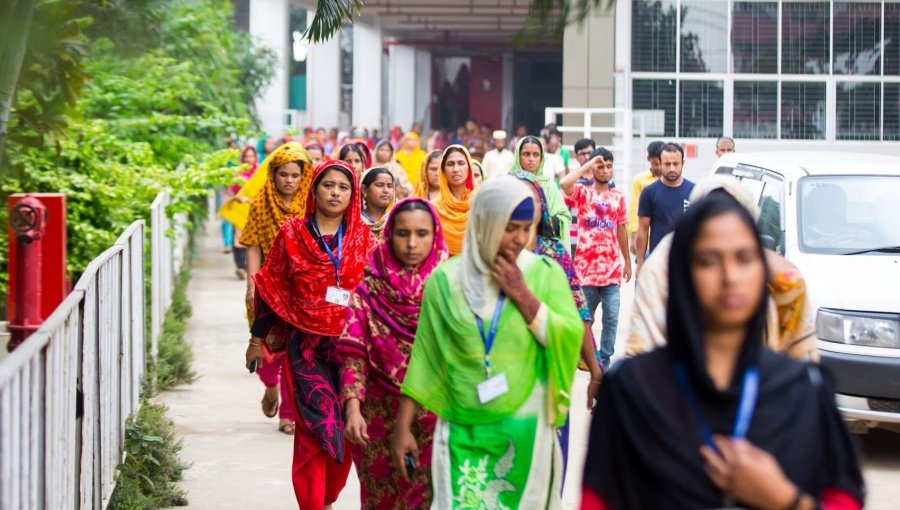
The ongoing turmoil within Bangladesh’s garment sector, characterized by a week of intense wage strikes, has created a rare opening for Indian apparel exporters. As production at nearly 690 Bangladeshi factories ground to a halt in early November, global retailers facing the year-end peak ordering season have begun looking for alternative supply chains to avoid catastrophic delivery delays.
A Crisis of Timing
The timing of the strikes could not be worse for Dhaka. November and December represent the most critical period for Western retailers as they stock up for upcoming seasons. Industry analysts note that when factories miss these tight shipping windows, the cost of flying goods via air freight to avoid late penalties often wipes out profit margins entirely.
For international buyers, this uncertainty makes India an attractive alternative. Unlike its neighbor, India boasts an integrated textile supply chain—growing its own cotton and spinning its own yarn—which offers a level of stability that has become increasingly elusive in Bangladesh.
India’s Strategic Advantages
India is uniquely positioned to capture a portion of the market share currently being vacated by Bangladeshi manufacturers. Recent geopolitical and economic developments have shifted the landscape in India’s favor. A free trade agreement with the UK, which took effect in July 2025, has placed Indian clothing on equal footing with Bangladeshi exports regarding duty-free access. Furthermore, an upcoming trade deal with the European Union, expected to be finalized by 2027, promises to eliminate the 12% duty currently imposed on Indian textiles, further narrowing the price gap that has historically favored Dhaka.
However, India’s path to becoming a global garment powerhouse is not without obstacles. While Bangladesh has expanded its share of world apparel exports to nearly 10% over the last two decades, India’s share has remained stagnant at approximately 3%.
The Hurdles to Growth
The primary limitation facing the Indian industry is fragmentation. Research indicates that the Indian garment sector lacks the large-scale production facilities required to handle the massive, high-volume orders that multinational retailers typically place. This makes it difficult for India to fully capitalize on the sudden influx of inquiries from buyers seeking to de-risk their supply chains.
Moreover, the competition is not limited to Bangladesh. Vietnam, known for its rapid production cycles and efficient supply chain, remains a formidable rival, equally well-placed to secure the orders abandoned by factories in Dhaka. Additionally, India faces its own hurdles in the US market, where exports have declined following recent tariff adjustments, leaving it trailing significantly behind both Bangladesh and Vietnam in terms of total volume.
A Complex Economic Landscape
The instability in Bangladesh has created a ripple effect that complicates the regional dynamic. As neighbors with deep economic ties, a slump in Bangladeshi manufacturing does not necessarily translate into a net gain for India. Many Indian spinning mills, which rely heavily on exports to Bangladeshi factories, have seen their order books shrink as their primary buyers remain idle.
While India can certainly expect a “hearing” from global buyers looking to diversify their sourcing, turning these opportunities into long-term growth will require significant capacity building. As Dhaka faces mounting pressure to modernize its labor practices and move toward higher-value manufacturing, India must focus on scaling its operations and leveraging its trade agreements to transform these temporary gains into a sustained foothold in the global fashion market.
Disclaimer: This content is auto-generated for informational purposes only.
Source: Read Original News