








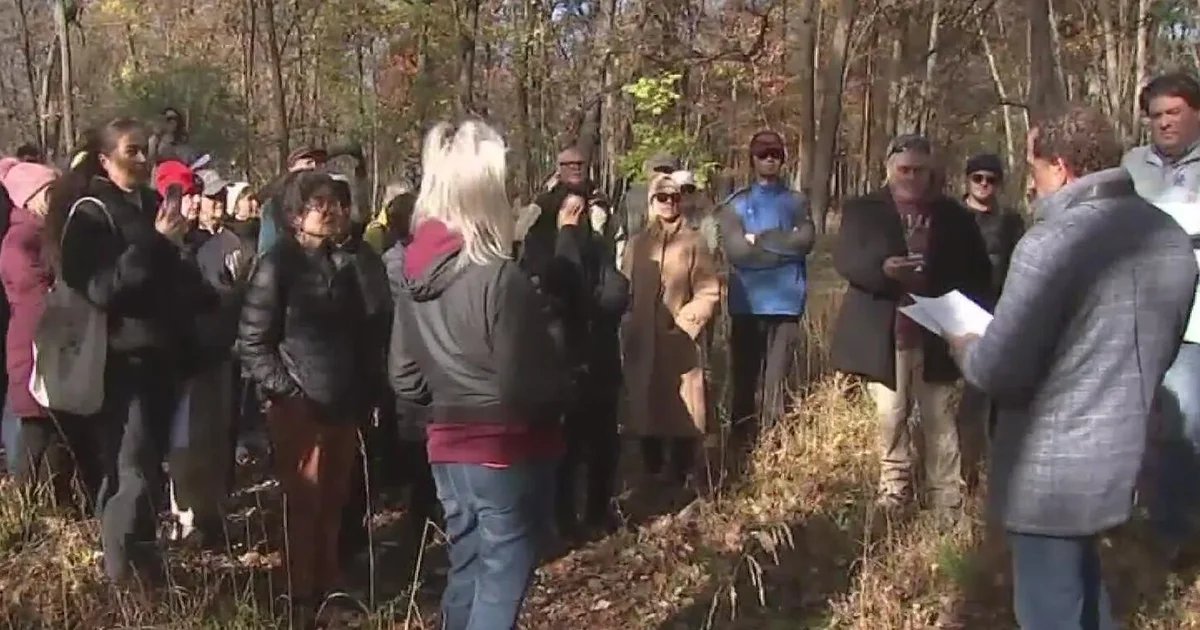
The quiet trails of Thatcher Woods, a sprawling forest preserve in River Forest, became the backdrop for a growing environmental protest this past Saturday. Members of the grassroots coalition “Stop the O’Hare Passthrough” gathered among the trees, not for recreation, but to raise awareness about the potential ecological consequences of the proposed O’Hare Flyer—a high-speed rail project designed to shuttle passengers from downtown Chicago to O’Hare International Airport in just 15 minutes.
As project developers aim to break ground as early as next year, local opposition has intensified. Critics argue that the project, which would traverse sensitive ecosystems, threatens to fragment local wildlife habitats and disrupt the environmental integrity of the region’s protected green spaces. By hosting the field trip at Thatcher Woods, the coalition sought to bridge the gap between abstract infrastructure plans and the tangible reality of the forest floor, highlighting the specific flora and fauna they believe are at risk.
The primary point of contention, beyond the direct construction impacts, is the perceived lack of transparency from the developers. Opponents maintain that there has been a significant shortage of publicly available, independent environmental impact assessments.
“The developers have not been forthcoming. In fact, they have been performative at best, and we need access to data and information,” said Elif Negiz, a prominent voice within the coalition. Negiz and other activists are demanding a rigorous, third-party analysis of the project’s environmental footprint before any further development proceeds. They argue that the promise of speed must be weighed against the long-term cost to the local ecosystem, including potential issues related to noise pollution, water runoff, and habitat disruption for local bird and mammal populations.
Proponents of the O’Hare Flyer have centered their argument on economic development. Supporters contend that the rail link is a vital piece of infrastructure that would modernize Chicago’s transportation network, reduce traffic congestion on regional expressways, and create a substantial number of jobs for the city. For these advocates, the project is a necessary investment in Chicago’s global competitiveness, promising to streamline travel for millions of commuters and international travelers alike.
However, for the residents and environmental advocates gathered in River Forest, the economic benefits do not automatically justify the potential environmental sacrifice. The push for transparency has become a rallying cry for the community, as they seek to ensure that public transit projects are held to the same stringent environmental standards as any other large-scale construction initiative.
The conflict reflects a broader tension currently playing out in many American metropolitan areas: the struggle to balance rapid transit modernization with the preservation of essential urban and suburban green spaces. As Chicago moves closer to the projected start date of the O’Hare Flyer, the coalition shows no signs of slowing down. They intend to continue their pressure on local officials, insisting that residents be granted a seat at the table to review the technical data before the landscape is irreversibly altered.
With construction timelines looming, the debate over the O’Hare Flyer is set to remain a focal point in local government meetings. For now, the future of both the transit project and the tranquility of Thatcher Woods remains in a state of uncertainty, pending further disclosures from the project’s developers.
Disclaimer: This content is auto-generated for informational purposes only.
Source: Read Original News