








When Nitesh Tiwari announced he was helming a massive, multi-part adaptation of the Ramayana, the industry held its breath. Could a filmmaker known for grounded, slice-of-life dramas like Dangal and Chhichhore capture the scale, the divinity, and the sheer audacity of one of the world’s oldest epics? The early box office numbers suggest that not only can he handle the scale, but he has also tapped into something that modern audiences—hungry for spectacle—are lining up to witness in droves.
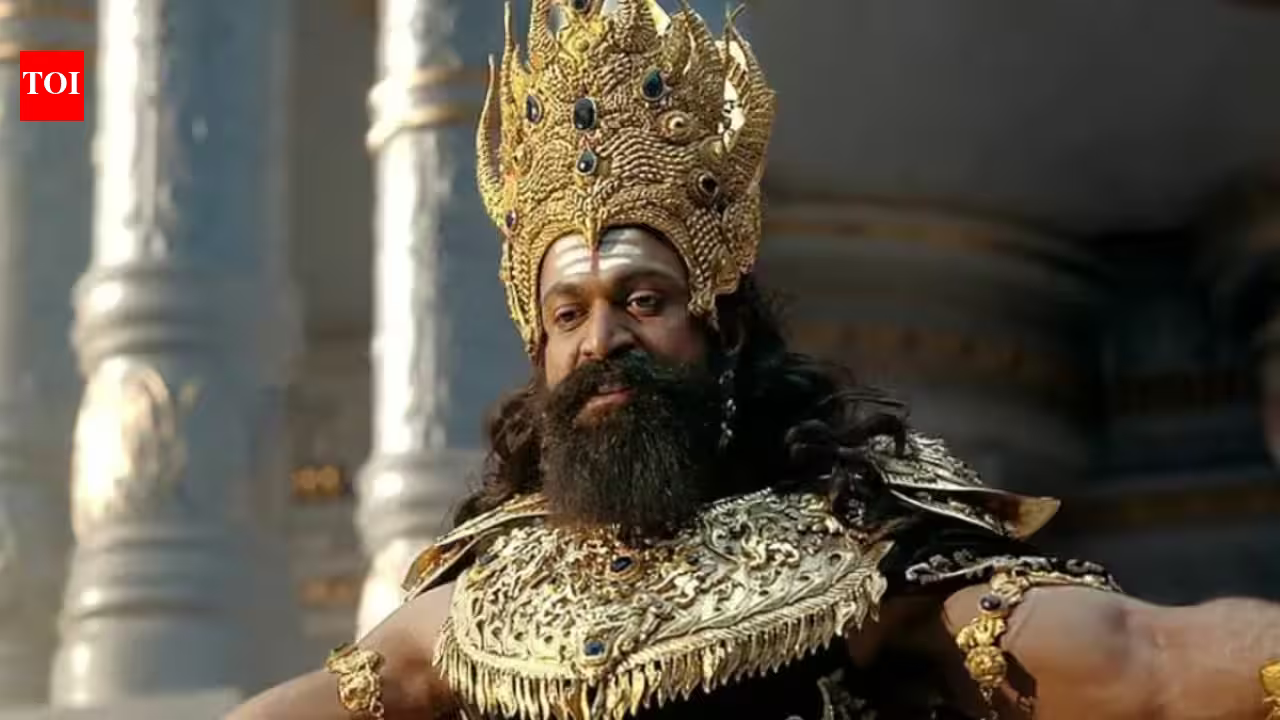
But amidst the discourse on visual effects, the casting of Ranbir Kapoor as Rama, and the musical synergy of Hans Zimmer and AR Rahman, one performance has clawed its way to the center of the conversation. Yash, the man who redefined Kannada cinema with the KGF franchise, has stepped into the shoes of the ten-headed demon king, Ravana. It isn’t just his performance that has audiences buzzing; it’s the physical, almost torturous transformation he underwent to inhabit the role of Lanka’s formidable ruler.
The Weight of Ambition: 33 Kilograms of Devotion
We are used to actors losing or gaining weight for roles, but in Ramayana: Part 1, the transformation is as much about what the actor carries as how he acts. Costume stylist Saniya Sardhariya recently peeled back the curtain on the grueling logistical nightmare of dressing a legendary villain. While standard costumes for the film typically weighed in at a respectable 16 to 20 kilograms, the regal looks designed for Ravana—specifically those tied to the Lanka sequences and the Shurpanakha wedding—pushed the limits of physical endurance.
These garments were structural marvels, tipping the scales at a staggering 33 kilograms. To put that in perspective, Yash was essentially performing complex action sequences and nuanced dramatic beats while wearing the equivalent of a heavy hiking backpack strapped to his frame. When you consider that the crown alone accounted for nearly two kilograms of that weight, the performance becomes less about acting and more about sheer, disciplined fortitude.
Opulence as a Weapon: Designing the King of Gold
The visual language of Ravana had to be distinct. He wasn’t just a villain; he was a scholar, a musician, and a king whose city was literally built of gold. According to Tarang Arora, the creative director of Tribe Amrapali—the house responsible for the film’s intricate jewelry—the aesthetic brief was rooted in the paradox of the character.
“Ravana was the king of the land of gold,” Arora explained in a recent briefing. The goal was to drape the character in extreme opulence, using jewelry not just as ornamentation, but as a map of his psyche. Every piece was a deliberate choice reflecting his multifaceted nature. The design team incorporated motifs like the snake, the demon mask, and the trishul (trident) to pay homage to Ravana’s unwavering devotion to Lord Shiva. It was a delicate balancing act of “yin and yang,” capturing both his terrifying destructive power and his intellectual sophistication.
A Box Office Force Like No Other
While the behind-the-scenes stories of costume weights are making headlines, the cold, hard numbers at the box office tell an even more compelling story. Ramayana: Part 1 is defying the “mixed reviews” narrative that usually hampers a film’s longevity. By the end of its first five days, the film had raked in a domestic net of Rs 346.35 crore, with a staggering worldwide gross of Rs 663.90 crore.
The real anomaly, however, is the film’s first Monday. In a market where films often see a sharp decline after the opening weekend, Ramayana did the impossible. It pulled in Rs 107.50 crore on its first Monday—a number that eclipses the first-Monday performance of heavyweights like Baahubali 2, Dangal, and Pushpa 2. This isn’t just a win; it is a rewriting of the rulebook. It suggests that the audience isn’t just interested in the “event” status of the movie, but is finding something in the execution that compels repeat viewing and massive, collective theater-going.
The Synergy of Legends
The success of Ramayana is undoubtedly a triumph of collaboration. Bringing together Ranbir Kapoor, whose understated intensity serves as a perfect foil to the grandiose, almost operatic presence of Yash’s Ravana, was a stroke of casting genius. When you layer this with a score composed by the dual force of Hans Zimmer and AR Rahman, you get an audio-visual experience that demands to be consumed on the largest screen possible.
Sai Pallavi’s turn as Goddess Sita and Sunny Deol’s portrayal of the mighty Hanuman round out a cast that seems chosen for their specific ability to ground these mythological archetypes in human emotion. Producer Namit Malhotra’s investment in the film’s technical polish is clearly paying dividends.
Looking Ahead: The Mythological Renaissance
As Ramayana: Part 1 continues its march toward even greater financial milestones, it forces us to look at the future of Indian cinema. We are currently living through a mythological renaissance, where technology has finally caught up to the imagination of our ancient texts.
However, the lesson here isn’t just about the CGI or the scale of the sets. It is about the physical commitment of the performers. Whether it is the 33-kilogram armor weighing down the shoulders of an actor or the painstaking attention to the iconography of a piece of jewelry, the audience recognizes labor. They recognize when a film has been built with an obsession for detail. Yash’s Ravana, with all his heavy gold and heavier burdens, has become the anchor for this epic, proving that sometimes, the weight of the crown is exactly what makes a performance feel real. If this is the start of the journey, the remaining chapters have a massive, record-breaking bar to clear.
Disclaimer: This content is auto-generated for informational purposes only.
Source: Read Original News