





The Strategic Architecture of US-China AI Diplomacy
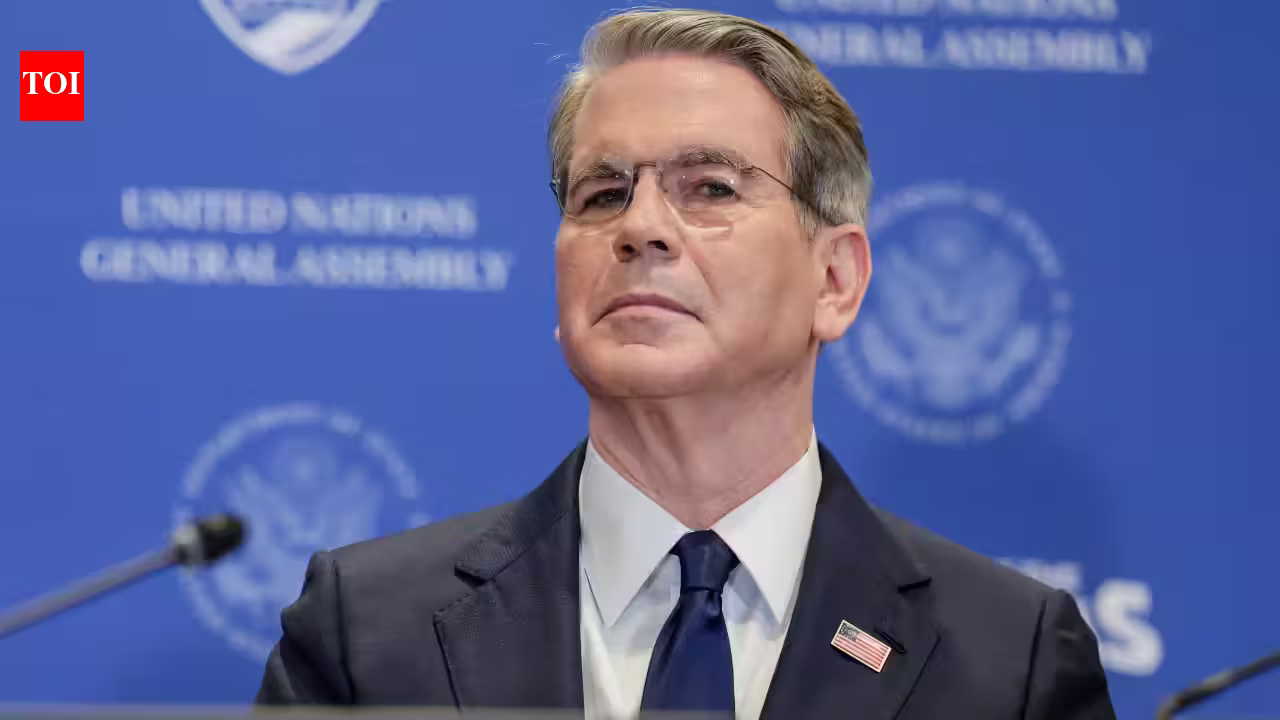
The recent pronouncements by US Treasury Secretary Scott Bessent signal a pivotal shift in the trajectory of US-China relations, specifically regarding the governance of advanced artificial intelligence. By emphasizing a strategy of “de-risking, not decoupling,” the United States is attempting to construct a framework that acknowledges deep-seated ideological and geopolitical rivalries while simultaneously establishing guardrails for the most transformative technology of the century. As Washington and Beijing prepare for the upcoming summit, the primary objective is to institutionalize risk management for “superintelligence” (SI).
The dialogue surrounding SI is focused on technical transparency and safety protocols. Both nations recognize that an uncoordinated race for AI supremacy carries existential risks, including potential miscalculations in automated systems or the uncontrolled proliferation of high-end computational models. By moving toward a reciprocal system for evaluating and testing AI models before public release, the two superpowers are essentially attempting to create a bilateral non-proliferation treaty for digital intelligence. This initiative aims to ensure that human judgment remains the final authority in AI operations, thereby mitigating the risk of autonomous system failures that could trigger broader global instability.
Economic Reciprocity and the Future of Global Trade
Beyond the technological sphere, the economic dimensions of the US-China relationship are undergoing a structured recalibration. The proposed establishment of a “Board of Trade” and a “Board of Investment” marks a departure from the ad-hoc trade policies that have defined recent years. By proposing reciprocal tariff reductions on $30 billion worth of non-sensitive goods, the US is attempting to demonstrate a preference for functional economic exchange over total systemic separation.
For the Indian business community and global investors, this shift suggests that the era of erratic trade wars may be transitioning into a period of managed competition. While the US remains wary of China’s market access policies, the current administrative shift toward predictable, forum-based conflict resolution provides a clearer baseline for global supply chain planning. Indian industries, which have often been positioned as alternative nodes in the “China Plus One” strategy, must now observe whether this US-China cooperation results in a more stable global economic environment or if it creates a closed-loop system where only the two superpowers set the standards for technological and trade-related market access.
Corporate Governance and National Security Intersections
The turmoil surrounding Nvidia and its CEO, Jensen Huang, serves as a high-stakes case study in how individual corporate leadership can suddenly become a pivot point for national security concerns. The current shareholder lawsuit and the subsequent internal investigation highlight the fragility of modern tech giants that operate at the confluence of US intelligence oversight and cross-border commercial partnerships. For investors, the volatility in Nvidia’s share price—which saw massive market value evaporation following revelations of the CEO’s personal connections—underscores the systemic risk inherent in companies that hold a near-monopoly on critical AI infrastructure.
The appointment of Wachtell, Lipton, Rosen & Katz to lead an independent inquiry suggests that Nvidia is moving to ring-fence the company from the personal actions of its leadership. This move is essential for maintaining investor confidence, yet the situation remains precarious. In the Indian market, where Nvidia’s hardware forms the backbone of several burgeoning AI initiatives and data center projects, any sustained instability within the company directly impacts the cost and availability of AI compute resources for domestic enterprises. Indian corporations reliant on Nvidia’s ecosystem are likely watching this investigation closely, as any findings of compromised national security could lead to tighter export controls or shifted priorities in US-China technological cooperation.
The Indian Perspective on Superintelligence Governance
India occupies a unique position in this unfolding landscape. As a nation aggressively pursuing its own AI mission and looking to bolster its semiconductor and high-performance computing capabilities, India has a vested interest in the global standards that arise from US-China dialogues. If Washington and Beijing manage to align on safety standards for superintelligence, those standards will likely become the global benchmark. Indian policymakers must remain agile to ensure that such standards do not inadvertently create barriers to entry for emerging AI economies or overly favor the dominant infrastructure providers of the US and China.
Furthermore, the emphasis on “reciprocity” in the US-China context serves as a template that India may wish to emulate in its own bilateral trade negotiations. As India seeks to localize manufacturing and scale its digital economy, the model of establishing structured forums for market access—rather than relying solely on tariff mechanisms—could be a productive avenue to explore. The risk of the US and China creating a duopoly of technological rules necessitates that India continues to advocate for a multi-polar, inclusive approach to international technology governance.
Conclusion: Navigating the New Geopolitical Reality
The coming months will test the resolve of both the United States and China to maintain a distinction between strategic competition and necessary collaboration. The dialogue on superintelligence is not merely a technical necessity; it is a vital step toward preventing the total degradation of global trust. Businesses operating within this landscape—whether in the US, China, or India—must prepare for a future defined by high transparency requirements and a heightened emphasis on risk management.
As seen with the Nvidia crisis, corporations that bridge the divide between national security interests and global commercial success are increasingly vulnerable to geopolitical shocks. The takeaway for leadership teams across all sectors is clear: the integration of national security analysis into corporate strategy is no longer optional. It is a mandatory component of risk management. As the world moves toward the integration of superintelligence, the ability to balance the demands of innovation with the realities of geopolitical tension will define the next generation of business leaders and global stability alike. Success will depend on navigating the fine line between defending one’s interests and recognizing the shared vulnerabilities that neither side can afford to ignore.
Disclaimer: This content is auto-generated for informational purposes only.
Source: Read Original News