




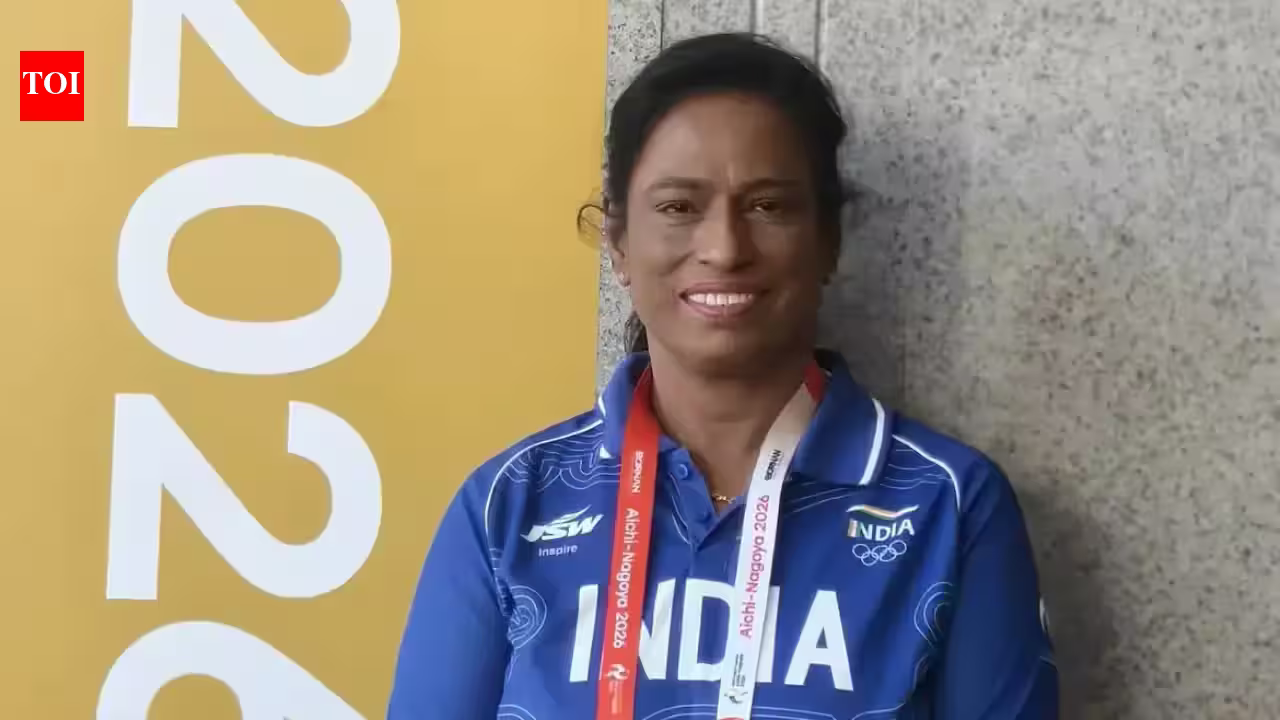
NEW DELHI — The administrative landscape of Indian sports has been sent into a tailspin following the Sportspersons of Outstanding Merit (SOM) elections, which have left Indian Olympic Association (IOA) president PT Usha at a critical crossroads. In a stunning result on November 9, the legendary track-and-field icon failed to secure one of the four available female slots in the SOM category, a defeat that has effectively dismantled her previous path to the IOA presidency and ignited a fierce battle for the future of the organization.
The SOM election serves as a vital gateway for distinguished athletes to enter the IOA General Assembly, and subsequently, the Executive Council. While Usha secured 40 votes, she finished fifth in a six-way race, falling behind badminton star Saina Nehwal (43), archer Dola Banerjee (45), hockey icon Rani Rampal (50), and long-jump legend Anju Bobby George (53). This electoral setback, just weeks before the pivotal December 5 Executive Council elections, has cast a long shadow over her tenure as the first woman to lead the country’s apex sports body.
The Constitutional Conundrum
The question now dominating the corridors of power in New Delhi is whether this defeat marks the end of Usha’s presidency or merely a temporary hurdle. The IOA Constitution, ratified last September, provides various routes for membership in the General Assembly, including nominations from National Sports Federations (NSFs).
Under the election notification, 30 eligible NSFs are required to submit two authorized representatives—one male and one female—to form the Electoral College. In theory, Usha could seek a nomination from a supportive federation to regain her place in the General Assembly. However, the path is fraught with technical requirements: a nominee must be a member of the concerned NSF in good standing, an Indian citizen, and under 70 years of age. Even if she clears these hurdles, the eligibility criteria for the presidency itself—which mandate that a candidate be a recognized SOM or have previously served a full term as an office-bearer—remain a point of intense legal and administrative scrutiny. Whether her current term is deemed “complete” for election purposes is a matter that will ultimately rest with the Electoral Officer.
Seeking International Intervention
Rather than attempting to navigate the domestic political maze by courting federations or challenging the poll in local courts, Usha has opted for an aggressive international strategy. In a scathing three-page complaint addressed to International Olympic Committee (IOC) president Kirsty Coventry, Usha has called for an independent probe into the SOM election process.
The complaint alleges serious irregularities, including improper campaigning by incumbent Executive Council members, coercive communication regarding voter participation, and inappropriate references to the Sports Ministry during what was supposed to be a secret-ballot process. Usha has further questioned the impartiality of the Returning Officer, Sanjay K. Srivastava, alleging that her repeated representations regarding these procedural violations went unaddressed during the counting period.
By framing this as a struggle for the “independence, transparency, and governance” of the Indian Olympic movement, Usha is clearly aiming to exert pressure on the local body through the IOC’s ethics and compliance mechanisms. Her team is also reportedly lobbying the Prime Minister’s Office for intervention, suggesting that the integrity of India’s sports administration is now a matter of national priority, particularly as the nation angles for a successful bid to host the 2036 Olympic Games.
The Road to December 5
With the SOM results finalized, the clock is ticking toward the December 5 elections. The Electoral Officer has set a rigid timeline for the formation of the Electoral College, with the final voter list slated for publication on November 15. The college will be comprised of two representatives from each of the 30 eligible NSFs, members of the IOA Athletes Commission, IOC members, and the newly elected eight SOM members—a group that will undoubtedly hold significant sway over the final outcome.
As the IOA prepares to elect its leadership for the next four years, the atmosphere is electric with anticipation. Usha’s camp maintains that her fight is not merely about retaining a chair, but about defending the democratic integrity of the Olympic movement in India. Whether her call for an international inquiry will yield results or if she will be forced to bow out of the race remains to be seen. For now, the “Payyoli Express” finds herself in her toughest race yet, not on the track, but in the complex, high-stakes arena of institutional governance. As stakeholders await the final Electoral Roll on Friday, the only certainty is that the coming weeks will redefine the power structure of Indian sports for years to come.
Disclaimer: This content is auto-generated for informational purposes only.
Source: Read Original News