







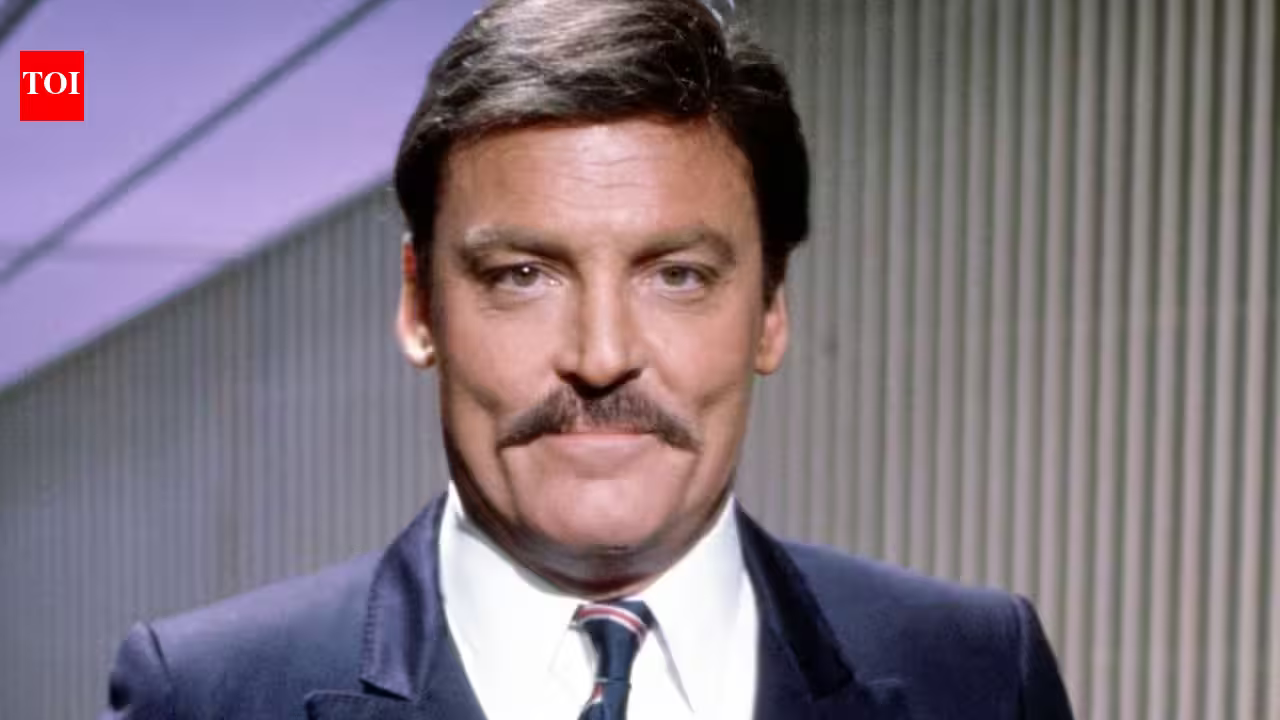
The world of entertainment lost a titan this week. Stacy Keach, the gravel-voiced powerhouse whose career spanned six decades, has passed away at the age of 85 at his home in Poland. While his passing marks the end of an era for classic television and stage performance, the tributes pouring in from across the industry serve as a testament to a man who was, in equal measure, a brilliant technician and a deeply human storyteller.
Known by millions as the hard-boiled detective Mike Hammer, Keach was never just a face on a screen. He was a classically trained actor who approached every role—whether it was a brutal private investigator or a crumbling Shakespearean king—with the same intensity and intellectual rigor that he first cultivated in the lecture halls of Berkeley and the hallowed rooms of the Yale School of Drama.
The role of Mike Hammer that made him a television favourite
For many, Stacy Keach was Mike Hammer. When the television adaptation of Mickey Spillane’s iconic crime novels arrived in the early 1980s, the character could easily have become a caricature. Instead, Keach imbued Hammer with a weary, cynical humanity. He brought a weight to the performance that transformed the character from a two-dimensional pulp hero into a gritty, fascinating study of a man trying to maintain a moral compass in a world that had long since lost its own.
Starting with the 1983 film Murder Me, Murder You, Keach made the role his own. His performance in the 1984 Mickey Spillane’s Mike Hammer series didn’t just define his career; it set a high-water mark for the television private eye genre. He possessed the rare ability to convey volumes with a single look or a clipped sentence, proving that he didn’t need to shout to own the screen. Even decades later, when he returned to the character for Mike Hammer, Private Eye, that familiar, resonant baritone remained as sharp as ever.
His memorable performances in films and television
Keach was far too talented to be pigeonholed by his most famous hat and trench coat. His filmography reads like a syllabus for a masterclass in acting. If you want to see the true range of his capability, look no further than his portrayal of the washed-up boxer Billy Tully in John Huston’s 1972 film Fat City. It remains a devastating, raw performance that firmly established him as a heavyweight of the silver screen.
From the ensemble brilliance of The Long Riders—where he acted alongside his brother, James Keach—to the menacing, calculated calm of Warden Henry Pope in the hit series Prison Break, he was a chameleon. He could pivot from the absurdity of a cult comedy like Up in Smoke to the historical gravitas of playing Ernest Hemingway in the 1988 miniseries Hemingway. That performance, which earned him a Golden Globe, was a masterclass in capturing the tortured, larger-than-life nature of one of America’s most celebrated writers. Whether he was playing a cardinal in Blue Bloods or lending his iconic, world-weary voice to the narration of American Greed, Keach consistently elevated the material around him.
A lifelong connection with theatre
Despite the fame and the steady paychecks that television brought, Stacy Keach’s soul was rooted firmly in the theatre. To see him on stage was to see an actor entirely in his element. He was a titan of the classics, tackling the impossible roles—Hamlet, Macbeth, King Lear—with a fearlessness that intimidated his peers and thrilled his audiences.
His work in the play Indians earned him a Tony nomination, but his contributions to the stage went beyond the footlights. As a founding member of L.A. Theatre Works, he was instrumental in keeping the art of audio drama alive, ensuring that the magic of the stage could reach people far beyond the borders of a theater house. In 2015, his induction into the American Theatre Hall of Fame was not a mere formality; it was a long-overdue acknowledgement of a man who viewed the stage as the highest calling of his profession.
Navigating the storms of personal struggle
No tribute to Stacy Keach would be honest without acknowledging the complexities of his life. He was a human being in the truest sense, subject to the same failings as the characters he portrayed. His well-documented 1984 arrest for cocaine possession and his subsequent time served in prison was a dark chapter that threatened to derail everything he had built.
Yet, perhaps the most defining aspect of Keach’s life was his capacity for reinvention. He didn’t disappear after his legal troubles; he emerged on the other side with a refined perspective. He faced those public struggles with a grit that mirrored his screen presence, eventually rebuilding his life and his reputation. It was a testament to his character that he could acknowledge the fire he walked through without letting it define the entirety of his legacy.
The final curtain for an acting icon
Stacy Keach is survived by his wife, Malgosia, who stood by him through the final, difficult years of his battle with heart failure. Their union, lasting nearly four decades, provided him with the stability that often eludes those in the volatile world of show business.
In her statement following his passing, she spoke of his “unforgettable voice” and “spirit.” That voice is one we won’t soon forget. From the narrations that guided us through the complex world of finance and crime to the nuanced delivery of his most dramatic roles, he possessed a tone that commanded attention and respect.
Stacy Keach wasn’t just an actor; he was a bridge between the old guard of classical theater and the modern landscape of prestige television. He leaves behind a body of work that is as vast as it is impressive, and a generation of actors who will continue to study his performances for years to come. As the house lights dim on his storied career, one thing is certain: they don’t make them like Stacy Keach anymore. He leaves behind an immeasurable void, but he also leaves behind a library of performances that will ensure his name is spoken with reverence for a long, long time.
Disclaimer: This content is auto-generated for informational purposes only.
Source: Read Original News