







As climate anxiety intensifies among the younger generation, the discourse surrounding the environment has moved from peripheral concern to a central political issue. However, the true severity of climate change is often obscured by media cycles, leading many to view it as a vague, distant theory. In reality, climate change is a precise, measurable crisis. The World Health Organization (WHO) projects that climate change will be directly responsible for 250,000 deaths annually between 2030 and 2050, a stark statistic that underscores the human cost of global inaction.
A primary driver behind recent environmental volatility is the El Niño Southern Oscillation (ENSO), a climate pattern that occurs naturally every two to seven years. During an El Niño phase, weakened trade winds push warm water eastward toward the Americas, shifting the Pacific jet stream and triggering abnormally dry and warm conditions across Canada, the northern United States, and parts of South America. The current “Super El Niño” cycle, which the National Oceanic and Atmospheric Administration (NOAA) flagged with a 63% probability of reaching “very strong” intensity, has already left its mark. Earlier this year, the phenomenon created arid conditions that fueled catastrophic wildfires in Canada, forcing hazardous air quality levels onto millions of residents in Toronto, New York, and Philadelphia.
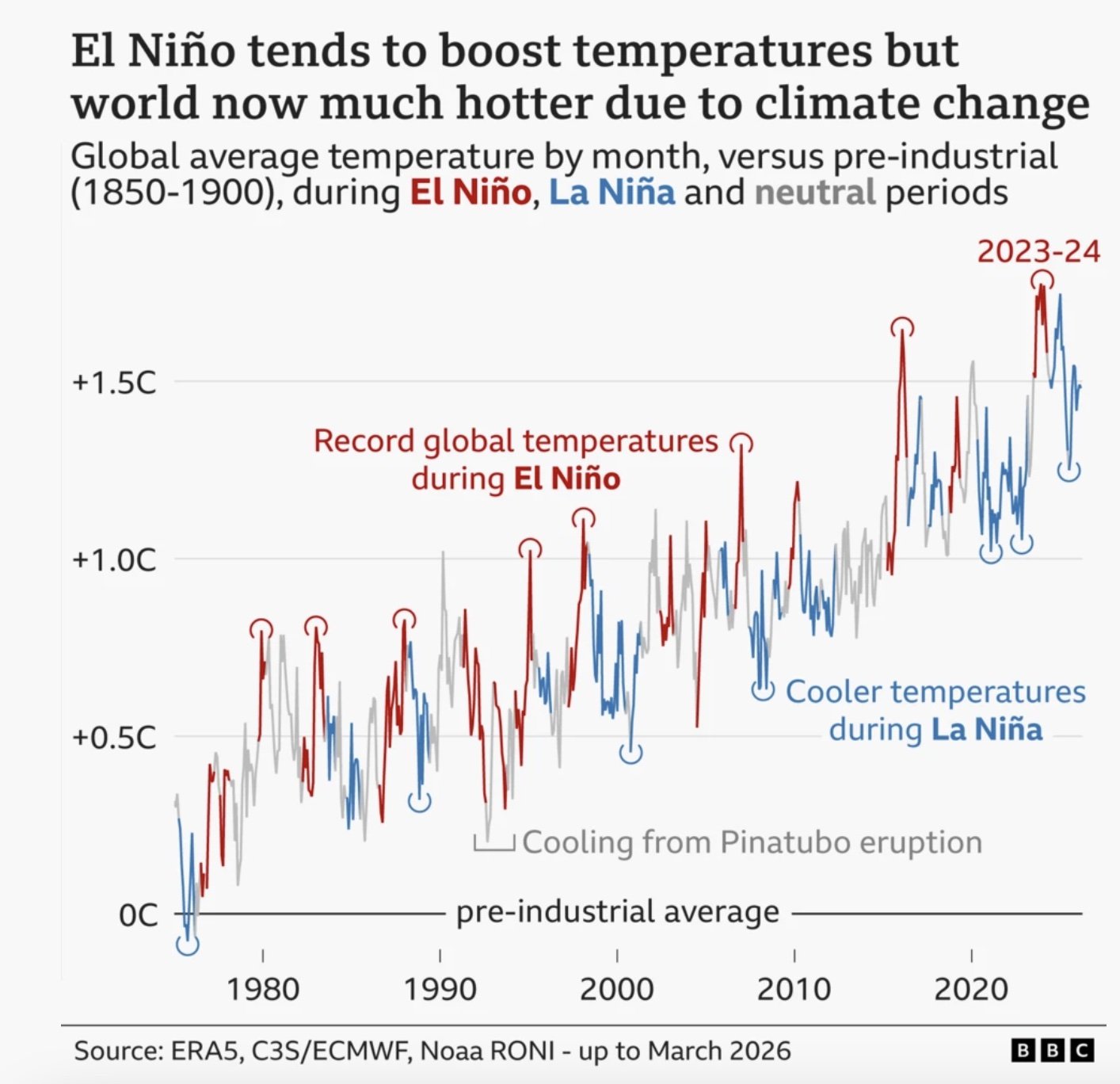
While El Niño is a natural occurrence, its potency is being drastically amplified by anthropogenic climate change. The burning of fossil fuels and mass deforestation have created a baseline of higher global temperatures; when this warming trend meets the El Niño cycle, the result is a compounded climatic event. Consequently, El Niño years are now frequently becoming the hottest years on record.
The consequences of this “double-threat” climate extend far beyond rising thermometers. Food security is perhaps the most urgent casualty. In regions like Guatemala and Honduras, El Niño-driven drought has caused crop failures, dried up vital water wells, and decimated livestock. Because our globalized food supply chain is deeply interconnected, these localized failures ripple across borders. The United Kingdom, for instance, imports 40% of its total food supply, with a significant reliance on Central and South American exports. The UN’s Intergovernmental Panel on Climate Change (IPCC) has warned that without immediate intervention, these heat-stressed regions will continue to suffer lower crop yields and declining nutritional quality, destabilizing international markets.
This environmental fragility is further compounded by geopolitical instability. The “global chokepoint” at the Strait of Hormuz, where trade disruptions have stalled the movement of 30-40% of the world’s fertilizers, has left farmers globally unable to replenish their soil at a time when they are most vulnerable to drought. When political tension restricts essential agricultural resources, the intersection of climate change and supply chain fragility pushes the global food system to a dangerous breaking point.
UN Secretary-General António Guterres recently issued a stern warning: “El Niño conditions will pour fuel on the fire of a warming world. Impacts will hit even harder, travel even farther, and cross borders with devastating speed.”
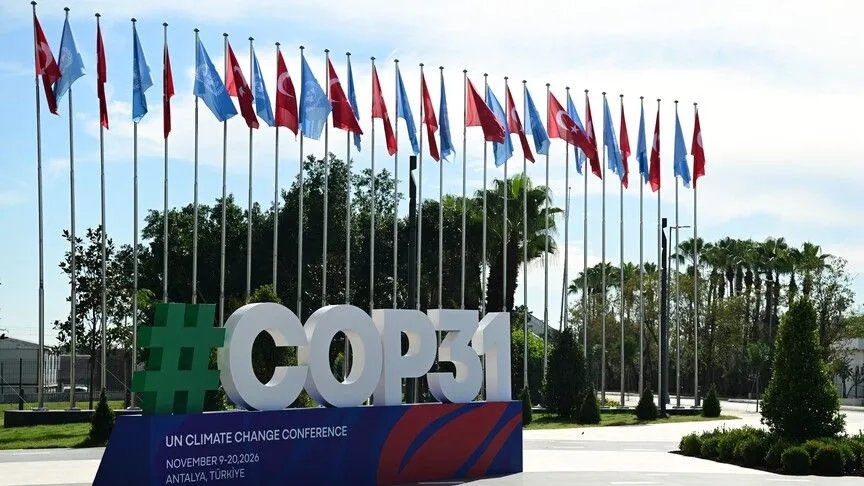
As the global community gathers for COP31 in Antalya, Türkiye, this month, the urgency of these discussions cannot be overstated. While the data remains unnerving, the move toward transparent, fact-based communication is the only viable catalyst for systemic change. The evidence is clear: the climate crisis is no longer a future prospect but an unfolding reality that demands immediate, coordinated intervention.
Disclaimer: This content is auto-generated for informational purposes only.
Source: Read Original News