








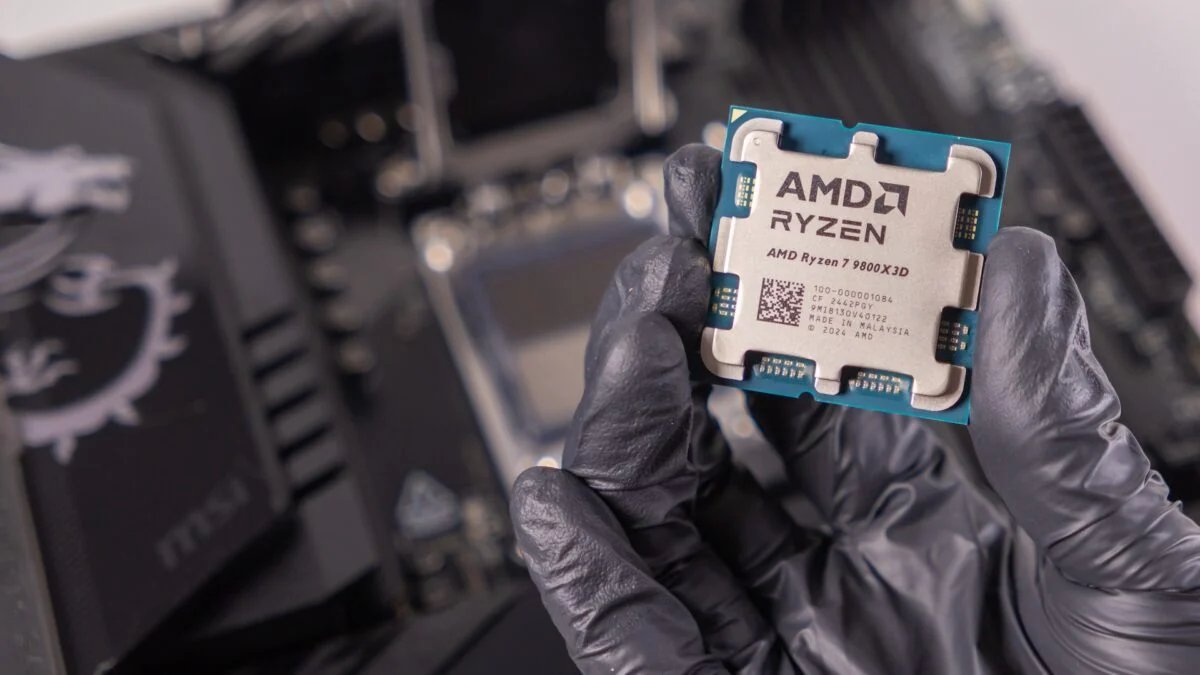
The rapid evolution of desktop computing architectures continues to accelerate, with recent benchmarks and industry leaks pointing toward a significant leap in performance for AMD’s next-generation processors. While current flagship models like the Ryzen 7 9800X3D have set a high bar for gaming efficiency and thermal management, the spotlight has already shifted to the upcoming Zen 6 architecture. This transition promises to move beyond simple clock-speed increases, focusing instead on structural improvements in cache hierarchy, core density, and interconnect bandwidth.
Evolution of the Zen Architecture
The progression from Zen 5 to Zen 6 represents more than a minor iteration; it signifies a fundamental shift in how AMD approaches workload distribution within desktop silicon. Zen 5 introduced refined branch prediction and increased instruction-per-clock (IPC) throughput, which stabilized performance across multi-threaded productivity tasks. Zen 6 is expected to leverage a more mature lithography process—likely an optimized 3nm node—to squeeze additional transistors into the same physical footprint.
By increasing the density of the compute dies, AMD is addressing the primary bottleneck of modern processing: data latency. When data travels between the L3 cache and the compute cores, the speed of light and the physical distance on the silicon become limiting factors. Zen 6 aims to minimize these physical gaps, ensuring that the execution units spend less time waiting for instructions and more time processing them. This architectural refinement is essential for maintaining the performance growth trajectory that users have come to expect from the Ryzen series.
The Role of 3D V-Cache in Future Designs
A defining characteristic of AMD’s dominance in the gaming sector has been its 3D V-Cache technology. By stacking L3 cache directly onto the processor die, AMD has effectively mitigated the need for constant memory access from the system RAM, which is significantly slower than on-chip cache. For the upcoming Zen 6 processors, industry reports suggest that this technology will receive a major overhaul.
Instead of merely increasing the capacity of the cache, the next generation is rumored to focus on lowering the latency of that cache. This is critical for high-frame-rate gaming and real-time simulation applications where micro-stutters are often caused by the processor waiting for memory hits. If Zen 6 successfully integrates a high-capacity, low-latency cache structure, it will create a distinct performance tier that traditional monolithic designs will struggle to match. Furthermore, the heat dissipation issues associated with 3D stacking are being mitigated through advanced packaging materials, allowing these chips to maintain higher boost clocks under sustained load.
Addressing Multi-Threaded Throughput
While gaming performance often headlines the reviews for Ryzen processors, Zen 6 is designed to be a dual-threat performer. The architecture is expected to incorporate a refined SMT (Simultaneous Multithreading) implementation that optimizes how threads are scheduled across cores. In modern desktop environments, users are frequently running background applications—streaming software, browser instances, and productivity suites—alongside intensive primary tasks like video rendering or gaming.
Zen 6 aims to manage these concurrent workloads with improved resource allocation at the hardware level. By enhancing the efficiency of the L2 and L3 cache sharing between cores, the architecture ensures that a heavy background process does not starve the primary application of necessary data. For professional users, this translates to shorter compile times and faster export speeds in creative software. The impact is a more responsive system that maintains high performance regardless of how many background services are demanding CPU cycles.
Socket Longevity and Platform Integration
A key component of the AMD ecosystem is the longevity of its socket interfaces. The transition to the AM5 platform was a significant investment for consumers, and the Zen 6 architecture is widely expected to maintain compatibility with existing AM5 motherboards, potentially requiring only a firmware update. This commitment to platform stability is a major departure from competitors who frequently require new motherboards for each processor generation.
By maintaining socket compatibility, AMD enables a seamless upgrade path for current AM5 users. This strategy reduces the total cost of ownership for enthusiasts and small-business owners who wish to keep their workstations current without performing a complete system rebuild. The integration of PCIe 5.0 lanes and support for high-frequency DDR5 memory remains a cornerstone of this platform, ensuring that the motherboard infrastructure will not act as a bottleneck for the increased data throughput expected from the Zen 6 compute dies.
Future-Proofing the Desktop Ecosystem
Looking ahead, the implementation of Zen 6 marks a pivot toward artificial intelligence and specialized workload acceleration within the CPU. While dedicated GPUs and NPUs handle the bulk of AI inferencing, the central processor plays a vital role in data orchestration. The Zen 6 architecture is anticipated to feature expanded instruction sets specifically designed to handle AI-driven background tasks, such as noise suppression, real-time video upscaling, and predictive system maintenance.
These features will likely be integrated into the operating system level, allowing the CPU to offload tasks that would otherwise consume system memory or auxiliary bandwidth. By embedding these capabilities directly into the silicon, AMD is ensuring that desktop systems remain relevant in an era increasingly defined by machine learning. The result is a desktop processor that is not just faster in raw benchmarks, but smarter in its resource management. As we move closer to an official release, the combination of architectural density, optimized caching, and platform stability positions Zen 6 to redefine the standard for high-performance desktop computing, providing users with the durability and power required for both current and future digital demands.
Disclaimer: This content is auto-generated for informational purposes only.
Source: Read Original News