







Toxic Haze Persists: No Rain Relief in Sight for North India
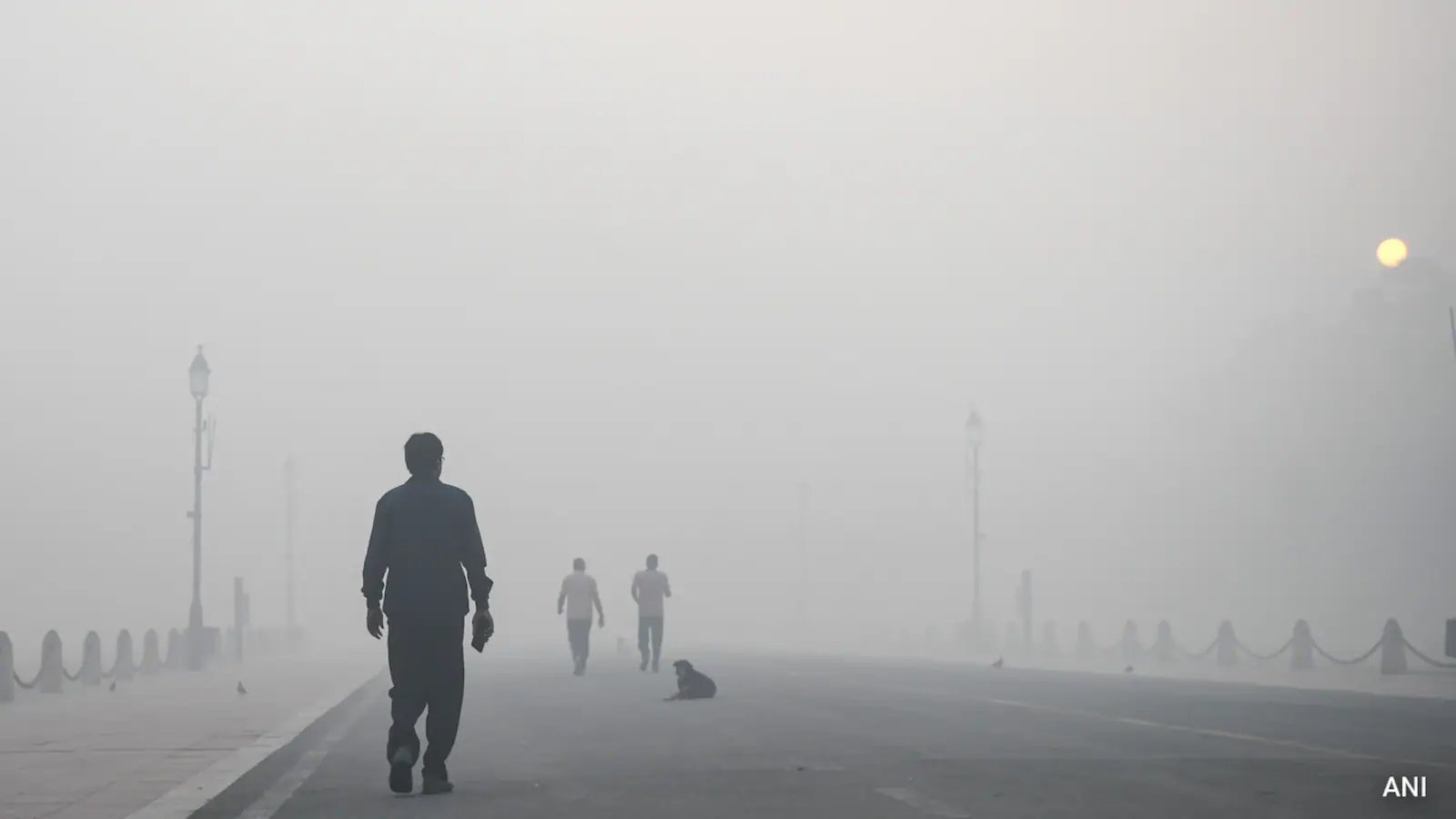
New Delhi: A thick, toxic shroud of smog continues to blanket the northern plains, leaving millions of residents in states across the Indo-Gangetic belt gasping for air. As pollution levels persistently hover in the “severe” and “very poor” categories, the public’s collective hope for a cleansing spell of rain has been dashed by the India Meteorological Department (IMD).
Meteorological experts have confirmed that the prevailing weather patterns offer no immediate respite for the national capital and its surrounding regions. While the Himalayan belt—specifically Jammu and Kashmir, Himachal Pradesh, and Uttarakhand—is bracing for precipitation, the plains are expected to remain dry, leaving the pollutants trapped near the surface.
Western Disturbance Fails to Deliver
The primary hope for clearing the air had been an incoming Western Disturbance, a weather system originating from the Mediterranean. However, IMD Chief Dr. Mrutyunjay Mohapatra clarified that this system lacks the moisture-laden strength required to trigger widespread rainfall across the plains.
“While there will be increased cloud cover in Delhi on November 12 and 13, it will not translate into the meaningful precipitation needed to wash away the noxious haze,” Dr. Mohapatra told the media. He warned that the presence of clouds without actual rainfall could potentially worsen the situation by further trapping pollutants under a low-hanging atmospheric lid.
Cloud-Seeding Prospects Dim
With natural rainfall unlikely, the Delhi government and researchers from the Indian Institute of Technology (IIT) Kanpur have been exploring artificial rain through cloud-seeding. However, meteorologists remain skeptical about the efficacy of such an operation under current conditions.
Dr. Mohapatra explained that successful cloud-seeding is highly dependent on the availability of specific types of moisture-heavy convective clouds. The expected cloud formations over the region are primarily medium and high-level clouds, which are fundamentally unsuitable for the process. Attempting cloud-seeding under these conditions, he noted, would likely result in poor yields, rendering the expensive operation ineffective against the overwhelming scale of the pollution.
A Distant Hope: Bay of Bengal Cyclone
As the north remains locked in a cycle of calm winds and stable, pollution-trapping temperatures, meteorologists are turning their gaze toward the Bay of Bengal. A deep depression is projected to develop around November 15 or 16, with the potential to intensify into a cyclonic storm.
While the storm’s trajectory remains uncertain, with some models pointing toward Andhra Pradesh and others toward Bangladesh, experts are monitoring it for a secondary effect. Should the system track toward Bangladesh and occupy a more northerly position, it could bolster north-westerly winds across the Indo-Gangetic plains.
“Stronger winds are the only natural mechanism that could effectively disperse the pollutants,” Dr. Mohapatra noted. Until such a weather shift occurs, the region is set to remain under a stifling blanket of stagnant, hazardous air, as current wind speeds are too weak to provide any atmospheric relief.
Disclaimer: This content is auto-generated for informational purposes only.
Source: Read Original News