








Nabu Casa, the commercial entity behind the Open Home Foundation and the popular Home Assistant platform, has released the Home Assistant Connect Aux-2. This compact, versatile hardware bridge is designed to integrate non-smart or legacy devices into a modern smart home ecosystem. Priced at $69, the device aims to reduce the technical barriers that often discourage users from fully adopting Home Assistant.
Hardware Specifications and Connectivity
The Aux-2 is a small, unobtrusive device roughly the size of a standard deck of cards. Despite its modest footprint, it is packed with a wide array of connectivity standards to accommodate diverse home setups. The device features 2.4GHz Wi-Fi, Bluetooth, and Ethernet—the latter of which supports Power over Ethernet (PoE) for simplified installation.
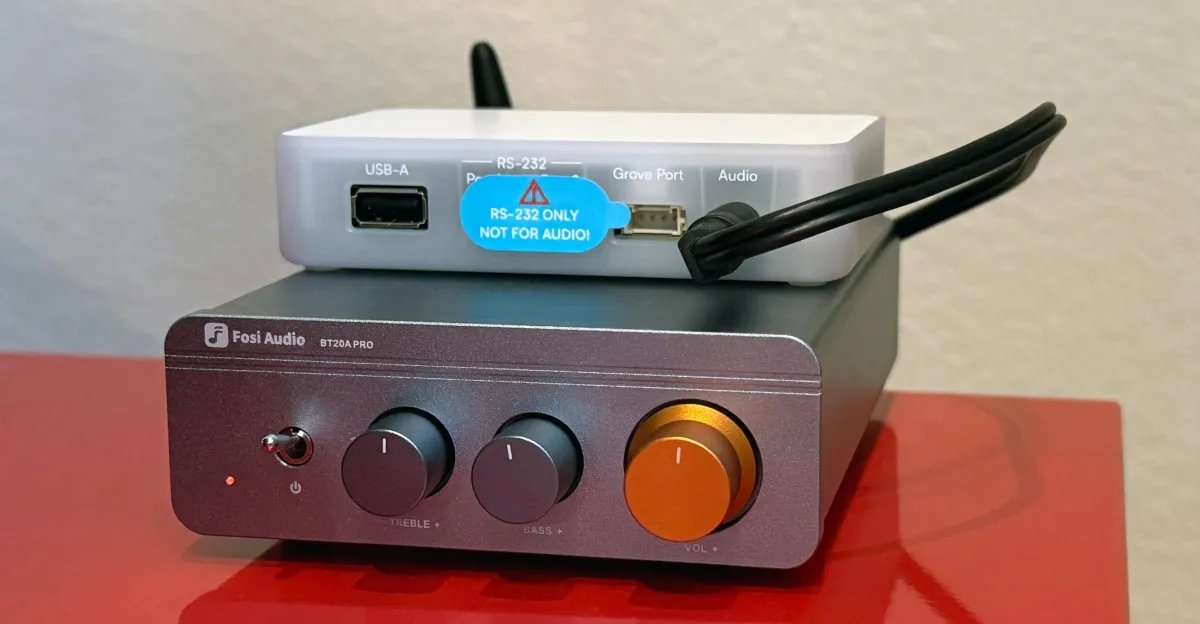
Physical connectivity includes a USB-A port for attaching additional hardware, such as Z-Wave or Zigbee antennas, and a USB-C port for power. A standout feature is the inclusion of a Grove port, which allows users to directly interface with various peripherals like sensors, buttons, and LEDs without complex wiring. Furthermore, the unit includes a digital/analog audio jack for sound output and two RS-232 serial ports, which are essential for controlling older electronic equipment like AV receivers, specialized lighting, or industrial-grade hardware.
Bridging Legacy Equipment to Modern Automation
The primary utility of the Aux-2 lies in its function as a bridge. For users with fragmented smart home setups—relying on disparate systems like Google Home or Apple Home—this device acts as a centralizing point. By plugging into the Aux-2, previously “dumb” devices, such as older garage appliances or legacy stereo systems, gain the ability to communicate with the broader Home Assistant network.
The device leverages ESPHome, an open-source platform designed for configuring custom smart devices using ESP boards. By utilizing pre-existing Home Assistant and ESPHome integrations, the Aux-2 simplifies tasks such as Bluetooth proxying, which allows long-range connectivity for Bluetooth sensors that would otherwise struggle to reach the main hub. For audio, the device works in tandem with Music Assistant and SendSpin, enabling users to stream music to non-networked audio equipment.
Streamlined Setup and User Experience
While Home Assistant is often noted for its steep learning curve, the Aux-2 is engineered to lower that entry bar. The initial configuration is straightforward: users connect the device via USB-C to a computer to install the latest firmware and input Wi-Fi credentials. Once configured, the device is managed directly through the Home Assistant interface.
The setup wizard within the platform automatically discovers the Aux-2 and guides the user through the installation of necessary integrations. For instance, enabling Bluetooth proxying requires only a few clicks, after which compatible sensors are recognized by the system automatically. This ease of use extends to more complex tasks, such as configuring multi-room audio, which can be completed within half an hour for those familiar with basic Home Assistant menus.
Applications and Use-Cases
The practical applications for the Aux-2 are vast. For a user dealing with connection drops in a garage-based refrigerator sensor, the device acts as a robust signal extender, ensuring that temperature data remains consistent regardless of physical obstacles like walls or insulation.
For media enthusiasts, the device addresses the “analysis paralysis” often associated with upgrading home audio. Rather than purchasing a new proprietary amplifier, a user can connect a modest amplifier to the Aux-2’s audio output to create a network-connected speaker system. The inclusion of RS-232 ports also opens doors for advanced hobbyists to exert granular control over televisions, solar inverters, and other high-end appliances that are typically difficult to integrate into modern automation routines.
The Philosophy of an Open Ecosystem
The Aux-2 serves as a testament to the open-source philosophy championed by the Open Home Foundation. While the hardware is sold as a pre-packaged, polished product, it is fundamentally built upon the same principles as the DIY hardware movement. The creators acknowledge that technically proficient users could build a similar bridge using individual ESP32 boards and custom-sourced accessories.
However, the Aux-2 provides a turnkey solution that balances convenience with the flexibility of an open ecosystem. By offering an accessible, ready-to-use device, Nabu Casa is not replacing DIY innovation but rather enabling it for a broader audience. The device acts as a gateway for those who may have been intimidated by breadboards and complex soldering but are eager to explore the capabilities of custom automation.
Impact on the Smart Home Market
The introduction of the Aux-2 marks a shift toward more inclusive smart home hardware. As the industry moves toward interoperability standards, tools that bridge the gap between proprietary platforms and legacy hardware become increasingly valuable. The Aux-2 does not aim to lock users into a specific vendor ecosystem; instead, it provides the connective tissue required to make existing devices work better together.
For the average consumer who has accumulated a variety of disconnected appliances over the years, the Aux-2 offers a pathway to unify these items under a single, manageable interface. By facilitating the transition from disparate systems to a cohesive home automation environment, Nabu Casa is helping to solve one of the most persistent frustrations in the smart home space: the lack of seamless integration between old and new technology.
Disclaimer: This content is auto-generated for informational purposes only.
Source: Read Original News