






Expanding the Horizon of Legacy Gaming on PC
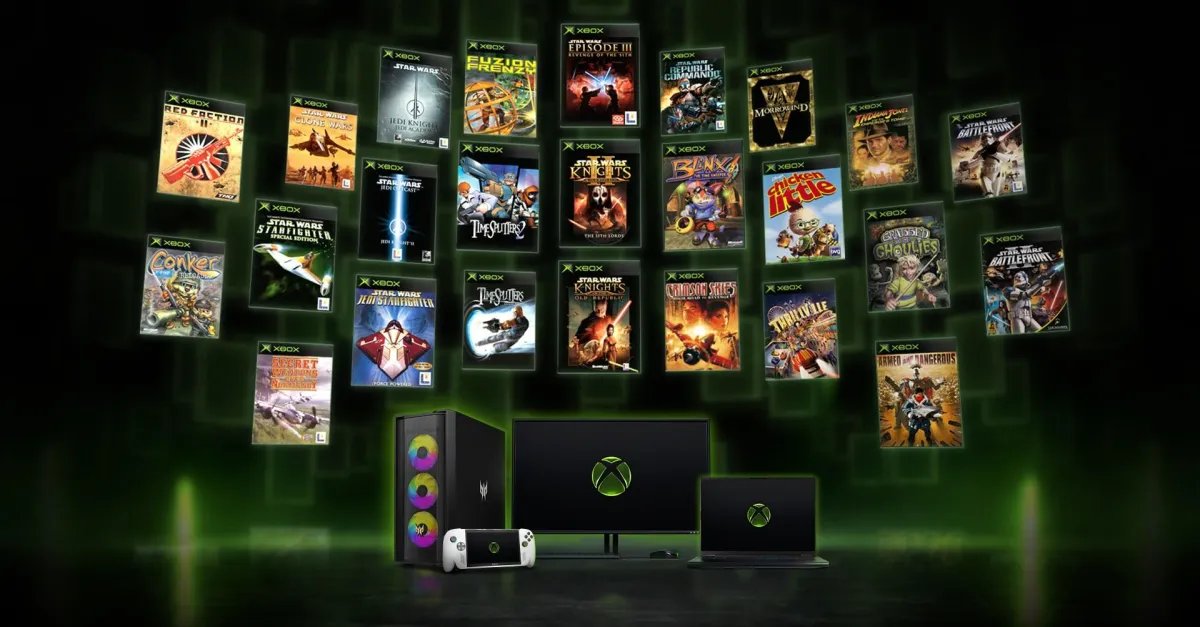
Microsoft continues its aggressive push to bridge the gap between historical gaming libraries and modern hardware, recently announcing a significant expansion of its backward compatibility initiative for Windows PCs. Having debuted the program in July with a foundational list of just four titles, the company has officially scaled the catalog to 25 playable games. This development marks a concerted effort to standardize the availability of classic Xbox titles on the PC platform, ensuring that these games are not only accessible but also optimized for contemporary input methods.
A notable technical enhancement accompanying this expansion is the full integration of keyboard and mouse support for all 25 titles. For many original Xbox games, which were exclusively designed with the ergonomics of a controller in mind, this transition requires careful mapping and sensitivity adjustments. By implementing native support for these inputs, Microsoft allows PC users to experience classic gameplay with the precision and customization typically reserved for modern titles. This update highlights a commitment to platform fluidity, ensuring that legacy software does not feel artificially constrained by the hardware limitations of the early 2000s.
Introducing Achievements to the Original Xbox Library
One of the most requested features for legacy software has finally arrived: the integration of an achievement system for original Xbox games. Historically, the original Xbox console preceded the introduction of the Achievement system, which became a staple of the Xbox 360 era. Microsoft is now retrofitting this infrastructure into its emulation layer, allowing players to earn digital accolades while revisiting iconic titles.
The rollout begins with four key titles: Star Wars: Knights of the Old Republic, Star Wars: Knights of the Old Republic II: The Sith Lords, Blinx: The Time Sweeper, and Conker: Live and Reloaded. This implementation is not limited to the PC environment; players can unlock these achievements on Xbox One and Xbox Series consoles following the latest system update. The introduction of this meta-progression layer provides a renewed incentive for long-term fans to return to these titles, effectively modernizing the experience of playing decades-old software. Microsoft has indicated that this feature will expand to include more games in future updates, suggesting a broader roadmap for catalog integration.
Technical Architecture and Emulation Protocols
The engine powering this backward compatibility on PC appears to be a sophisticated emulation layer. Because the original Xbox hardware architecture differs significantly from modern x86-based PC processors, Microsoft has developed a specialized emulator capable of translating the original game code in real-time. This approach avoids the need for developers to rewrite the underlying game engine, which would be a labor-intensive and costly process for titles that are often over 20 years old.
It is important for users to note that this digital initiative functions independently of physical media. Due to the way original Xbox and Xbox 360 discs were manufactured, they lack the unique digital signatures embedded into modern Xbox One and Series discs. Consequently, the program does not support the use of legacy discs; users must own the digital versions of these games. This serves as a reminder that while the library is expanding, it is strictly governed by the digital storefront ecosystem. By keeping the initiative digital-first, Microsoft maintains control over the emulation parameters, ensuring that the performance remains consistent across various PC hardware configurations.
Strategic Impact and Game Pass Integration
The current list of 25 games includes a heavy emphasis on the Star Wars franchise, reflecting the enduring popularity of these titles. Many of these games already existed in some capacity on the PC, but their inclusion in this specific program grants them the benefits of the new emulation framework, including unified support for modern controllers and high-resolution scaling.
However, the intersection of this initiative and the Xbox Game Pass subscription remains selective. Of the 25 titles currently available, only a subset—including Blinx, Conker, Crimson Skies, Fusion Frenzy, Morrowind, and Grabbed by the Ghoulies—is currently included in the Game Pass library. For the remainder of the titles, players must acquire the games individually. This highlights a clear strategy: Microsoft is positioning its backward compatibility project as a service for historical preservation rather than solely as a component of its subscription model. For collectors and enthusiasts, this provides a pathway to modernize their digital libraries, while for the average subscriber, it serves as a supplement to the broader Game Pass offerings.
Looking Toward the Future of Digital Preservation
The growth of this program from four games to 25 within a few months suggests a scalable process for title conversion. By tackling the technical hurdles of keyboard and mouse mapping and the complex integration of modern achievement tracking, Microsoft has established a template for how legacy software should be handled in the current generation. The success of this initiative could influence how the industry views the longevity of gaming software, moving away from a model of abandonment toward one of continuous support.
As the program matures, the expectation is that the library will continue to grow, encompassing a wider variety of cult classics and genre-defining titles. For PC gamers, this represents the consolidation of a massive, previously siloed library into a single, accessible environment. By leveraging the power of modern emulation, Microsoft is successfully proving that hardware age does not need to be a barrier to software accessibility, provided the right technical framework is in place to bridge the generations.
Disclaimer: This content is auto-generated for informational purposes only.
Source: Read Original News