









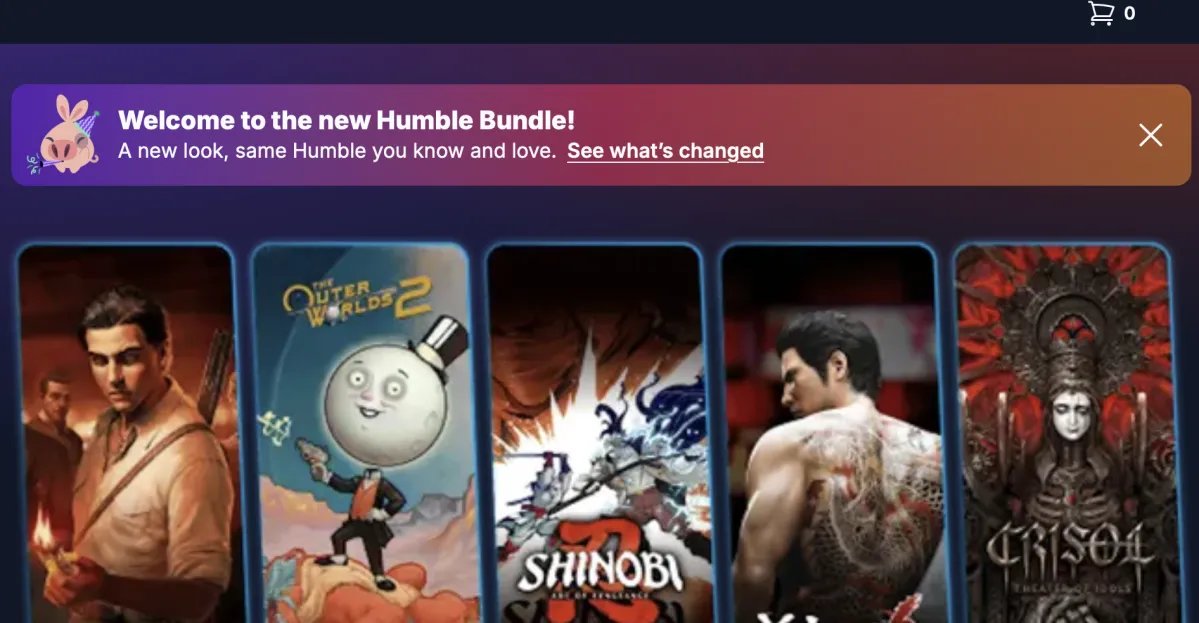
The Redesign Dilemma: Humble Bundle Interface Changes
Humble Bundle, a platform long celebrated for its distribution of digital games, software, and charitable initiatives, recently launched a comprehensive redesign of its digital storefront. While the visual overhaul aims to modernize the user experience, it has introduced significant friction regarding account management and platform security. Users navigating the new interface have discovered that the dedicated settings menus for managing Two-Factor Authentication (2FA) have been obscured or entirely removed.
For a platform that serves as a central repository for extensive digital libraries, security is not a tertiary concern; it is a fundamental pillar of the service. When users purchase software keys and manage personal account data, they operate under the assumption that the platform maintains rigorous security standards. The recent update, which appears to have prioritized aesthetic consistency over functional account security, has created a discrepancy between legacy security protocols and the current user dashboard.
Understanding the Current Security State
Analysis of the updated platform reveals a fragmented approach to identity verification. Historically, Humble Bundle provided robust mechanisms for securing accounts, including the utilization of Time-based One-Time Password (TOTP) applications—the standard for secure authentication. Current testing indicates that while a form of identity verification exists, it has shifted primarily toward email-based verification codes.
When logging into the redesigned environment, users are prompted to retrieve a numerical code sent to their registered email address. This method serves as a primary gatekeeper, but it lacks the depth of traditional multi-factor authentication (MFA). Email-based codes are inherently tied to the security of the user’s mail provider. If an email account is compromised, the reliance on a single verification channel becomes a critical point of failure. Furthermore, the absence of an interface to manage or view established TOTP tokens suggests that the platform may no longer be actively polling these secondary security layers during the login sequence.
Critical Vulnerabilities in Account Management
Beyond the ambiguity of the login process, deeper concerns have emerged regarding the security of the account settings themselves. Investigations into the new dashboard have highlighted a flaw: users can initiate a password change without the mandatory verification of their current, existing password. In standard web security architectures, requiring the current password is a baseline requirement to prevent unauthorized changes in the event that an active session is left unattended on a public or shared device.
By bypassing this step, the platform significantly lowers the barrier for an intruder to hijack an account. If a user leaves their browser session active, a secondary actor could navigate to the settings, update the account password, and effectively lock the legitimate owner out of their library of games and personal software licenses. This oversight, when coupled with the disappearance of robust MFA management, represents a substantial regression in the platform’s security posture.
The Role of Multi-Factor Authentication
Multi-factor authentication is defined by the integration of two or more independent credentials: something you know (a password), something you have (a smartphone or hardware token), and something you are (biometrics). By removing the ability to easily manage or enable app-based TOTP verification, Humble Bundle has moved away from the “something you have” layer of protection.
In the modern threat landscape, credential stuffing and phishing attacks are rampant. When a service limits its security to an email-based code, it ignores the reality that many users employ the same password across multiple services. If a database leak elsewhere exposes a user’s Humble Bundle credentials, the lack of an active TOTP requirement means that a malicious actor only needs access to the user’s email—which is often the most vulnerable point of a digital identity—to gain full administrative control.
Platform Responsibility and Future Remediation
The responsibility for maintaining digital infrastructure lies heavily with the service provider. As a subsidiary of Ziff Davis, Humble Bundle carries the burden of industry-standard security compliance. The current outcry from the user base regarding these changes underscores the necessity for transparent communication regarding security roadmaps. Whether the disappearance of these features is a result of a phased deployment or a permanent restructuring of the platform’s backend, users deserve clear documentation on how to secure their assets.
In technical terms, the platform must prioritize re-implementing a dedicated dashboard for authentication tokens. Security should never be sacrificed for the sake of a streamlined storefront design. Moving forward, the focus must shift toward restoring granular control over security settings, including the re-integration of authenticator app support, to ensure that users can effectively defend their accounts against unauthorized access.
Recommendations for Users
Until an official update addresses these gaps, users should remain vigilant. If you have an active account, navigate to your security settings and audit your current password. While the platform currently restricts your ability to manage 2FA, ensure that the email account associated with your Humble Bundle profile is secured with its own robust, non-SMS-based MFA.
If the platform continues to operate without formal support for hardware or app-based 2FA, the risk profile of maintaining a large digital library on the storefront increases. Users are advised to monitor their account activity closely and verify if the platform eventually reinstates the legacy settings menus. As technology providers continue to iterate on their visual designs, the user community must remain an active participant in demanding that security remains a foundational requirement, rather than an optional component of the digital experience.
Disclaimer: This content is auto-generated for informational purposes only.
Source: Read Original News