





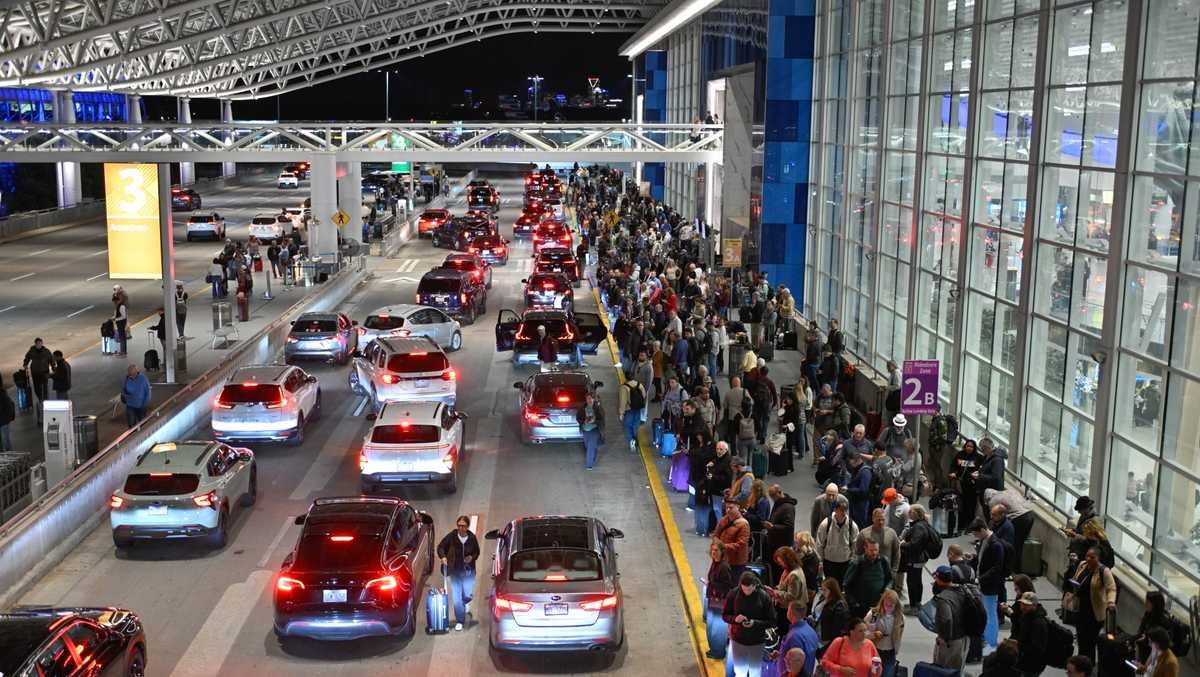
A massive technical failure in the nation’s air traffic control system triggered the longest nationwide ground stop in 25 years on Friday, grounding thousands of flights and leaving more than a million travelers stranded. The Federal Aviation Administration (FAA) halt, which lasted five hours, was sparked when the installation of new technology overwhelmed the agency’s antiquated infrastructure, causing intermittent communication gaps and radar instability.
The ground stop, the first of its scale since January 2023, was lifted Friday night. However, federal officials cautioned that the recovery process will be slow. Transportation Secretary Sean Duffy warned that while the system is slowly returning to capacity, the massive displacement of planes and crews means it could take days for airline operations to fully normalize. Officials remain optimistic that the system will be stabilized in time for the upcoming Thanksgiving travel rush.
Homeland Security Secretary Markwayne Mullin held a press briefing at the White House to assure the public that the incident was “mechanically driven” and that no passengers were in danger. Of the 3,500 airplanes in the sky at the time of the stop, all were landed safely. Mullin explicitly ruled out a cyberattack, stating that investigators have found no “footprints” of malicious activity. Both the federal government and Microsoft have also dismissed rumors circulating online that the aviation crisis was linked to a significant Microsoft Outlook outage that occurred a day earlier.
The logistical fallout was immense. Aviation analytics firm Cirium reported that at least 827 flights were diverted, with 670 forced to return to their origin airports. Major hubs, including Washington Dulles, Los Angeles International, and Chicago O’Hare, became scenes of frustration and confusion as passengers dealt with sudden cancellations.
At Chicago O’Hare, travelers were left to navigate an information vacuum. Amber McQuilkin, a software engineer from Seattle traveling to New York, expressed her frustration over the lack of communication as she weighed the prospect of abandoning her trip. Similarly, families and travelers were forced to scramble for hotel accommodations as airlines struggled to manage the backlog.
The disruption extended to the professional sports world, leaving numerous NBA, NHL, and college teams stranded. Secretary Duffy noted that the FAA is prioritizing collegiate teams to ensure they can reach their destinations in time for Saturday’s games. Cargo operations were also impacted, with logistics giant FedEx activating contingency plans to mitigate delays in the movement of goods.
While the incident is similar to past regional outages caused by equipment failures, aviation experts noted that the nationwide scope made this event uniquely severe. “If you don’t have the ability to communicate with pilots, you’ve got to stop airplanes on the ground,” said former pilot and safety expert Steve Arroyo.
As the aviation industry works to clear the backlog, officials are left to address the underlying vulnerability of the aging technology that underpins the U.S. airspace.
Disclaimer: This content is auto-generated for informational purposes only.
Source: Read Original News