







Evolution of Ergonomic Input: The Keychron T1 HE
The evolution of computer peripherals has seen a resurgence in trackball technology, driven by a growing professional demand for devices that prioritize long-term wrist health and desktop efficiency. Keychron, a manufacturer primarily recognized for its mechanical keyboards, has officially expanded its hardware lineup with the T1 HE Wireless Adjustable Trackball Mouse. This release follows the Nape Pro, the company’s first foray into trackball design, which focused on a slim, compact form factor intended to sit flush against keyboards.
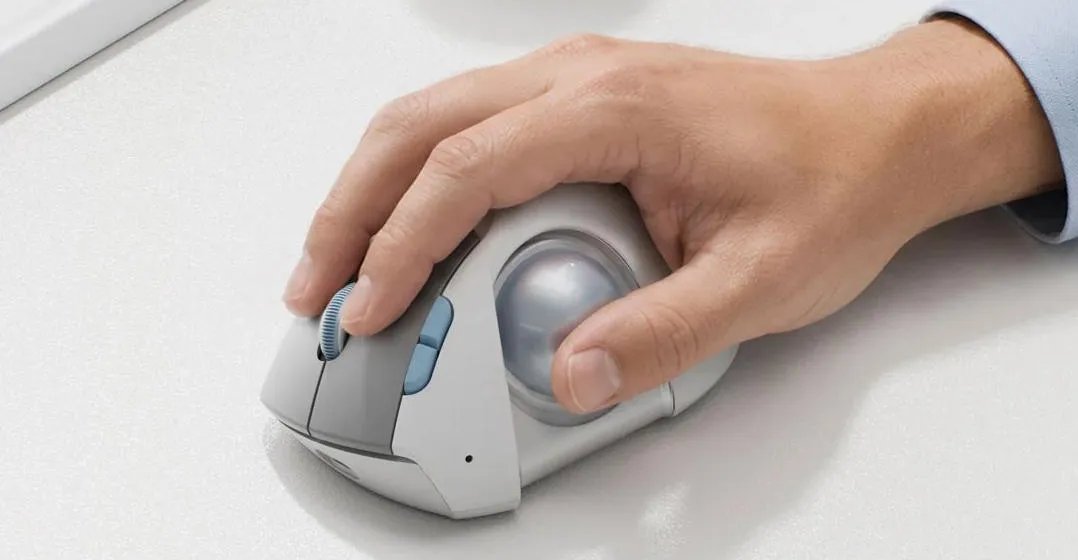
The T1 HE shifts the paradigm toward a more traditional ergonomic shape similar to established offerings from Logitech and Kensington. However, it distinguishes itself through a mechanical innovation that addresses a persistent flaw in static ergonomic design: the lack of anatomical variance. By integrating an adjustable trackball module, Keychron aims to provide a tailored experience that accommodates the physiological differences in user hand and finger sizes.
Precision Engineering for Thumb Alignment
The primary innovation of the T1 HE lies in its mechanical adjustability. Typical thumb-operated trackballs are manufactured with a fixed geometry, forcing users to adapt their hand posture to the device. If the trackball is positioned too far forward or backward, the user must engage in repetitive reaching or awkward thumb extension, which can lead to fatigue over extended periods of professional use.
Keychron has engineered the T1 HE with two adjustment dials located on the underside of the chassis. These controls allow for the fine-tuning of the trackball module’s vertical and horizontal alignment. While the range of movement is limited to a few millimeters, this specific level of granular control ensures the trackball sits precisely under the user’s thumb joint, maintaining a neutral wrist alignment regardless of hand size. This feature effectively minimizes strain and ensures that the user’s thumb stays within a natural range of motion, potentially mitigating the risk of repetitive stress injuries associated with daily, high-volume mouse usage.
Sensor Performance and Software Integration
Beyond its physical configuration, the T1 HE integrates a high-performance optical sensor designed for precision navigation. The device supports a wide sensitivity range, adjustable from 100 DPI to 2,400 DPI. Users can manage this sensitivity via a physical cycle button on the mouse or through the Keychron Launcher web-based software. This software suite serves as the central hub for the device, enabling deep customization of the user experience.
The integration of the Keychron Launcher allows for button remapping and the programming of complex macros across the mouse’s six customizable buttons. This level of programmability is particularly beneficial for professionals in creative fields or technical sectors who rely on specific shortcuts within software applications. By offloading frequently used functions to the trackball’s programmable buttons, users can maintain a more efficient workflow without frequently moving their hand between the mouse and the keyboard.
Wireless Connectivity and Power Management
In modern work environments, the demand for cable-free workstations is high. The T1 HE satisfies this requirement through dual-mode wireless connectivity, offering both Bluetooth and a high-speed 2.4GHz wireless receiver. The 2.4GHz connection is intended to provide a more stable, low-latency experience suitable for tasks requiring high precision, while Bluetooth serves as a power-efficient solution for multi-device setups.
The internal power system is anchored by a 600mAh lithium-polymer battery. According to manufacturer specifications, the device provides approximately 106 hours of operation when using Bluetooth, and roughly 98 hours when utilizing the 2.4GHz receiver. Recognizing that battery degradation or the requirement for continuous uptime is a concern for many power users, the T1 HE also functions as a wired peripheral. By connecting the mouse via a USB-C cable, users can bypass battery limitations entirely, allowing the device to draw power directly from the host computer while simultaneously maintaining a data connection.
Impact on Ergonomic Workspaces
The introduction of the T1 HE represents a shift toward more inclusive ergonomic design. The device is currently available for preorder in three colorways: black, white, and a translucent housing option that reveals the internal structure of the device. Shipping is scheduled to commence in early December, targeting the late-year upgrade cycle for office and home-office equipment.
For professionals who experience discomfort with traditional mice or standard fixed-position trackballs, the T1 HE provides a viable alternative that does not sacrifice the functionality expected of modern peripherals. The combination of adjustable physical ergonomics and sophisticated software-level customization positions the T1 HE as a robust tool for long-duration computing. As workspace health becomes a higher priority for both individual users and corporate procurement, devices that offer specific, mechanical adjustments for anatomical fit will likely become the standard for the next generation of input peripherals.
Disclaimer: This content is auto-generated for informational purposes only.
Source: Read Original News