








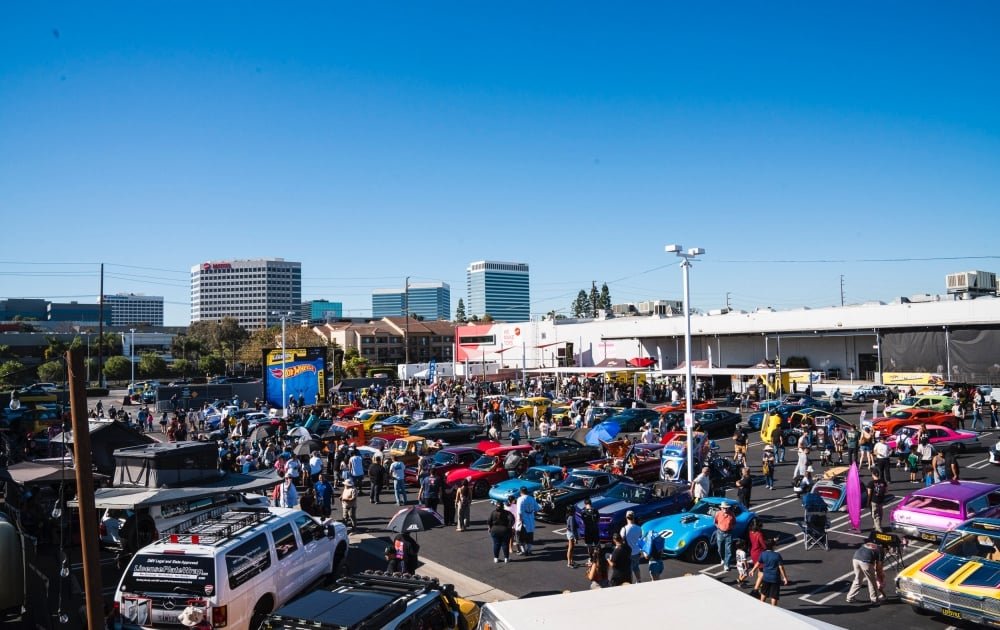
The Intersection of Engineering and Miniature Artistry
The Hot Wheels Legends Tour has long served as more than just a promotional circuit for a toy manufacturer; it functions as a global stage for automotive engineering innovation. Each year, the competition invites builders to submit customized vehicles that undergo rigorous evaluation based on three primary criteria: authenticity, creativity, and the legendary “garage spirit.” While the ultimate reward for the winner is the inclusion of their vehicle in the Hot Wheels die-cast collection, the process demands a level of technical rigor that often rivals professional custom car shops.
At its core, the competition highlights the transition from conceptual design to mechanical realization. Builders must navigate complex fabrication challenges, such as custom chassis modification, engine swaps, and structural integrity assessments, all while maintaining a aesthetic that translates effectively to a 1:64 scale model. This synthesis of artistry and mechanical engineering pushes participants to employ advanced metalworking techniques, 3D printing for prototyping parts, and sophisticated suspension tuning to ensure their builds are not just static display pieces, but functional, road-worthy machines.
Technical Challenges in Scale Translation
The transition from a full-scale vehicle to a miniature model presents a unique set of technical hurdles. When the Hot Wheels design team selects a winner, they must ensure the vehicle’s defining features remain recognizable when shrunk down by a factor of 64. This requires builders to emphasize distinct silhouettes and high-contrast design elements. If a custom car features overly complex, fragile, or non-functional geometry, it may struggle to survive the rigorous manufacturing process involving zinc die-casting.
Participants who successfully navigate this competition often employ high-end CAD software to refine their bodywork before cutting a single piece of steel. This digital-to-physical workflow allows builders to test proportions and anticipate how light will reflect off curves or sharp body lines. By utilizing laser scanning and virtual simulation, contestants can verify that their custom frames will support the weight of the engine while maintaining the ground clearance necessary for the aesthetic profile required by the judges. This marriage of high-tech design software with traditional welding and machining is the hallmark of the modern hobbyist-turned-engineer.
Materials Science and the Garage Spirit
The term “garage spirit” is frequently cited in the Hot Wheels Legends Tour, but it encompasses a sophisticated approach to resource management and material science. Unlike professional factory teams, these builders often work with limited budgets and salvaged components. This limitation forces ingenuity. For example, a builder might repurpose the steering rack from an obscure import vehicle, adapt an engine block from a different era, or fabricate custom engine mounts from aircraft-grade aluminum to ensure durability.
These projects frequently serve as a sandbox for experimental engineering. Builders often explore new welding techniques for exotic alloys or integrate bespoke electronics to manage fuel injection systems in custom-built powertrains. This persistent experimentation creates a ripple effect throughout the automotive community. Solutions developed for a competition car often find their way into mainstream restoration practices or performance tuning, demonstrating that the most innovative engineering often occurs in private workspaces rather than corporate laboratories.
The Global Impact on Automotive Culture
The reach of this competition has expanded significantly, now encompassing events across multiple continents. This geographic diversity has led to a fascinating cross-pollination of automotive design languages. Builders in North America might emphasize high-horsepower muscle car modification, while European competitors often prioritize track-focused weight reduction and handling dynamics. Meanwhile, entrants from Asia frequently showcase extreme aesthetic modifications inspired by drift culture and high-concept fabrication.
By bringing these distinct engineering philosophies together, the tour creates a global dialogue on vehicle design. Younger generations are exposed to advanced mechanical concepts, while seasoned veterans are introduced to modern materials and 3D-modeling techniques that they may have previously overlooked. The resulting ecosystem fosters an environment of mutual learning where the primary objective is not only the trophy, but the validation of complex engineering solutions presented to a global audience of peers and industry professionals.
Prototyping and the Future of Fabrication
Looking ahead, the Hot Wheels Legends Tour is becoming a primary driver for the democratization of automotive fabrication tools. With the increasing affordability of 3D scanners, CNC mills, and home-based laser cutters, the barrier to entry for high-level customization is lower than ever. Many participants are now documenting their build processes with a level of transparency that functions as an educational resource for the next generation of engineers.
The impact of these technological shifts is clear: the machines entering the competition are becoming more refined and mechanically complex each year. As builders adopt more sophisticated prototyping cycles, the time from conceptual sketch to finished vehicle is shrinking, allowing for more ambitious projects to come to fruition. The tour effectively serves as a barometer for the state of custom automotive engineering, showing that as technology advances, the human capacity for creativity remains the most critical component of the assembly process. By encouraging this blend of historical appreciation and technical advancement, the program ensures that the art of the custom car remains a relevant and evolving pursuit.
Disclaimer: This content is auto-generated for informational purposes only.
Source: Read Original News