









The Mechanics of Deceptive Pace and Delivery
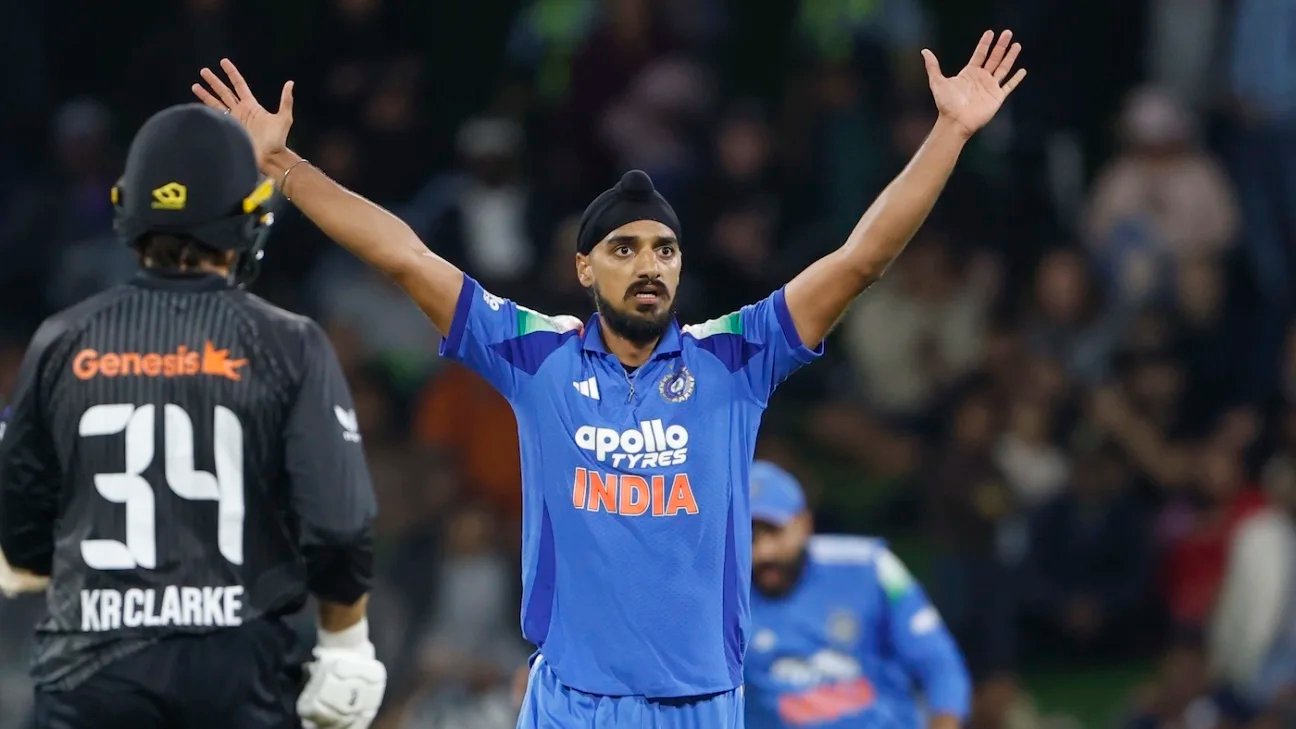
In the realm of professional cricket, performance analysis has shifted from subjective observation to data-driven dissection. Recent data from the India-New Zealand ODI series highlights a significant tactical evolution in the repertoire of Indian pacer Arshdeep Singh. Traditionally recognized for his proficiency with the new ball and precise yorkers, Singh has successfully integrated the short ball as a primary offensive weapon.
The technical efficacy of Singh’s short-pitched deliveries lies in his unique delivery biomechanics. Unlike bowlers who rely on a high-leaping gather to generate momentum, Singh utilizes a rapid, condensed action that minimizes the window for the batter to adjust. This creates a cognitive dissonance for the hitter; because the preparation phase is compressed, batters often struggle to distinguish between a full-length delivery and a bouncer until the ball is already in flight. This specific lack of pre-delivery cues, often described as a “quick action,” forces batters to remain stationary or commit too early, leading to misjudged hook shots and defensive errors.
Data-Driven Tactical Shifts in Modern Cricket
Analytical tracking reveals the extent of this shift. Across the five-match series, 57 wickets were claimed by fast bowlers, with 31 resulting from short or short-of-good-length deliveries. Singh’s frequency of utilizing this length was notable, accounting for 47.30% of his deliveries—surpassing several specialized fast bowlers known for their reliance on vertical bounce.
The impact of this approach is quantified by the “control percentage,” a metric measuring a batter’s ability to execute shots without risk. Against Singh, batters maintained a control percentage of only 60% when facing his short-pitched deliveries. This indicates that even when batters anticipated the length, the speed of the ball, combined with the subtle variations in pitch bounce, rendered traditional defensive techniques ineffective. By digging the ball in frequently, Singh successfully created a “skidding” effect that accelerates the ball off the surface, complicating the decision-making process for the opposition.
The Integration of Wobble-Seam Technology
Beyond the bouncer, Singh has demonstrated mastery of the wobble-seam delivery. This technique involves angling the seam of the ball in a way that minimizes conventional swing but creates unpredictable deviation upon impact with the pitch. When the ball stops swinging through the air—a common occurrence as matches progress—the wobble-seam serves as a critical fallback.
This delivery is particularly potent because it introduces an element of stochastic movement. By manipulating the seam position, Singh can force the ball to deviate either into or away from the batter regardless of the atmospheric conditions. In the final match of the series, this technique proved decisive; one delivery moved back into a left-handed batter off the edge, while another maintained a line that forced a catch behind the stumps from a right-hander. This versatility allows Singh to remain effective across all phases of the game, including the middle overs, where conventional swing is often non-existent.
Strategic Utility of Angle Variation
Another key technical component observed during the series is the strategic use of bowling angles. By transitioning between “over the wicket” and “around the wicket,” Singh forces batters to constantly recalibrate their spatial awareness. During the fifth ODI, he delivered 23 of his 43 balls to right-handed batters from around the wicket.
This shift in angle is not merely cosmetic; it changes the trajectory of the ball relative to the stumps and the batter’s blind spot. When combined with the wobble-seam, the “around the wicket” angle creates a difficult challenge for right-handers, as the ball appears to be moving across the line of the stumps before shifting late. This approach effectively narrows the batter’s scoring area and increases the probability of an edge or an inside-out dismissal.
Impact on Career Trajectory and Team Standing
The transition of Arshdeep Singh from a T20 specialist to an ODI mainstay reflects a broader trend of fast bowlers developing multi-dimensional skill sets. Prior to late 2025, Singh’s exposure to the 50-over format was limited, with only 14 appearances in three years. However, his performance metrics over the last 12 months—averaging 25.16 with the ball and maintaining an economy rate of 5.37—demonstrate a refined maturity.
By adding the short ball and the wobble-seam to his existing toolkit, Singh has become an all-phase asset for his team. The data indicates that his success is the result of becoming a more calculated operator, relying on tactical adjustments and technical accuracy rather than just raw speed. As international cricket continues to prioritize versatility, Singh’s ability to manipulate length, seam, and angle provides a blueprint for the modern, high-functioning fast bowler. This evolution, backed by detailed performance analytics, underscores how bowlers can remain competitive even on pitches that provide little assistance to traditional swing bowling.
Disclaimer: This content is auto-generated for informational purposes only.
Source: Read Original News