










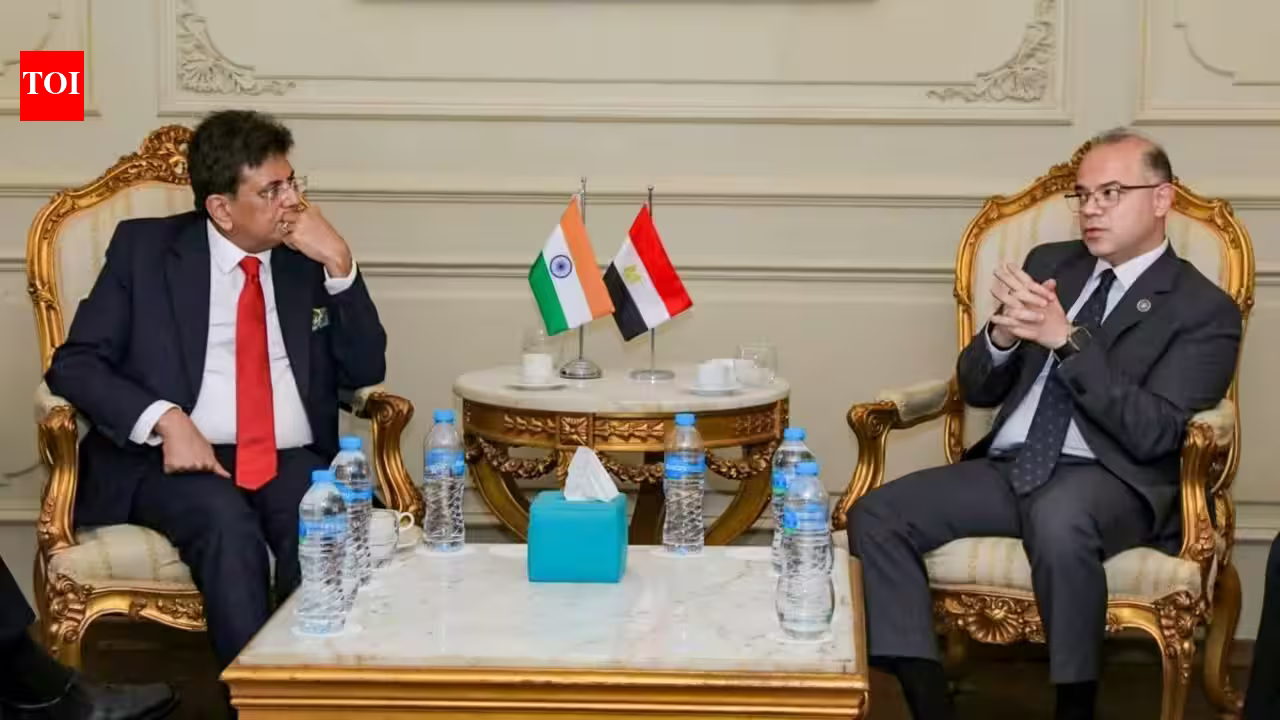
Strengthening Economic Ties: The India-Egypt Strategic Partnership
The recent diplomatic and trade discussions between India and Egypt, spearheaded by Union Minister of Commerce and Industry Piyush Goyal in Cairo, signal a significant shift in India’s engagement with North Africa and the Arab world. With a massive delegation of over 130 business leaders and startup representatives, this visit underscores the Indian government’s commitment to moving beyond traditional diplomatic rhetoric toward concrete economic integration. As both nations look to capitalize on their geographical proximity—linked by maritime trade routes—the potential for a formalized trade agreement represents a pivot point for bilateral commerce.
India and Egypt share a historical camaraderie, but the current administration is intent on transitioning this relationship into a robust economic corridor. The bilateral trade target of $12 billion is not merely a number; it serves as a benchmark for the deeper industrial and technological synergies these two emerging economies aim to achieve. Given the global supply chain diversification strategies currently underway, Egypt offers India a critical gateway into the African Continental Free Trade Area and the broader Mediterranean market.
Navigating the Complexity of Trade Agreements
A central theme in the recent Cairo discussions is the careful evaluation of a Preferential Trade Agreement (PTA) versus a full-blown Free Trade Agreement (FTA). Minister Goyal’s emphasis on safeguarding the livelihoods of farmers, fishermen, and small-scale workers is a critical nuance. In the context of India’s domestic economic landscape, agriculture and small-scale manufacturing are employment-heavy sectors that remain highly sensitive to sudden influxes of cheaper imports.
By prioritizing “terms of reference” before jumping into binding commitments, India is signaling a methodical approach to trade liberalization. Unlike the rapid, often unilateral trade deals of the past, modern Indian trade policy emphasizes reciprocity and long-term sustainability. For Egypt, the concern revolves around protecting its own industrial base and ensuring that an agreement with India acts as a catalyst for local value addition rather than just creating a destination for Indian finished goods. The iterative negotiation process is intended to identify complementary strengths—where India’s expertise in services and technology meets Egypt’s strategic location and manufacturing potential.
Economic Complementarity and Market Growth
The recent trade statistics reflect a robust growth trajectory. With bilateral trade in goods rising by 64% year-on-year to $5.04 billion between April and September 2026, the economic relationship is already demonstrating significant momentum. India’s exports, which reached $3.87 billion in the 2025-26 financial year, are increasingly diversified, moving from traditional commodities to machinery, chemicals, and pharmaceutical products. Conversely, Egypt’s role as a supplier of phosphates and fertilizers is crucial for India’s agricultural output.
Beyond physical goods, the inclusion of startup representatives in the delegation highlights a focus on the digital economy. Egypt’s burgeoning fintech and e-commerce landscape mirrors India’s own journey over the last decade. There is significant potential for cross-pollination of digital public infrastructure and technological solutions. As Indian firms seek to internationalize their digital services, Egypt provides a stable and familiar regulatory environment within the Middle East and North Africa region, lowering the barrier to entry for Indian technology services and software exports.
The Role of SMEs and Grassroots Economic Protection
The specific mention of protecting small workers and fishermen reflects a growing awareness in Indian trade policy regarding the impact of globalization on the informal economy. Small and Medium Enterprises (SMEs) account for a significant share of India’s GDP and employment. When entering trade pacts with developing economies like Egypt, the government must ensure that small businesses are not sidelined by large conglomerates.
Future agreements between the two nations are likely to include chapters focused on SME collaboration and technical capacity building. This would allow smaller firms from both sides to leverage new trade volumes rather than being overwhelmed by them. By creating specific frameworks for small-scale exchange, the India-Egypt partnership aims to create a “bottom-up” economic boost. This ensures that the benefits of increased bilateral trade are distributed among the broader workforce rather than being concentrated solely in capital-intensive industries.
Geopolitics and the Strategic Maritime Corridor
The India-Egypt relationship cannot be viewed in isolation from the broader geopolitical context of the Suez Canal and the Indian Ocean. As a vital artery for global trade, the Suez Canal remains the primary route for Indian goods reaching European markets. Closer economic alignment with Egypt secures India’s logistics interests and allows for potential joint ventures in port infrastructure and shipping logistics.
Furthermore, as India continues its pursuit of “Make in India,” establishing manufacturing hubs in Egypt could allow Indian companies to bypass some of the logistical hurdles and tariffs associated with exporting directly to the European Union. This “gateway” strategy is becoming increasingly popular among Indian manufacturers looking to scale globally. By utilizing Egypt as a production base, Indian firms can combine their technical expertise with Egypt’s regional market access, creating a synergistic model that serves both local and international consumers.
The Future Outlook for Indo-Egyptian Trade
Looking ahead, the commitment to institutionalize the India-Egypt economic relationship through a formal framework represents a mature stage of diplomatic and commercial interaction. The success of these initiatives will depend on the ability of both nations to translate high-level agreements into operational realities for their respective private sectors. If the terms of reference can effectively balance market opening with the protection of sensitive local sectors, the $12 billion target will likely be surpassed within a short timeframe.
The emphasis on the Joint Trade Committee and the Startups Forum provides a dual-track approach: one focused on traditional industrial cooperation and the other on innovation-led growth. This multifaceted strategy is necessary to ensure resilience in a volatile global economic climate. For India, the engagement with Egypt is a testament to the country’s intent to play a more proactive role in the economies of the Global South. By fostering these deep, institutionalized partnerships, India is not only securing its own supply chains but is also helping to shape a more interconnected and stable economic architecture across the African and Middle Eastern continents. The upcoming months, as officials refine the scope of potential agreements, will be critical in determining the pace and scale at which this strategic partnership evolves.
Disclaimer: This content is auto-generated for informational purposes only.
Source: Read Original News


