









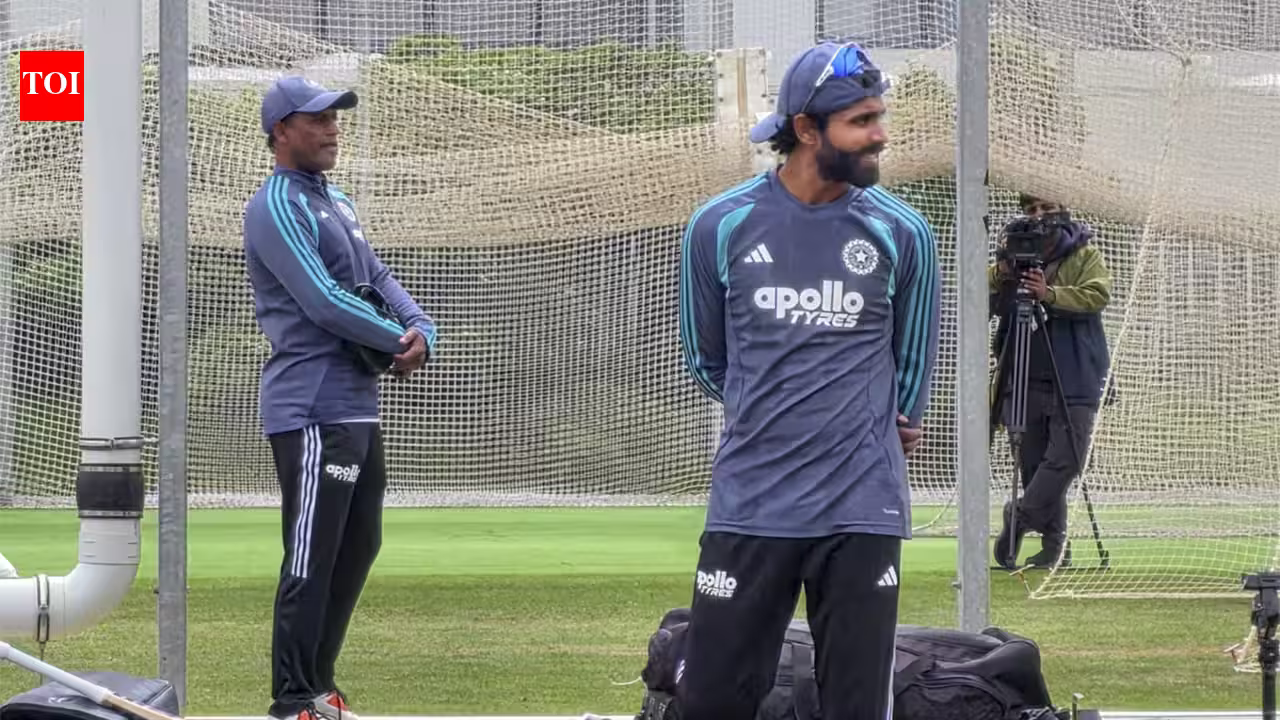
“My job is not to make everyone happy. My job is to take the right decisions, not the popular decisions.” These words, spoken by Indian head coach Gautam Gambhir ahead of the fifth T20I in Hamilton, were intended to signal a new era of ruthlessness and clarity for the national team. Yet, as India took the field at the Basin Reserve for the first Test against New Zealand, the “right” decisions appeared to have been replaced by a logic that left fans, pundits, and arguably the players themselves, scratching their heads.
The decision to exclude Mohammed Siraj was eyebrows-raising, but the move to leave Ravindra Jadeja on the bench was nothing short of a shock. In the cold, hard reality of professional sport, selection is often a game of margins, but in this instance, the margins seem to favor the excluded party so heavily that the rationale for the change begins to fracture under scrutiny.
The All-Rounder Dilemma
To understand the weight of the decision, one must look at the data. Siraj currently stands as India’s leading wicket-taker in the ongoing World Test Championship (WTC) cycle with 43 victims. Jadeja follows closely behind with 33. However, Jadeja’s utility is not confined to the ball. He is India’s third-highest run-getter in this WTC cycle, boasting 790 runs in 11 matches at an average of 60.76.
His pedigree away from the subcontinent is arguably even more impressive. During the 2025 tour of England, Jadeja was a pillar of consistency, amassing 516 runs in five Tests at an average of 86. To omit a player of this caliber—a world-class fielder, a containment specialist with the ball, and a seasoned middle-order stalwart—raises the question posed by legend Sunil Gavaskar: “If you did not want to play him, being such a senior cricketer, why bring him here?”
The “Left-Hander” Justification
The team management, through batting coach Sitanshu Kotak, offered a tactical justification for the inclusion of Washington Sundar over Jadeja: the prevalence of left-handed batters in the New Zealand top four. The intent was to field an off-spinner who could take the ball away from these southpaws.
While sound in theory, the argument crumbles when compared against Jadeja’s career record. Of his 356 Test wickets, 120 have been claimed against left-handed batters at an average of 25.75. He has made a career of dismantling some of the game’s greatest left-handers, including Ben Stokes, Moeen Ali, and David Warner.
Former India off-spinner R. Ashwin, writing on his YouTube channel, offered a scathing critique of the logic. Ashwin pointed out that in the current climate, with eight right-arm seamers on display, the rough outside the left-hander’s off stump is inevitable. Rather than needing an off-spinner, the conditions are perfectly tailored for a left-arm spinner to exploit those pockets. Ashwin noted, “If Washington Sundar is playing, he is effectively replacing a batter. Jadeja, on the other hand, walks into the side on pure merit.”
Mixed Messaging and Future Planning
The confusion extends beyond the veteran core to the management of emerging talent. The selection saga surrounding Nitish Kumar Reddy has added another layer of frustration. The management has spoken at length about grooming Reddy as a pace-bowling all-rounder specifically for overseas conditions. So dedicated were they to this cause that they pulled him from the ODI series after just one match and fast-tracked his transition to Wellington.
Yet, when the stage was set and the conditions were favorable, Reddy was left out of the playing XI. If a player is being groomed for a specific role and is excluded when that role becomes available, the “long-term plan” becomes difficult to discern.
Security vs. Confusion
Gautam Gambhir’s goal of creating “security within the dressing room” is noble. In high-stakes international cricket, players need to feel the backing of their leadership to perform with freedom. However, psychological security is built on consistent messaging. Players are professionals—they accept being dropped for poor form or when conditions dictate a tactical shift. What they find harder to reconcile is when the stated goals of the management diverge sharply from the actions taken on the field.
If Siraj, the lead wicket-taker, is dropped on a green pitch; if Jadeja, a top-three batter in the cycle, is benched; and if a project like Reddy is overlooked at the moment of truth, the dressing room will naturally wonder what exactly the selection criteria are.
As the series progresses, India will need more than just intent; they will need cold, hard results. Popular decisions are often criticized, but they are frequently correct. Conversely, unpopular decisions can be defended—provided they are rooted in a coherent, logical framework. On the opening day at the Basin Reserve, it was precisely that thread of logic that seemed to be missing from the Indian camp. Moving forward, the team will need to align their actions with their ambitions, or risk losing more than just a Test match—they risk losing the confidence of the very players they hope to mold into winners.
Disclaimer: This content is auto-generated for informational purposes only.
Source: Read Original News