







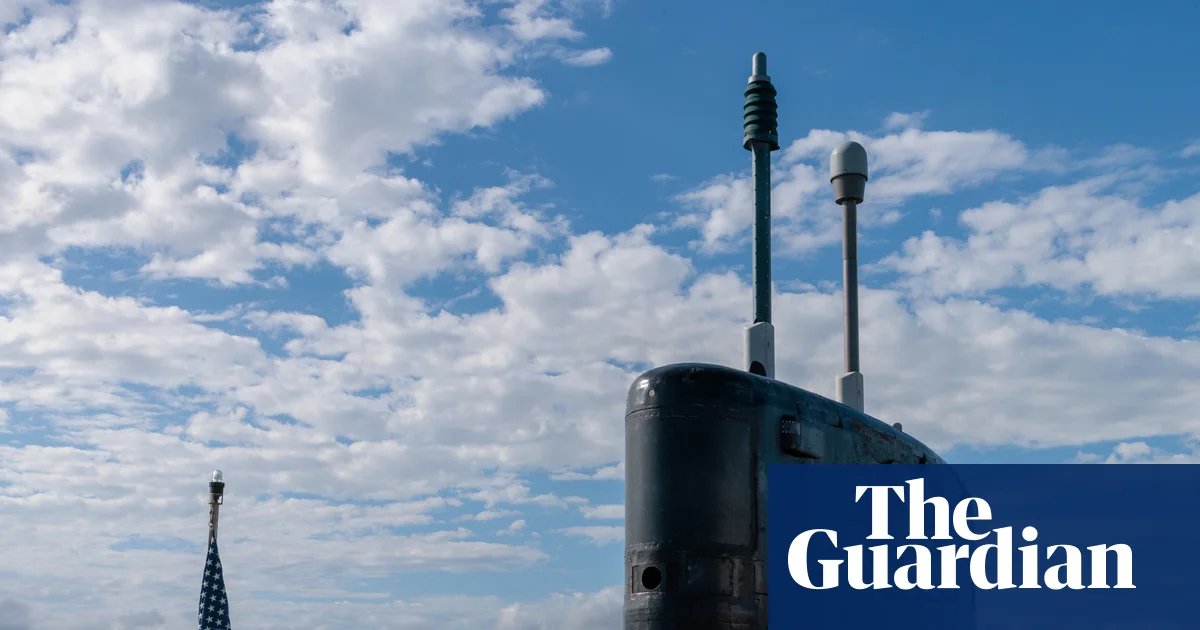
A new report from the Congressional Budget Office (CBO) has cast a shadow over the landmark Aukus security pact, warning that providing nuclear-powered submarines to Australia will significantly deplete the US Navy’s own fleet for “many years.”
The analysis, released Friday, highlights a growing crisis within the American submarine industrial base, which is already struggling to meet current domestic production demands. Under the “Pillar One” of the Aukus agreement, the US is slated to sell three to five in-service Virginia-class submarines to Australia beginning in 2032. However, the CBO findings suggest that maintaining this commitment would exacerbate the challenges currently facing US shipyards.
“Increasing production further to replace SSNs [attack submarines] sold to Australia would increase the challenges that the Navy and the shipyards are facing,” the report states. “The sale of SSNs to Australia would reduce the number of attack submarines available to the Navy for many years.”
The logistical hurdles are substantial. US shipyards are currently producing Virginia-class vessels at a rate of 1.13 per year. To meet domestic needs, that rate must climb to two per year; to accommodate the transfer to Australia, it would need to reach 2.33 annually. The report notes that construction times have ballooned from five to six years in the early 2000s to as many as 11 years today, with deliveries currently suffering from delays of up to 36 months.
Beyond production capacity, the CBO raised strategic questions regarding the sovereignty of the transferred vessels. While the pact aims to bolster deterrence in the Indo-Pacific, the report notes that because Australia would maintain complete control over its submarines, their participation in a potential conflict with China is not guaranteed.
Australian Defence Minister Richard Marles has previously emphasized that any future Australian submarines would remain under the “complete control of the Australian government of the day,” refusing to provide ironclad commitments for deployment in support of US operations. This autonomy has led some analysts, including the Congressional Research Service, to suggest an “alternative division of labour”—one where the US retains command of the vessels but stations them in Australian ports, ensuring they remain available for immediate deployment during a crisis.
Critics are becoming increasingly vocal, with former Australian foreign minister Bob Carr claiming that both nations are “living a lie” by maintaining the pretense that the sale will proceed.
Despite the skepticism, the Biden administration and the Australian government maintain that the deal is on track. US Secretary of Defense Pete Hegseth recently reaffirmed the commitment to “strengthen deterrence in the Pacific.” However, with US law requiring that the president only approve a transfer if it does not “degrade” US undersea capabilities, the path to the 2032 delivery remains fraught with uncertainty.
Disclaimer: This content is auto-generated for informational purposes only.
Source: Read Original News