







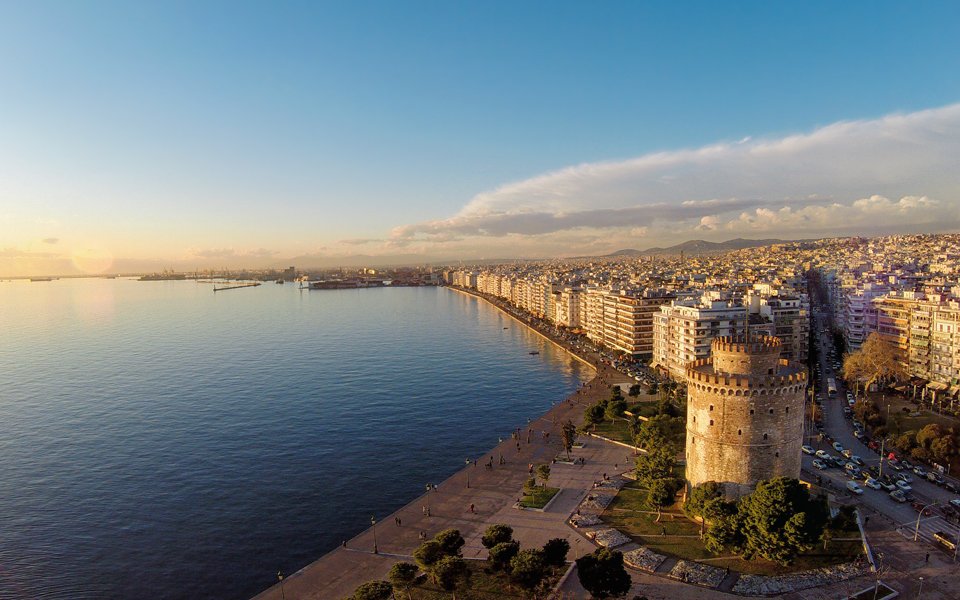
The management of the Thermaic Gulf, a body of water long plagued by ecological neglect and administrative confusion, is set to undergo a significant transition. Under a newly enacted law, responsibility for the gulf—encompassing the area from Alykes Kitrous in Pieria to Epanomi—has been transferred to Greece’s Natural Environment and Climate Change Agency (NECCA).
This legislative shift marks a pivotal attempt to centralize oversight of one of Greece’s most troubled marine environments. For years, local officials have lamented the “tangle” of overlapping jurisdictions that hampered consistent maintenance and environmental protection. Thessaloniki Mayor Stelios Angeloudis, who championed the move in discussions with the prime minister, emphasized that the decision was driven by the need for a singular, accountable authority.
“We asked that NECCA take responsibility so there is one body we can work with on the basic issues,” Mayor Angeloudis stated, highlighting that the gulf’s persistent pollution problems required a streamlined approach rather than the fragmented management of the past.
The immediate strategy under NECCA’s stewardship involves a two-pronged approach: the mobilization of private contractors for surface-level debris collection and a more intensive operation to remove waste from the seabed along the Old and New Waterfronts. Ilias Tekidis, head of NECCA’s Central Macedonia management unit, confirmed that a public tender is expected to be announced by the end of the month. The scope of this contract is broad, covering not only the removal of floating garbage but also the mitigation of petroleum spills and other chemical pollutants. Furthermore, the agency intends to develop a rapid-response mechanism to address ecological emergencies, such as recurring phytoplankton blooms that frequently turn the gulf’s surface opaque and foul-smelling.
Despite the renewed focus and administrative consolidation, scientific experts remain cautious about the long-term prospects for the gulf’s health. The Thermaic Gulf faces inherent geographical and hydrological challenges that complicate restoration efforts.
Konstantinos Fytianos, a professor emeritus of environmental chemistry at Aristotle University, underscored the technical difficulties inherent in the site. “The gulf is shallow, and its water does not easily renew itself,” Fytianos noted, pointing to the slow circulation rates that cause pollutants to accumulate rather than disperse. Having monitored the gulf’s degradation for decades, Fytianos expressed skepticism regarding the feasibility of a total cleanup. Instead, he argued that the focus must shift from surface-level aesthetics to the root causes of the degradation, specifically calling for rigorous improvements to sewage treatment and urban wastewater management.
The transition to NECCA is seen by many as a necessary administrative evolution, moving beyond the era of overlapping bureaucracy that allowed the gulf to decline. However, the success of the initiative will ultimately hinge on whether the agency can move past the recurring cycle of “cleanup and relapse.” With the introduction of private contractors and a mandate for environmental stewardship, the region enters a new chapter, though the scientific community warns that technological intervention alone cannot overcome the challenges posed by the gulf’s unique geography and the persistent impact of industrial and urban runoff.
As NECCA prepares to take the helm, residents and environmentalists alike are looking for results that transcend temporary waste collection. The coming months, during which the tender will be finalized and operations launched, will serve as the first major test of whether the new management framework can deliver meaningful improvements to the water quality of Greece’s most historic urban bay.
Disclaimer: This content is auto-generated for informational purposes only.
Source: Read Original News