







As the global demand for leaders capable of navigating the intersection of climate science and corporate strategy continues to intensify, Georgetown University’s Master of Science in Environment and Sustainability Management (ESM) program is marking a significant milestone. Now entering its fifth academic year, the program—a collaborative effort between the McDonough School of Business and the Earth Commons Institute—continues to cultivate a specialized cohort of professionals equipped to translate environmental data into actionable business solutions.
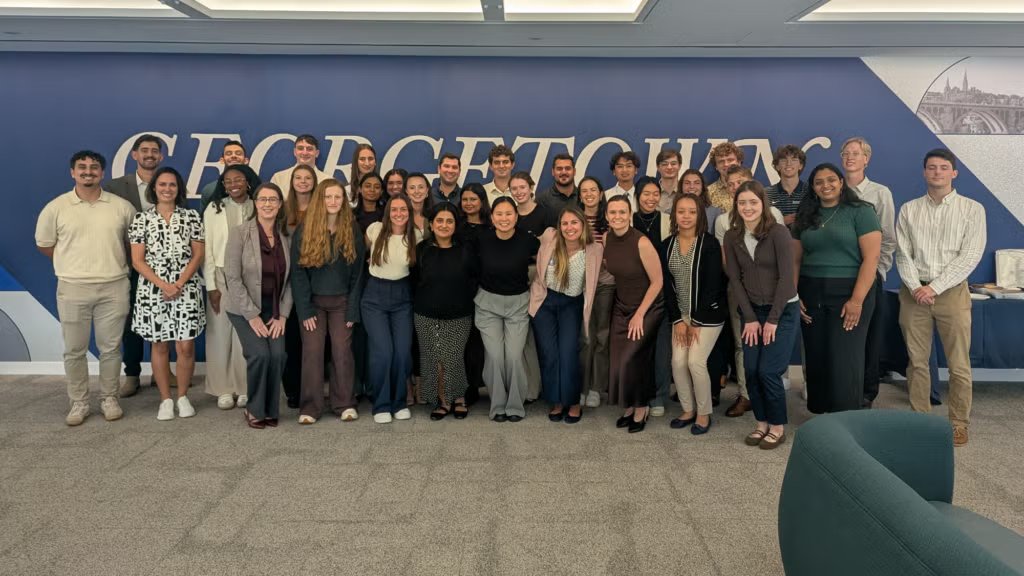
The incoming Class of 2027 comprises 39 students, reflecting the international and multidisciplinary nature of the sustainability field. Representing 12 countries and collectively speaking 22 languages, the cohort brings a diverse range of perspectives to the D.C.-based program. With an average age of 26, these students enter the 10-month, STEM-designated program with an average undergraduate GPA of 3.6 and more than two years of prior professional experience.
“The incoming Georgetown ESM class offers different experiences, perspectives, and areas of expertise, creating opportunities to learn from one another both inside and outside the classroom,” said Nita Swinsick, associate dean of graduate and executive program admissions. “In sustainability management, where addressing complex challenges requires collaboration across disciplines, industries, and cultures, that diversity of thought is especially valuable.”
The academic foundation of the ESM program is explicitly interdisciplinary. Over half of the new class—59%—holds undergraduate degrees in environmental, sustainability, or life sciences. The remaining students bring expertise in economics (15%), social and behavioral sciences (10%), engineering (5%), communications (5%), and business (3%). This blend of scientific rigor and market-focused discipline is designed to prepare graduates to manage the technical and operational complexities of modern environmental challenges, including climate impact measurement, sustainable supply chain logistics, and environmental data analysis.
Located on Georgetown’s Capitol Campus in downtown Washington, the program leverages its proximity to policymakers, NGOs, and corporate leaders to enhance its curriculum. A cornerstone of this experience is the capstone course, where students work in teams to solve real-world sustainability problems for partner organizations.
“Georgetown’s ESM program is distinctive for its intentional integration of environmental science and business principles, preparing students to understand sustainability challenges and translate that knowledge into action,” said Kerrie Carfagno, program director of the ESM program. “Through a rigorous curriculum and hands-on capstone experience, students develop the analytical and strategic skills to help organizations navigate complex sustainability issues.”
The career outcomes for the program reflect its practical focus. Graduates are increasingly landing roles in consulting, energy, government, manufacturing, and technology. According to data from the classes of 2023, 2024, and 2025, the average starting salary for graduates is $82,676, with for-profit sector roles averaging slightly higher at $85,713.
To support these professional trajectories, the program integrates individualized career coaching through the McDonough Career Center and provides additional co-curricular programming via the Business of Sustainability Initiative. By combining a intensive 10-month curriculum with experiential learning and deep industry networking, the program aims to remain a vital pipeline for future leaders who must balance the demands of environmental stewardship with the realities of the global economy.
Disclaimer: This content is auto-generated for informational purposes only.
Source: Read Original News