









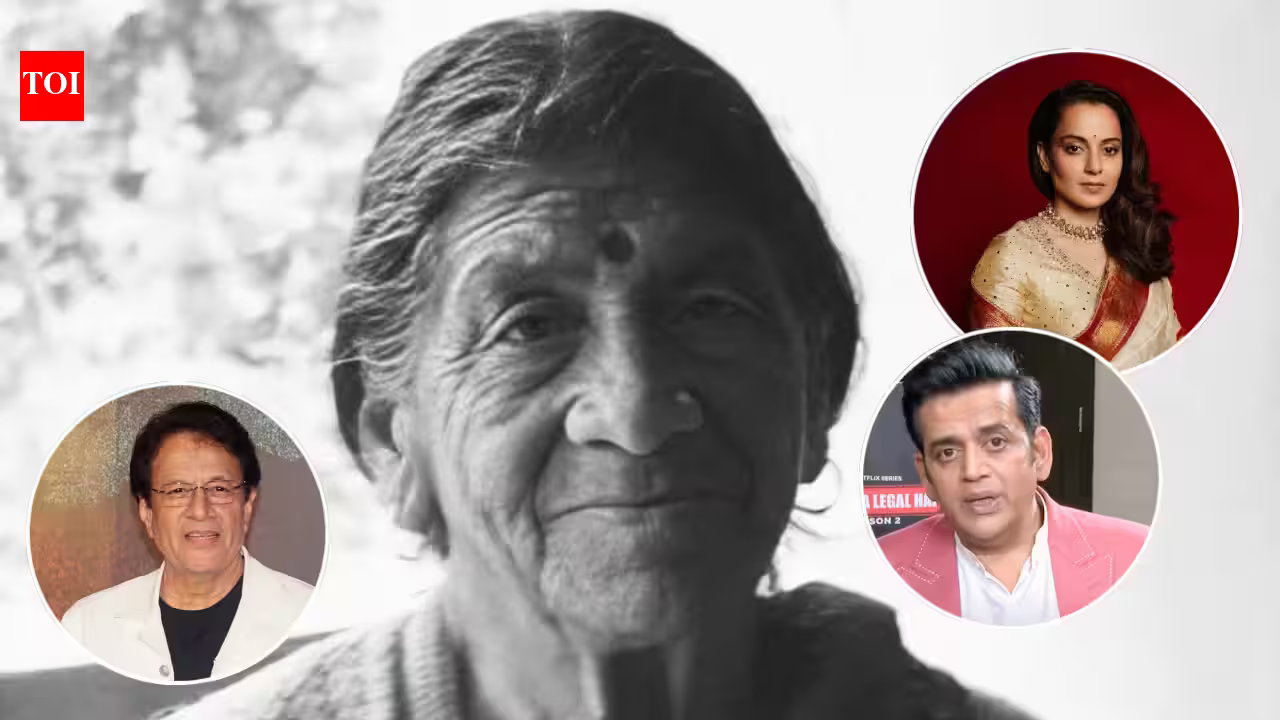
The loss of a parent is a universal grief, one that transcends political divides and public stature. When news broke of the passing of Savitri Devi—the 91-year-old mother of Uttar Pradesh Chief Minister Yogi Adityanath—the corridors of power and the stages of Indian entertainment briefly converged in a collective moment of silence. For a man who has dedicated his life to the ascetic rigor of monkhood and the high-stakes world of governance, the news served as a poignant reminder of the human connections that underpin even the most prominent public figures.
As news of her passing filtered through the media landscape, the film industry—which often finds itself at the center of political discourse—stepped forward to offer its condolences. From veteran actors to influential lyricists, the sentiment was unanimous: a recognition of the woman who raised a leader, and an acknowledgement of the heavy, private burden of loss.
## Kangana Ranaut’s Personal Reflection
For Kangana Ranaut, the news clearly struck a personal chord. The actress-turned-politician, known for her candid and often fiery social media presence, chose a tone of profound humility and somberness. Sharing an archival photograph of Yogi Adityanath in a rare, vulnerable moment with his mother, Ranaut took to her Instagram story to address the Chief Minister directly.
“Sabse zayada dukhad khabar, mere bhai Yogi ji ki mata ji ka 91 saal ki umar mein Uttarakhand mein dehant hua,” she wrote, signaling a deep fraternal respect. By referring to the CM as her brother, Ranaut highlighted the communal nature of political families in India, where the lines between professional solidarity and personal empathy often blur during times of tragedy. Her simple, echoing “Om Shanti” served as a digital prayer, reflecting the sentiments of her followers who gathered to mourn alongside the state leadership.
## Ravi Kishan: A Witness to the Moment
Perhaps one of the most chilling accounts of the day came from actor and MP Ravi Kishan. Often seen alongside the Chief Minister during official state functions, Kishan provided a window into the surreal reality of being a politician—where public duty and private tragedy often collide without warning.
Kishan, who was present with the Chief Minister in Gorakhpur at the time the news reached him, recounted the atmosphere on stage. “We were in the middle of a massive programme, distributing 50,000 tablets to students,” Kishan recalled, describing the stark contrast between the celebration of future education and the sudden finality of death. “Maharaj was on stage when he received the news. It is truly heartbreaking.”
Kishan’s words painted a picture of the immense restraint required of a man in Adityanath’s position. To continue a state event while receiving the news of one’s mother’s passing requires a brand of stoicism that is rarely seen outside of the highest echelons of public service. In his video message, Kishan didn’t just express sympathy; he offered a tribute to the late Savitri Devi, calling her a “remarkable woman” for raising a son who chose the path of the selfless saint.
## The Lyricist’s Tribute: Manoj Muntashir’s Poetic Grief
In the world of art and literature, grief is often processed through metaphor. Manoj Muntashir, a National Award-winning lyricist known for his profound command of the Hindi language, captured the gravity of the loss with a sense of poetic despair. Posting a sepia-toned image of Savitri Devi, Muntashir touched upon the unique irony of the situation: the man who is revered by millions across the country was now, in his own home, stripped of the “voice of love and compassion.”
Muntashir wrote, “There are no words in any language of the world to express this pain.” His note served as a reminder that regardless of power, the relationship between a mother and her son remains the primary foundation of a man’s life. His appeal to Lord Shri Ramchandra to grant the Chief Minister the strength to endure such a loss resonated with many, underscoring the spiritual framework within which this tragedy was being processed.
## The Journey Home to Panchur
The finality of the situation culminated in the Chief Minister’s journey to his ancestral village of Panchur, tucked away in the Pauri Garhwal district of Uttarakhand. It was a pilgrimage of sorts—a return to the roots that produced one of the most polarizing and powerful figures in modern Indian politics.
In a world that thrives on 24/7 connectivity, the passing of Savitri Devi served as a rare instance of national pause. Prime Minister Narendra Modi’s outreach to offer his personal condolences signaled the significance of the loss, not just for the BJP, but for the wider political family in India. For a woman who had lived 91 years, seeing her son transition from a boy named Ajay Singh Bisht to a monk, and finally to a Chief Minister, her passing marked the end of an era for the Bisht family.
## A Legacy of Simple Roots
Savitri Devi’s life was defined by the quiet strength of the Uttarakhand mountains. Married to the late forest ranger Anand Singh Bisht, she raised seven children far removed from the glare of national media. While her son eventually left home in the 1990s to walk the path of the Nath tradition, her influence remained a steady, quiet anchor.
As the village of Panchur mourned, the messages from Bollywood celebrities weren’t merely performative gestures of political correctness. They were acknowledgments of the common human condition. Whether it was the prayerful tribute of Arun Govil—an actor synonymous with divine virtue—or the raw, reflective words of Ravi Kishan, the message remained the same: beneath the titles, the saffron robes, and the political stature, lies the son of a mother. And in the face of death, that is the only identity that matters.
Disclaimer: This content is auto-generated for informational purposes only.
Source: Read Original News