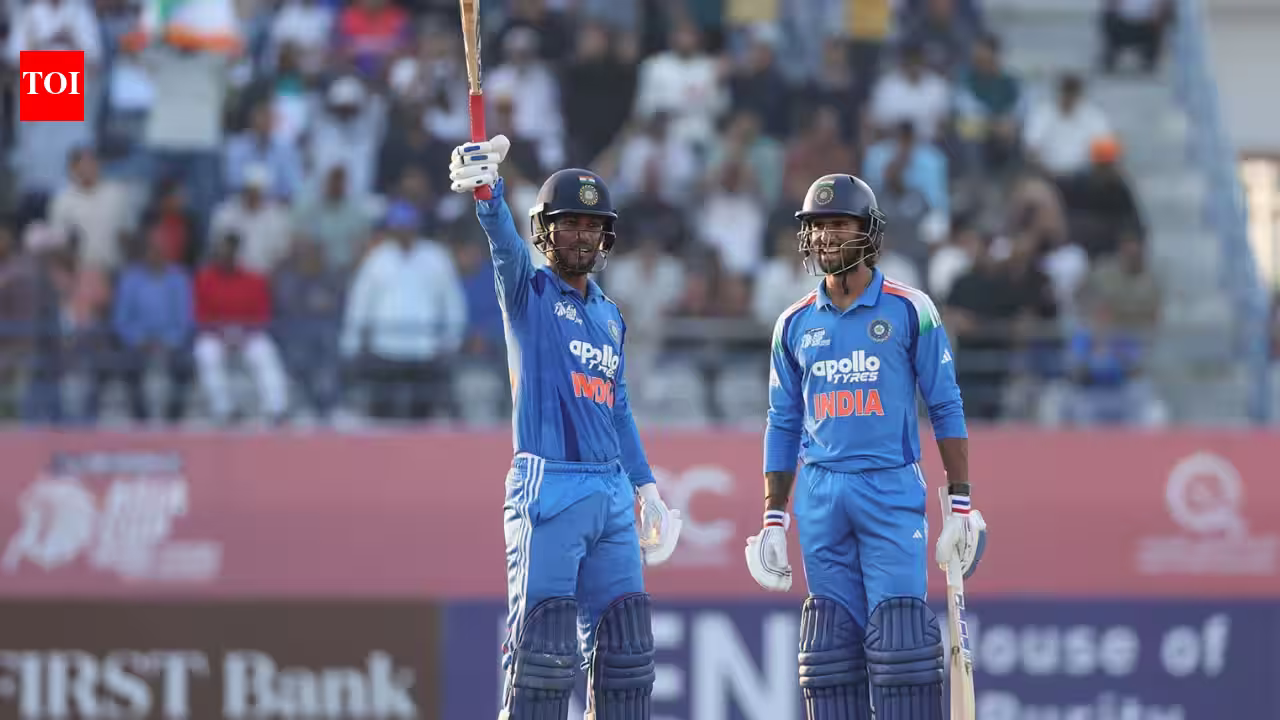










DOHA – The cricketing landscape at the Asia Cup Rising Stars tournament witnessed a lopsided affair of historic proportions on Friday, as India A dismantled Nepal in a clinical display of dominance. The match, which ended in a staggering 306-run victory for India, served as a grim reality check for the Nepali side, but captain Sandeep Lamichhane remains defiant, pointing to logistical nightmares and player availability as primary contributors to the collapse.
The encounter, billed as an opportunity for emerging talent to stake their claim on the international stage, turned into a nightmare for Nepal. After being set a formidable target of 333, the Nepali batting lineup imploded, finding no answer to the hostile pace and movement generated by the Indian bowling attack.
The Perfect Storm: A Batting Collapse for the Ages
India A’s victory was built on the foundation of two sublime centuries. Skipper Tilak Varma, whose tactical acumen was on full display throughout the day, led from the front with a masterful 107. He was joined in a prolific partnership by Kumar Kushagra, whose 117-run display anchored India A to an imposing 332 for nine in their allotted 50 overs.
If the first half of the match was a masterclass in accumulation, the second was a ruthless demonstration of how quickly a game can end. Nepal’s chase lasted just 11.3 overs, with the team bundled out for a measly 26 runs.
The carnage was spearheaded by the lethal pace duo of Harshit Rana and Prince Yadav. Rana signaled his intent early, trapping Arjun Kamal leg-before-wicket on the third ball of the innings. From there, the rout was on. Nepal found themselves reeling at 17 for five by the seventh over, with the Indian pacers exploiting the swing on offer with surgical precision.
Rana concluded his spell with impressive figures of 4/16, while Prince Yadav proved even more destructive, claiming a stunning 5/6. Between them, the pair accounted for nine of the ten wickets to fall, rendering the remainder of India’s bowling attack redundant. Left-arm spinner Shahbaz Ahmed eventually claimed the final scalp, wrapping up a victory that was as swift as it was comprehensive. None of the Nepali batters could manage to reach double figures in what will undoubtedly be a day to forget for the squad.
Logistical Headaches and the “Full-Strength” Reality
Speaking after the match, Nepal captain Sandeep Lamichhane was quick to deflect the blame from his players’ skill levels, pointing instead to the immense logistical challenges that hampered the team’s preparation.
“We were outplayed today. Credit goes to the way the Indian team carried their momentum. We had a good start with the ball, but they utilised their skills. Credit to Tilak and Kumar for the way they handled the pressure,” Lamichhane said in his post-match assessment.
However, the skipper revealed that the squad’s integration had been anything but smooth. With the Nepal Premier League (NPL) currently dominating the domestic cricketing schedule back home, several key players were unable to join the squad until the very morning of the match.
“We didn’t have our full-strength team here,” Lamichhane admitted. “A few of the players arrived this morning. NPL is going on back home. We somehow had to manage and put some new faces for this tournament. It was really a hard task for us to manage everything.”
The admission highlights the growing tension between domestic T20 franchises and international commitment schedules, a common hurdle for developing cricketing nations. For Nepal, the lack of match practice as a collective unit proved catastrophic against a disciplined and well-prepared India A side.
Looking Ahead: A Path to Redemption
Despite the optics of a 306-run defeat, Lamichhane remains confident in the trajectory of his team. While the scorecard suggests a total mismatch, the Nepali captain insists that the experience will serve as a valuable, albeit painful, lesson for his young players.
“We all are going in the right direction. We are still fully confident about how we’re going to approach the upcoming games. We know where we lacked today,” Lamichhane said.
The immediate challenge for Nepal will be to mentally recover from the collapse and find a way to integrate their full roster as they look toward the rest of the Asia Cup Rising Stars campaign. For India A, the win is a statement of intent—a warning to the rest of the competition that they are not just here to participate, but to dominate.
As the tournament progresses, the focus will now shift to whether Nepal can stabilize their batting order and manage the external pressures of tournament logistics, or if this opening defeat has set a trend they cannot break. For now, India A stands tall, having executed a near-perfect game of cricket.
Disclaimer: This content is auto-generated for informational purposes only.
Source: Read Original News