









Trump Targets Federal Reserve, Cites India’s Economic Model in Interest Rate Critique
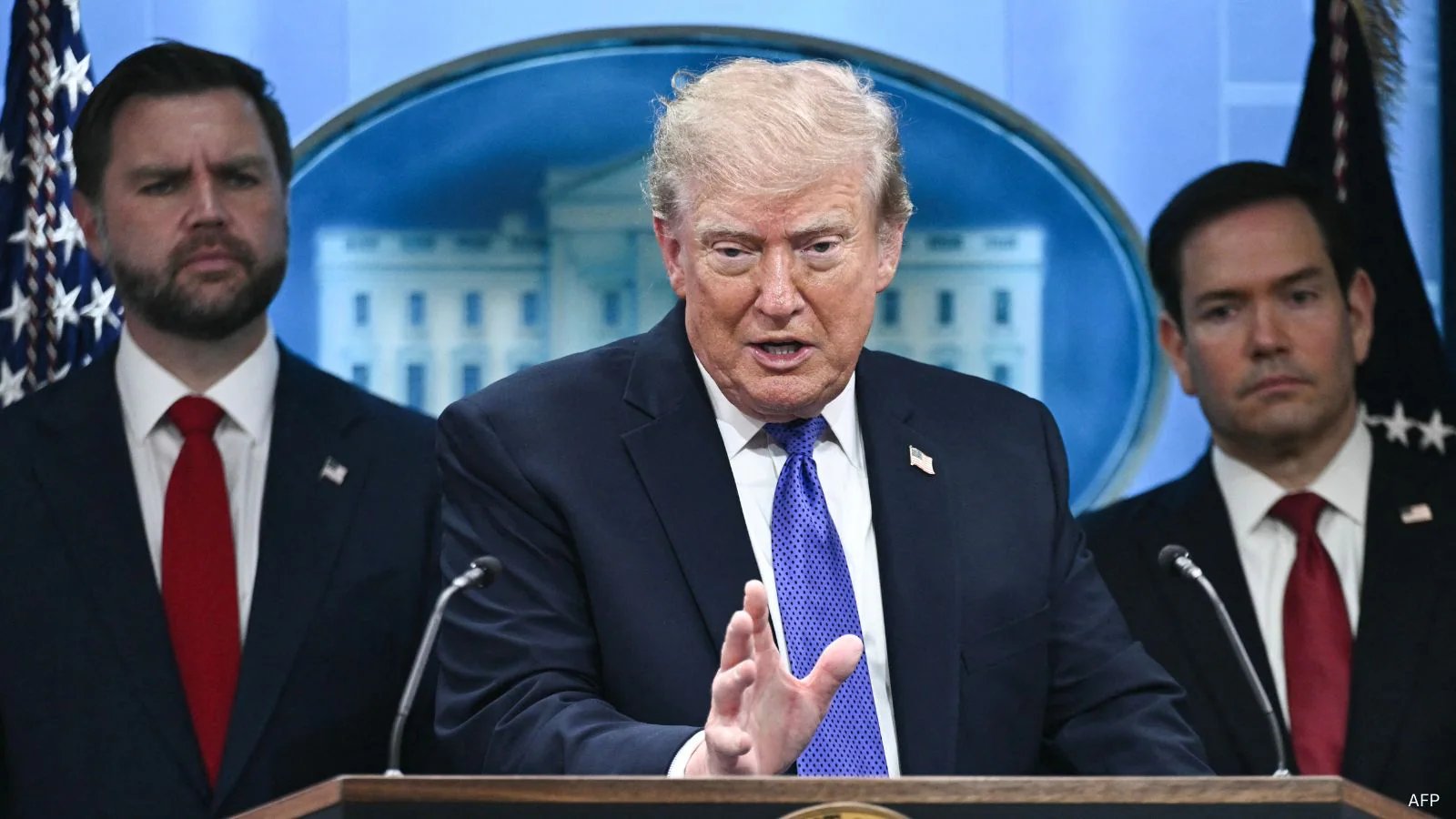
In a scathing rebuke of the United States’ monetary policy, former President Donald Trump has lashed out at the American central bank, claiming that its aggressive interest rate hikes are actively undermining the nation’s economic potential. During a recent media briefing at the White House, Trump characterized the Federal Reserve as a “political” institution, arguing that its decisions to tighten credit are impeding the country’s growth trajectory.
The Critique of “Political” Monetary Policy
Trump’s frustration stems from what he views as a contradictory approach by the Federal Reserve. He contended that when the U.S. economy posts robust financial indicators, the central bank responds with interest rate increases, a move he believes serves to throttle the nation’s momentum.
“Interest rates are too high because we have a very political Fed,” Trump remarked. “Whenever we announce good numbers, they raise the interest rates. It should be the opposite.”
The former President posited that the U.S. should be leveraging its strong fiscal standing to lower rates rather than raising them. He made the ambitious claim that if the U.S. were to adopt a more accommodative monetary policy, the nation could witness explosive GDP growth—potentially reaching 15 to 20 percent—rather than the current moderate expansion.
India Cited as an Economic Benchmark
While discussing global economic strategies, Trump specifically pointed to India as a successful example of how low interest rates can foster significant economic expansion. He highlighted India’s ability to maintain a steady 7 percent GDP growth rate while keeping lending rates relatively low, suggesting that the United States is missing a critical opportunity to follow suit.
“If you look at India, they have low interest rates and they have a 7 percent GDP,” Trump said, emphasizing that for an economy of the United States’ stature, a far higher growth rate should be achievable if credit conditions were optimized. He argued that as the world’s leading economy—which he described as a catalyst for the success of other nations—the U.S. should maintain the lowest interest rates globally.
The Reality of Global Interest Rates
Trump’s comments come at a time when the Federal Reserve, under the guidance of chair Kevin Warsh, has been prioritizing inflation control. In September, the Fed moved to hike rates, defying the former President’s calls for a reduction. This decision reflects the ongoing tension between political pressure and the central bank’s mandate to maintain price stability.
In the Indian context, the narrative remains distinct. While India is widely regarded as the fastest-growing major economy, having recorded a notable 7.8 percent growth in the April-June quarter, its central bank, the Reserve Bank of India (RBI), has also adjusted its stance to maintain economic balance. In September, the RBI hiked its repo rate to 5.5 percent, a move aimed at navigating domestic inflation despite the country’s strong growth performance.
While India’s rates remain among the lower end of the spectrum for major emerging markets, they represent a calibrated response to local economic conditions, contrasting with the political debate unfolding in Washington. As the US economy contends with a growth estimate of 3.4 percent for the July-September quarter, the debate over the Fed’s autonomy and the role of interest rates in stimulating national prosperity continues to intensify.
Disclaimer: This content is auto-generated for informational purposes only.
Source: Read Original News