







The air in Hyderabad buzzed with a mix of reverence and anticipation this past Friday as the promotional machine for Mysaa kicked into high gear. While the upcoming period action drama has already generated significant intrigue, the spotlight at the latest launch event wasn’t just on the film’s narrative—it was on the weight of history. Specifically, the weight of the iconic Osey Ramulamma.
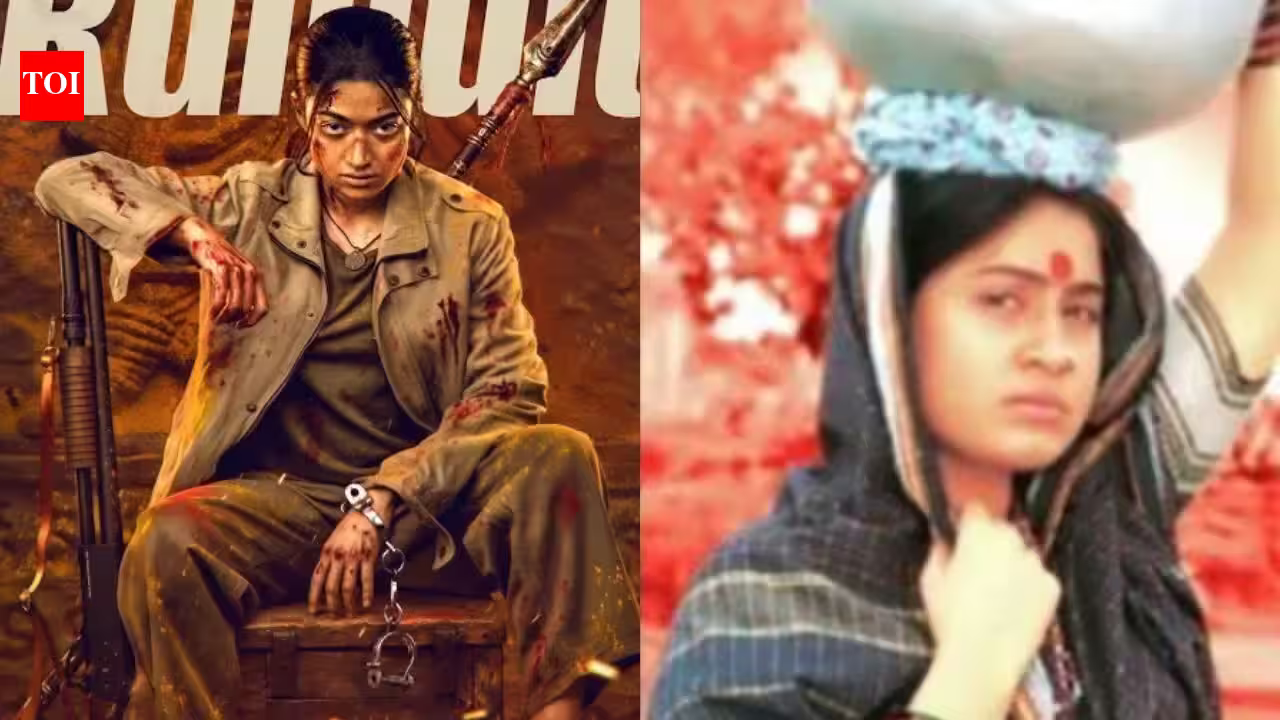
When it was announced that Rashmika Mandanna would be stepping into the shoes of a legacy track long associated with the legendary Vijayashanthi, the industry held its breath. Recreating a classic is a high-wire act; get it wrong, and you’re merely chasing ghosts. Get it right, and you’ve bridged generations. For Rashmika, the experience wasn’t just about choreography or screen presence; it was a deep, palpable anxiety regarding the “massive responsibility” of honoring a cinematic titan.
Stepping into the Shadow of a Legend
During the event, Rashmika didn’t shy away from the intensity of the moment. Addressing the press and fans, she admitted with refreshing candor that the initial pitch from director Rawindra Pulle had left her rattled. “I got really scared when Rawi sir told me we were going to recreate the Osey Ramulamma song,” she confessed.
For the uninitiated, the original 1997 film, directed by the visionary Dasari Narayana Rao, isn’t just a movie—it’s a sociocultural landmark. It depicted the harrowing, defiant journey of a woman rising against the shackles of a feudal landlord. Vijayashanthi’s portrayal of Ramulamma wasn’t merely a performance; it was a cultural force that defined the late 90s. Attempting to replicate that energy requires a level of humility that Rashmika clearly possesses. “Of course, we can’t match the original,” she noted, keeping her expectations grounded while emphasizing the intention behind the project: respect.
The Magic of the Original Architect
One of the most tactical and successful decisions by the Mysaa production team was securing the return of Vandemataram Srinivas. The legendary composer and singer, whose sonic stamp is indelibly linked to the 1997 masterpiece, stepped back into the recording booth to lend his voice to the new version.
Rashmika was visibly relieved to have the original architect of the song on board. “Srinivas sir, we were able to get you on board, so I was like, thank God,” she shared at the event. By retaining the soul of the track through the original vocals, the production manages to bridge the gap between nostalgia and modern sensibilities. It’s a clever move that tells the audience: we aren’t trying to replace the past; we are inviting it to dance with the future.
The actress also used the platform to extend a heartfelt message to Vijayashanthi, acknowledging her absence from the event. “Biggest love to Vijayashanthi ma’am. This is our little tribute to you. I hope you are happy with the song.” It was a moment of grace that solidified the bridge between the veteran icon and the current pan-Indian star.
Beyond the Song: A Transformation for ‘Mysaa’
While the song has dominated the headlines, it serves as a microcosm for the tone of Mysaa. Directed by Rawindra Pulle, the film promises to be a departure from the glossy, commercial projects often associated with mainstream stars. Set in the rugged, untamed landscapes of tribal territories, Mysaa is billed as an emotive period action drama.
Rashmika’s role as a Gond woman is being touted as arguably the most intense performance of her career. If the Osey Ramulamma recreation is any indication, the film is looking to capture a raw, earthy intensity that mirrors the socio-political gravitas of the 90s classics. The casting is equally promising, featuring heavyweights like Eshwari Rao, Guru Somasundaram, and the ever-reliable Rao Ramesh. This isn’t a film designed just for the weekend box office; it’s a narrative experiment aimed at cementing Rashmika’s range as an actor who can carry the emotional weight of a historically grounded drama.
Setting the Stage for 2026
As the release date of November 27, 2026, approaches, the pressure on the film’s shoulders is only going to mount. The strategy to release the film simultaneously in Telugu, Hindi, Tamil, Kannada, and Malayalam signals that Mysaa isn’t aiming for a regional silo—it is gunning for a pan-Indian consciousness.
The recreation of Osey Ramulamma serves as the perfect hook for this multi-lingual strategy. It provides a familiar, beloved melody to hook audiences from diverse linguistic backgrounds, while the film itself offers a fresh story rooted in a specific, under-represented cultural context.
Will the gamble pay off? Recreating a classic is a delicate balance of reverence and reinvention. However, with a star who approaches the task with such visible vulnerability and respect, and a creative team that values the roots of the material, Mysaa seems poised to be more than just a remake. It looks to be a vessel for honoring the icons of the past while carving out a distinct, gritty identity for the present. For fans waiting to see if lightning can strike twice, the answer will arrive in late 2026, but for now, the tribute holds its own, standing as a respectful nod to the woman who started it all: Vijayashanthi.
Disclaimer: This content is auto-generated for informational purposes only.
Source: Read Original News