








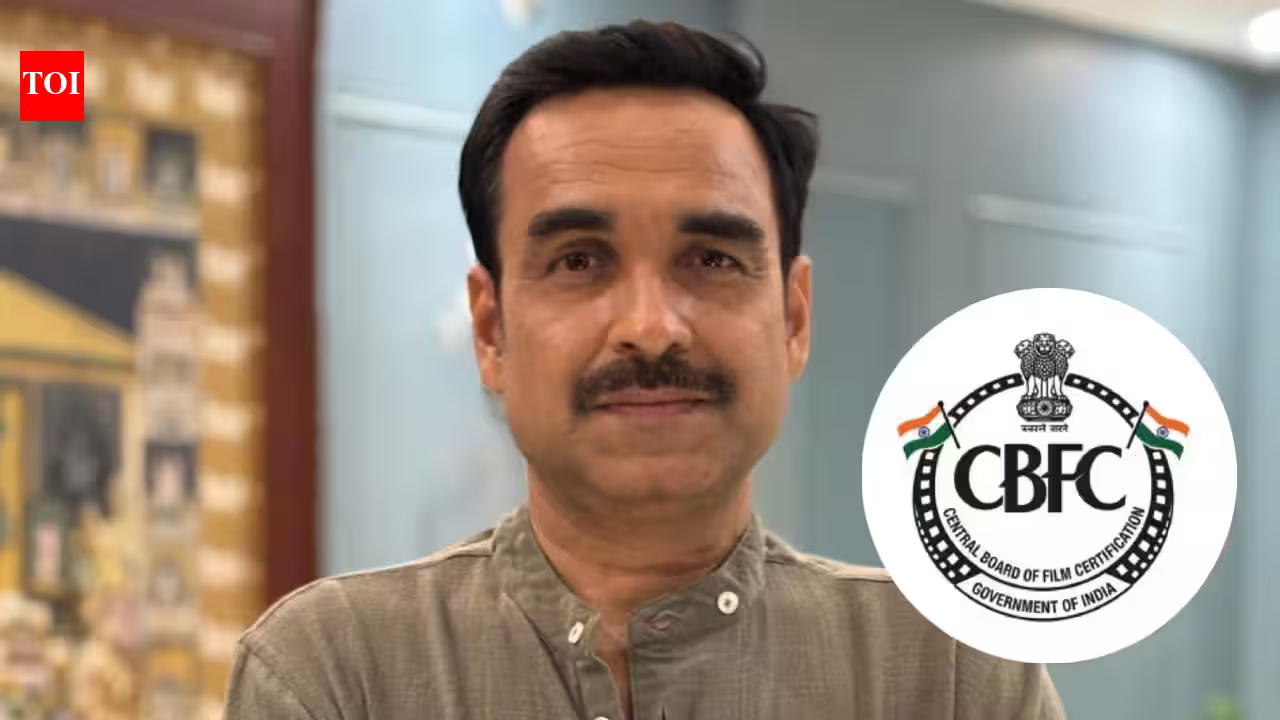
In the corridors of power at the Central Board of Film Certification (CBFC), a new voice has emerged—one that carries the distinct, gravelly authenticity of a man who spent years fighting for his own space in the spotlight. Pankaj Tripathi, the versatile powerhouse of Indian cinema, officially stepped into his role as a board member two months ago. Now, he is stepping into the firing line, tasked with the delicate balancing act of representing the creative soul of the film fraternity while upholding the regulatory framework of the censor board.
For an industry that has long viewed the CBFC as an adversarial gatekeeper, Tripathi’s appointment feels like a strategic olive branch. Known for his grounded persona and his deep roots in both independent and commercial cinema, Tripathi isn’t just another bureaucrat in the room; he is a practitioner speaking to his peers.
## The Winds of Change at the CBFC
The landscape of film certification is shifting. Under the new stewardship—which includes a star-studded 18-member body featuring the likes of Suniel Shetty, Preity Zinta, and Oscar-winner Ricky Kej—the board has introduced a series of stringent guidelines. The most significant among these? The mandate that producers must submit the final, finished version of their film. Perhaps more controversially, the board has asserted that a film’s title is not truly final until the certificate is officially issued, leaving the door open for revisions even late in the game.
To some, these rules are a tightening of the noose. To the CBFC, they are a necessary measure to ensure clarity and professional standards. Tripathi, however, is positioning himself as the mediator in this tug-of-war. His stated objective is not to further complicate the process, but to “reduce the gap” between the ivory tower of censorship and the bustling sets where actual filmmaking occurs.
## Bridging the Great Divide
Tripathi is acutely aware of the skepticism that follows any transition within the board. In a recent dialogue, he emphasized that his primary duty is to act as a voice for the creators. “Intelligent filmmakers know how to make movies, keeping in mind the country they cater to,” he noted, signaling a respect for the craft that is sometimes missing in bureaucratic discourse.
But how does a man who has thrived on the creative freedom of the indie circuit reconcile that with the rigidity of state-sanctioned certification? Tripathi remains humble about his tenure, describing himself as “still learning.” His promise is simple yet profound: “Whenever I am called for a meeting, I will put forward the concerns of filmmakers.” Whether this translates into tangible policy shifts remains to be seen, but for a fraternity that often feels unheard, having a comrade in the room is a significant start.
## The “Amplification” Effect of Indian Cinema
The CBFC has historically been a lightning rod for controversy. From high-profile scenes being slashed to titles being forced into oblivion, the board often finds itself trending for the wrong reasons. Tripathi offers an interesting psychological perspective on why these disputes feel so explosive in India.
He points to the massive, almost overwhelming, reach of cinema in the country. In a nation where movies are treated with the fervor of religion, every creative choice becomes a matter of public discourse. “Everything gets discussed and dissected quickly,” Tripathi explains. His philosophy on the certification process is rooted in the idea of collective wisdom. By having a diverse group of stakeholders reviewing a film, he argues that the board can better navigate the sensitivities of a complex, multicultural audience. It is, in his view, a necessary, if sometimes painful, filter.
## Scrapping the ‘Five-Hour’ Expectations
Perhaps the most pragmatic stance Tripathi has taken involves the highly debated ‘Tatkal’ certification. Introduced in June 2026, the fast-track service promised quick turnarounds for desperate producers—a service that Tripathi feels was fundamentally flawed.
His rejection of the five-hour certification window is rooted in a fundamental appreciation for the labor of filmmaking. “The process of making a film takes months,” he points out. “You cannot expect the certification process to be completed in five hours.” For Tripathi, this isn’t just about administrative speed; it’s about the gravity of the work. If a film is worth spending months or years to create, it deserves more than a frantic, half-day sprint through the halls of censorship. He views the scrapping of the Tatkal scheme as a move toward a more thoughtful, deliberate, and responsible regulatory environment.
## The Road Ahead for the New Board
The new CBFC, chaired by Shashi Shekhar Vempati, is tasked with managing an industry that is simultaneously expanding in scale and fracturing under the pressure of social media scrutiny. With heavyweights like Priyadarshan and Prosenjit joining Tripathi on the panel, the board boasts a resume of talent that understands the industry from the inside out.
As the industry watches with bated breath, the question remains: Can this panel actually transform the CBFC from a source of anxiety into a facilitator of art? Pankaj Tripathi’s presence offers a glimmer of hope that the conversation between the regulator and the creator might finally become a two-way street. He isn’t promising a deregulation of the industry, but he is promising a more informed, empathetic, and perhaps most importantly, a more realistic approach to the way our stories are cleared for the big screen.
In the end, Tripathi’s role is one of service. He has spent his career playing the common man, the underdog, and the mentor. Now, he plays the role of the regulator—a character arc that may prove to be his most challenging performance yet. Whether he can sway the board to adopt a more liberal, creator-friendly stance, or if the gravity of the position will ultimately reshape his perspective, is the subplot currently unfolding in the inner sanctum of Indian film policy. For now, the industry is waiting to see if the “common man” of the board can indeed clear the path for the future of Indian cinema.
Disclaimer: This content is auto-generated for informational purposes only.
Source: Read Original News