






The intersection of parental observation and ecological study is revealing new layers to our understanding of non-human intelligence. As caregivers turn their gaze toward the natural world to introduce their children to its rhythms, a shift is occurring in how we perceive the “personality” of common backyard creatures. Far from being simple biological automatons, garden-dwelling species are increasingly recognized as individuals capable of complex, adaptive behaviors.
This perspective builds upon a long, albeit often overlooked, history of naturalistic observation. In 1952, the naturalist Len Howard published Birds as Individuals, a seminal work that challenged the scientific consensus of the era by documenting the distinct, idiosyncratic temperaments of garden birds. Howard’s work, which detailed the quirks of thrushes and tits living near her home, predated much of modern behavioral ecology. Today, her intuition is being validated by contemporary science. Research into honeybee colonies, for instance, has demonstrated that diversity in the personality traits of worker bees—such as boldness in foraging or caution in hive defense—creates a more resilient and adaptable colony. Diversity, it appears, is a critical survival mechanism not just for species, but for the functional stability of local ecosystems.
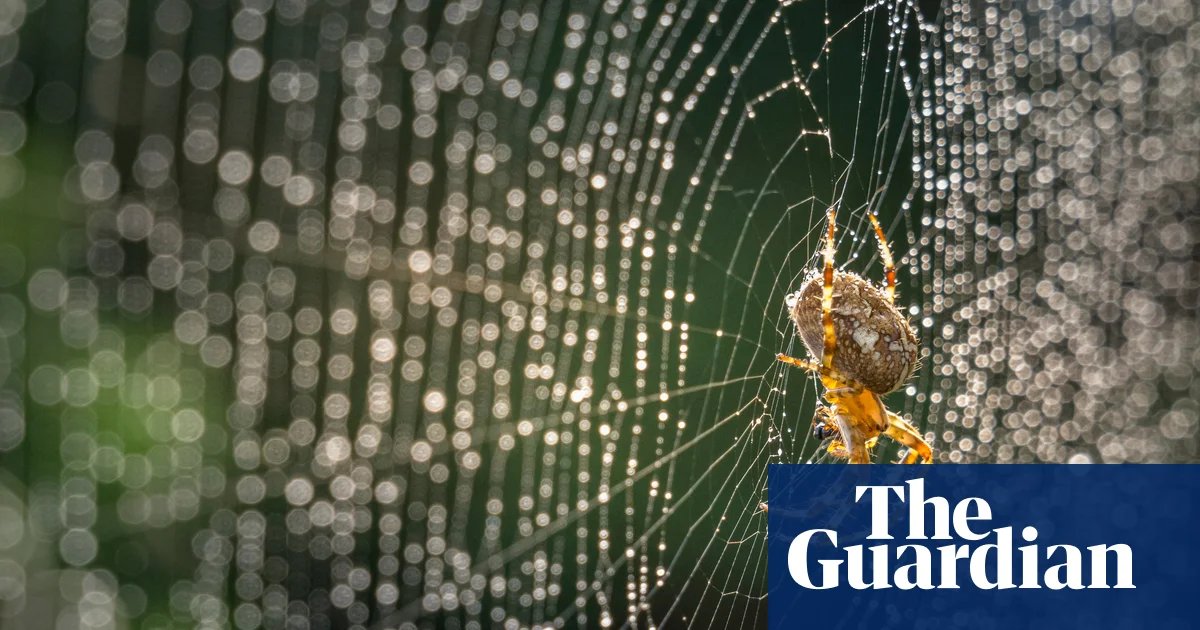
Nowhere is this individual variation more fascinating—and perhaps more misunderstood—than in the life of the garden spider (Araneus diadematus). Often viewed with trepidation, the garden spider reveals itself as a master of precision engineering upon closer inspection. Observations of these arachnids show that their web-building is far from a rote, uniform process. Each web is a unique architectural response to environmental constraints, with spiders adjusting their thread patterns based on wind, prey availability, and physical obstacles. The dexterity required to spin these silken snares rivals the fine motor skills of a musician, with movements adjusted with high-level sensitivity to the surrounding environment.
The question of whether such behaviors constitute “personality” or “consciousness” remains a subject of intense scientific debate. When a spider clears debris from her web or retreats to a den with a single leg monitoring a tripwire, the observer is tempted to label this as foresight or problem-solving. While ethologists caution against anthropomorphizing these actions, the “spectrum of personality” is becoming a standard framework for animal study. This spectrum ranges from basic environmental responses to the more expressive, complex markers of an inner life.
In the current era, as artificial intelligence begins to dominate discussions about logic, decision-making, and objective processing, the study of biological consciousness has taken on new urgency. The spider’s “instinct” is a flexed, responsive intelligence honed over millions of years—a form of problem-solving that is deeply tethered to the physical world. Unlike AI, which operates on abstract datasets, the garden spider’s “output” is a tangible manifestation of survival in real-time.
For those engaging with nature in domestic settings—such as parents observing wildlife alongside their children—these small, daily interactions with garden species provide a vital counterpoint to a digital-first world. By acknowledging the unique behaviors of a spider, a bird, or an insect, we move away from viewing nature as a background landscape and toward viewing it as a collection of unique, sentient actors.
This shift in perspective is essential for conservation. When we recognize that a spider is not merely a component of an ecosystem but an individual capable of unique architectural and survival choices, the impetus to protect biodiversity takes on a more personal dimension. Whether one defines these traits as primitive reflexes or the early building blocks of consciousness, it is clear that the natural world is defined by variation. As we refine our ability to observe these “individual” creatures, we find that the resilience of our environment rests, in large part, on the very diversity that makes each tiny life unique.
Disclaimer: This content is auto-generated for informational purposes only.
Source: Read Original News