






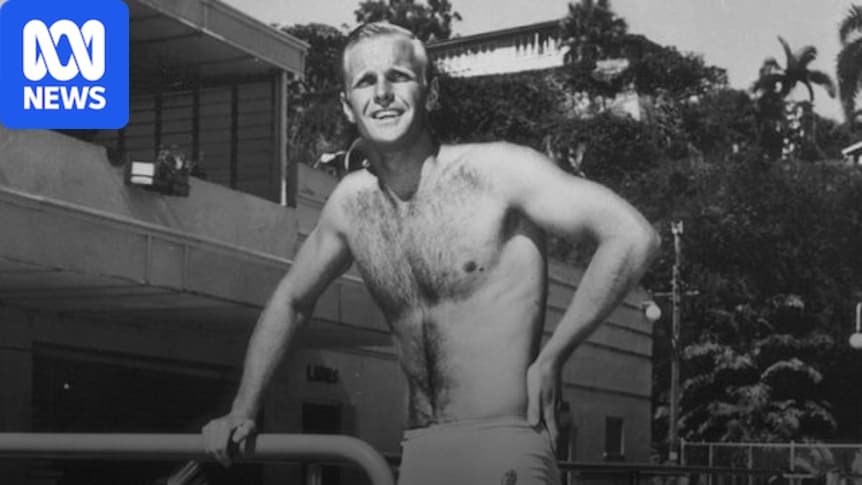
Australian swimming icon Jon Henricks, a dual gold medalist at the 1956 Melbourne Olympics, has passed away at the age of 91. The Australian Olympic Committee (AOC) announced his death, which poignantly occurred on the 70th anniversary of the historic home Games that cemented his status as one of the nation’s greatest sprint swimmers.
AOC president Ian Chesterman led the tributes, describing Henricks as a “giant” of the 1956 era. “Jon Henricks was part of a remarkable generation of Australian Olympians alongside Murray Rose, John Devitt, and his longtime friend Dawn Fraser,” Chesterman said. “In front of a home crowd, he won Australia’s first swimming gold medal of those Games, then anchored the 4x200m relay team to a world record. That week helped establish Australia’s reputation as a swimming nation, and it still inspires our athletes today.”
Born in Sydney in 1935, Henricks’ trajectory toward greatness began at the Balmain baths. After overcoming an ear infection that sidelined him from the 1952 Helsinki Games, he emerged as a dominant force. His breakthrough came in 1953 when, under the guidance of coach Harry Gallagher, he shattered the national 110-yard freestyle record. His transition to a dedicated sprinter was supported by groundbreaking, proto-scientific training methods—including the introduction of “tapering” and the practice of shaving body hair to reduce drag, a technique reputedly suggested by his father, Clyde.
Henricks’ career was defined by his dominance in the mid-1950s. Following three gold medals at the 1954 Vancouver Commonwealth Games, where he earned the moniker “human torpedo,” he arrived at the 1956 Melbourne Olympics as a heavy favorite. He lived up to the immense pressure, leading a historic Australian clean sweep in the 100 metres freestyle. “After I touched the wall, I looked for the timekeepers,” Henricks recalled in 1999. “They were all smiling at me, and I knew… We had made history. Everyone knew that this was something special.”
Though he later moved to the United States and found success at the University of Southern California, Henricks remained a deeply proud Australian. His attempt to defend his title at the 1960 Rome Games ended in heartbreak; severely weakened by a gastrointestinal illness, he was unable to reach the final—a moment he later described as feeling like he had let his country and coach down.
Despite the disappointment in Rome, his legacy as a pioneer of the sport remained untarnished. He was inducted into the International Swimming Hall of Fame in 1973 and received the Medal of the Order of Australia (OAM) in 2018 for his elite service to swimming. He leaves behind a profound influence on Australian sport, remembered not only for his records but for the quiet, enduring pride he sought in the eyes of his family after his greatest victories.
Disclaimer: This content is auto-generated for informational purposes only.
Source: Read Original News