







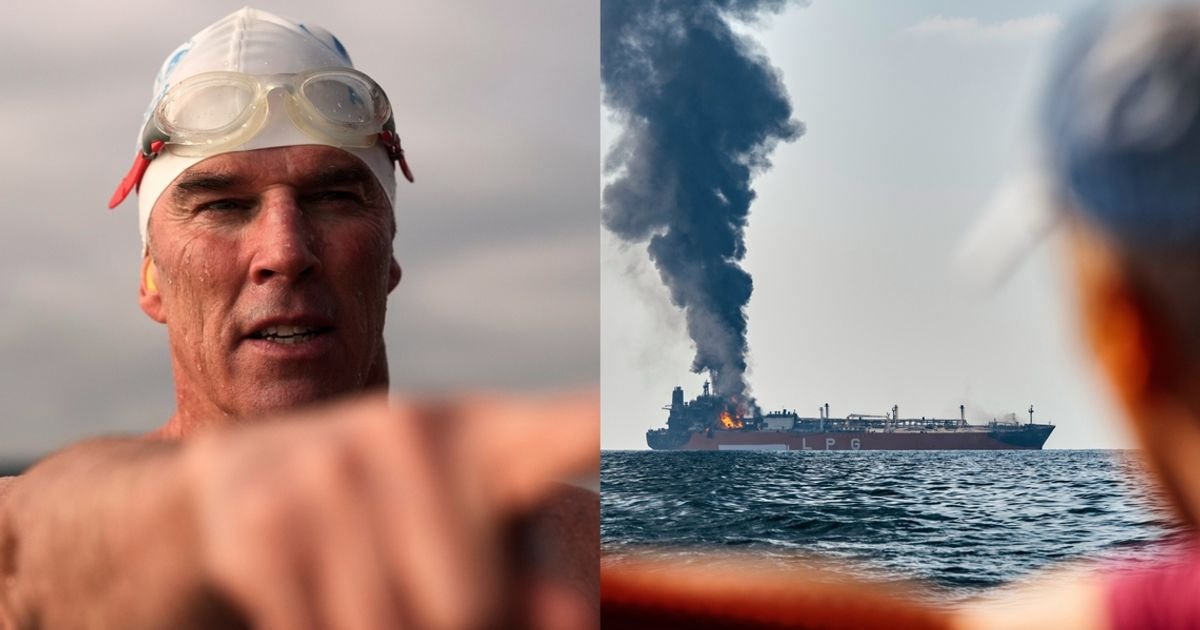
The Strait of Hormuz, a critical artery for global energy supplies and a vital marine ecosystem, has become the backdrop for an unconventional environmental protest. British endurance swimmer Lewis Pugh, a long-time advocate for ocean conservation and a patron of the United Nations Environment Programme, has completed a 15-kilometre swim in the waterway to draw international attention to the long-term ecological destruction caused by ongoing regional conflict.
For three days last week, Pugh braved the waters off the Musandam Peninsula in Oman, just kilometres from where military tensions have manifested in violent attacks against merchant shipping. The contrast between his mission and the reality of the geopolitical crisis was stark; on November 16, just 30 minutes into his swim, an oil tanker was struck by an explosion nearby. Throughout the remainder of his journey, other attacks occurred, occasionally leaving vessels in the distance ablaze, casting a literal and figurative shadow over the biodiversity of the region.
The Strait of Hormuz, which measures only 39 kilometres at its narrowest point, has been a central theater of instability since February, following military engagements involving US and Israeli forces. In response, regional blockades and the targeting of oil and gas carriers have become routine, disrupting trade and threatening to spill millions of gallons of hydrocarbons into a sensitive marine environment.
“Oil tankers, gas carriers and other merchant ships are being attacked, day after day. The environmental consequences of this war will last for generations,” Pugh wrote in a statement following the completion of his swim.
Beyond the strategic importance of the shipping lanes, Pugh emphasized that the Strait is a thriving natural habitat. The waters are home to populations of dolphins, sea turtles, and the vulnerable dugong. For the 56-year-old athlete, the area represents a natural wonder that is being treated as a collateral casualty of war.
“The Strait of Hormuz is far more than a vital shipping route. It is one of the most beautiful places I have ever visited,” he noted. “The environmental consequences of this war will last for generations.”
Pugh is no stranger to high-profile endurance feats aimed at climate and environmental advocacy. His previous campaigns have included swims in the sub-zero waters of the North Pole and Antarctica, as well as advocacy projects in the Red Sea, all intended to pressure policymakers to recognize the fragility of marine ecosystems. His latest endeavor serves as a plea for a humanitarian and environmental ceasefire in the area.
His demands are threefold: “Stop the fighting, open the strait, and clean up the pollution.”
As the conflict continues to escalate, environmental experts have raised concerns that the sinking or damaging of oil-laden vessels poses an existential threat to the local marine life. Oil spills in such a restricted waterway would not only devastate coral reefs and marine populations but also prove nearly impossible to remediate while military hostility persists.
By placing his own physical safety in the path of this conflict, Pugh hopes to shift the narrative from solely economic and military concerns to the irreversible damage being inflicted upon the natural world. As he recovers from his 15-kilometre journey, his message remains a stark reminder that while geopolitics are temporary, the ecological degradation of our oceans is often permanent.
Disclaimer: This content is auto-generated for informational purposes only.
Source: Read Original News