






The Emergence of the Moto Tag 3
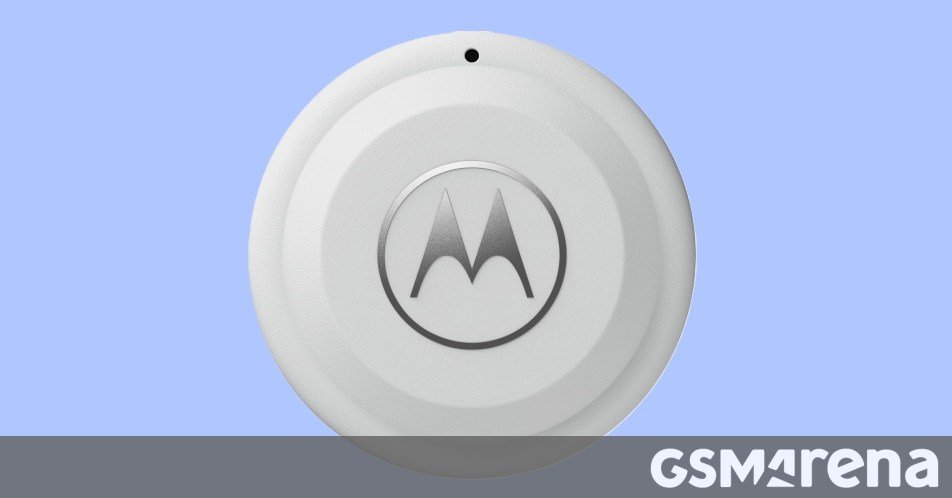
Motorola’s expansion into the personal asset tracking market has been marked by rapid iteration. Following the initial release of the Moto Tag in 2024 and the subsequent Moto Tag 2 in January of this year, the industry expected a more measured pace for future hardware. However, recent retail activity indicates that the third iteration is imminent. Product listings on various regional Amazon domains, including Amazon UK and Amazon Italy, have effectively surfaced the Moto Tag 3, suggesting a launch window that could be mere weeks or months away.
These listings appear in distinct colorways, specifically Pantone Lucent White and Pantone Indigo Blue. While the appearance of a new model number in official documentation is standard procedure, the technical specifications provided by these early retail previews raise questions about the scope of changes between the second and third generations. The physical design of the device, as showcased in the retailer imagery, remains consistent with its predecessor, leading to speculation regarding whether this represents a substantial hardware refresh or a strategic branding update to introduce new aesthetic options for the existing platform.
Core Technical Specifications and Performance
Despite the anticipation surrounding a new model, the technical foundation of the Moto Tag 3 largely mirrors that of the Moto Tag 2. The device continues to utilize a hybrid connectivity approach, combining Ultra-Wideband (UWB) technology for high-precision local tracking with standard Bluetooth for broader, lower-power discovery. This dual-radio configuration is essential for modern item trackers, as it allows users to switch between distance-based Bluetooth connectivity and proximity-aware UWB guidance when an item is nearby.
The hardware build maintains the compact form factor and structural integrity users have come to expect. The device carries an IP68 rating, signifying robust protection against both dust ingress and water submersion, which makes it suitable for attachment to luggage, keys, or items stored in challenging environments. The unit remains lightweight at 8.5 grams, ensuring that it does not add significant bulk to the items it monitors. Internally, it is powered by a user-replaceable CR2032 coin cell battery, a standard in the industry that allows for convenient maintenance without requiring proprietary charging cables.
Battery Life and Operational Discrepancies
One of the most notable technical points to emerge from the Amazon listings is the claim regarding power efficiency. The documentation states that the Moto Tag 3 will provide more than 500 days of operation from a single CR2032 battery. This figure presents a curious divergence from the manufacturer’s official claims regarding the Moto Tag 2. Motorola’s official marketing materials for the second-generation model have historically cited battery longevity exceeding 600 days.
This difference of approximately 100 days between the new retail listing and the legacy device’s specifications may be a result of updated power management profiles, conservative estimation by retail departments, or a reflection of the hardware’s actual performance in real-world scenarios. Regardless of the numerical variance, the longevity of these devices remains a significant competitive advantage in the tracking market. The ability to track assets for well over a year without physical intervention remains a primary use-case factor for consumers who rely on these tags for long-term inventory management or travel security.
Security and Network Integration
The functional utility of the Moto Tag 3 continues to rely on the Android Find Hub network. This infrastructure allows the tag to leverage a massive crowd-sourced network of mobile devices to pinpoint the location of lost items. When the tag is outside the immediate range of a user’s smartphone, it utilizes encrypted Bluetooth signals to communicate with nearby Android devices, which then relay the location metadata to the owner via the network.
Privacy remains a core design pillar. The system incorporates encrypted location data, ensuring that only the authorized user can view the specific coordinates of their tracked items. Furthermore, the device supports integrated unwanted tracking alerts. These alerts are a critical safety feature designed to mitigate the risks associated with unauthorized tracking. If a tag is determined to be moving with a person who is not its owner, the network triggers a notification to that individual’s device. This proactive approach to security addresses the ethical and privacy concerns that are frequently associated with the ubiquity of miniature GPS and Bluetooth tracking devices.
Product Consistency and Model Identification
An examination of the model numbers attached to these new listings provides further context. The identifier XT2561-1 is explicitly referenced in the online documentation, which is the same model number assigned to the second-generation device. This has led to intense industry discussion regarding whether the “Moto Tag 3” is a genuine technical revision or if it is effectively a rebranding of the existing hardware.
If the internal components and external form factor remain identical, the primary distinction may lie in the palette of colors and the potential for software optimizations or updated firmware. For users, the ambiguity in model naming does not necessarily diminish the value proposition. The existing features—UWB precision, IP68 durability, and network-wide tracking—constitute a robust feature set that fulfills the requirements for most consumer use-cases. Whether sold under the title of Moto Tag 2 or 3, the underlying technology continues to offer a reliable solution for those integrated into the Android ecosystem. Future press releases from Motorola are expected to clarify whether the release represents a true generational shift or a expansion of the current color-focused marketing strategy.
Disclaimer: This content is auto-generated for informational purposes only.
Source: Read Original News