







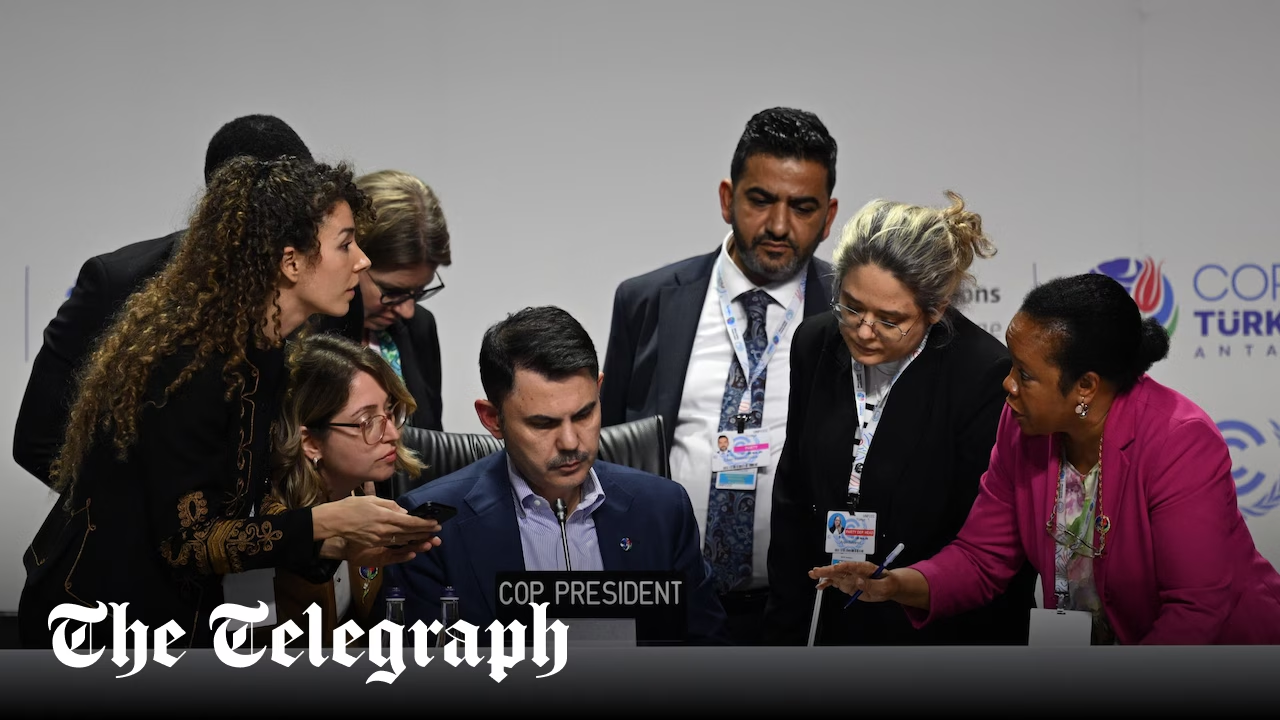
COP31 has concluded in a state of profound diplomatic fracture, with UN Secretary-General Antonio Guterres expressing deep disappointment that the summit ended without a consensus on an overarching climate agreement. The failure to secure a unified path forward marks a significant setback for international climate policy, leaving the global community without a roadmap to address the escalating climate crisis.
Addressing delegates at the close of the conference, Guterres offered a stark rebuke to the gridlock that paralyzed the negotiations. “There may be no consensus in the negotiating room. There is no ambiguity in the science,” he declared, emphasizing that the physical realities of global warming remain unchanged despite the political failure.
The Secretary-General did not shy away from naming those he believes are responsible for the stagnation. He launched a blistering attack on “powerful fossil fuel interests,” accusing them of deploying strategies modeled after the tobacco industry’s historical approach to health regulation. According to Guterres, these entities are actively “distorting the science, delaying policy, blocking action and piling up huge profits while people everywhere pay the price.”
However, the path to a global transition remains deeply polarized. Russia, a major oil and gas producer whose economy relies heavily on energy exports, stood as a vocal opponent to any language mandating a rapid shift away from fossil fuels.
Sergei Kononuchenko, the Russian delegate to the summit, dismissed the push for an explicit phase-out as mere “slogans.” He argued that the international community should focus on practical realities rather than ideological targets. “Even the most ambitious IPCC scenarios limit warming to 1.5C and require deep cuts to fossil fuels, but not their disappearance altogether,” Kononuchenko stated. His remarks reflect the view of a nation determined to protect its status as a cornerstone of the global energy supply, framing the push for a total exit from fossil fuels as economically unrealistic.
The failure to reach a consensus at COP31 highlights the growing friction between climate scientists, who warn that rapid decarbonization is essential to avoid catastrophic environmental damage, and resource-rich nations that view such transitions as a threat to their national sovereignty and economic stability.
As delegations depart the summit, the lack of a final agreement casts a long shadow over upcoming international climate efforts. With the world currently failing to meet the targets set by the Paris Agreement, the absence of a unified directive from COP31 leaves a vacuum in global leadership. Environmental advocates fear that without a clear, internationally mandated timeline for phasing out fossil fuels, the powerful interests criticized by Guterres will only tighten their grip on global energy policy, leaving the most vulnerable populations to bear the mounting costs of a warming planet.
Disclaimer: This content is auto-generated for informational purposes only.
Source: Read Original News