








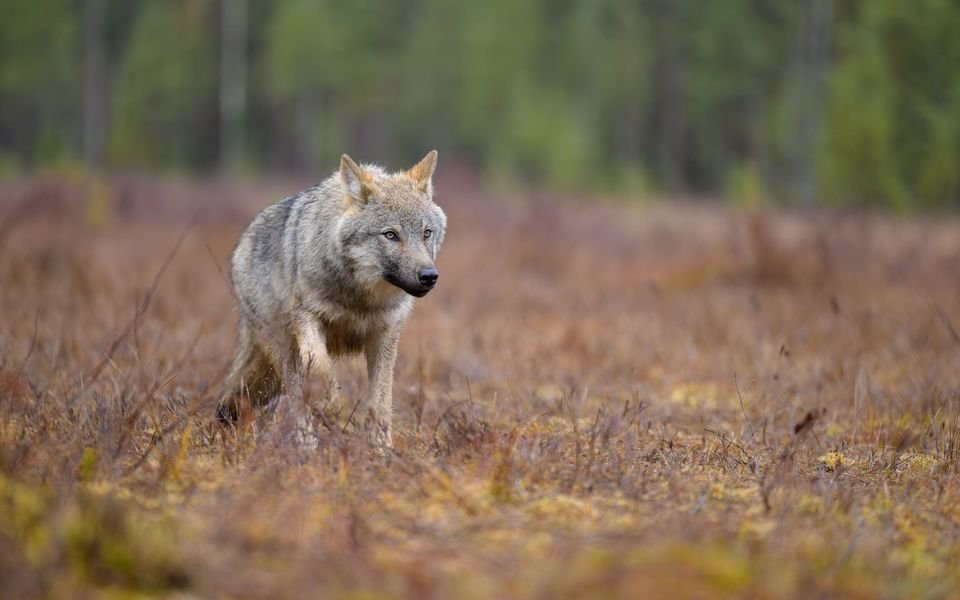
The return of the gray wolf to the Peloponnese peninsula, following a century-long absence, has been hailed by conservationists as a landmark event for Mediterranean biodiversity. However, this historic natural recolonization has been swiftly marred by an act of illegal violence, casting a shadow over the potential for peaceful coexistence between wildlife and local communities.
Late last year, the environmental organization Callisto confirmed the presence of a wolf pack in the Alagonia area of the Taygetos mountain range. Between November and December 2024, scientific teams captured photographic evidence of a group of nine wolves—comprised of four adults and five juveniles. This discovery served as the first definitive proof that the species had naturally migrated back to the region, a significant development for the ecological health of the mountainous terrain.
This progress was met with a stark setback when a young female wolf from the pack was found dead. A veterinary examination conducted by Callisto revealed that the animal had been killed by eight gunshots. The organization condemned the killing as a “heinous act” that undermines ongoing wildlife conservation efforts and violates the protected status of the species.
The incident has ignited a debate regarding the future management of the wolf population in the Peloponnese. Callisto has formally submitted a report to the Greek Forest Service and the Ministry of Environment, urging immediate, systematic monitoring of the species. According to the organization, establishing a clear understanding of the wolves’ distribution and total population size is essential for creating evidence-based management and conservation measures.
Central to these efforts is the challenge of navigating the friction between apex predators and the local agricultural sector. The Peloponnese is home to numerous livestock farmers who have not had to manage the risks associated with wolves for several generations. As the predators re-establish their presence, the threat to sheep and goat herds has emerged as a primary concern for the local economy.
Callisto has emphasized that the solution lies in a proactive approach that prioritizes cooperation between authorities, government agencies, and the agricultural community. The organization advocates for the implementation of proven deterrents, including the use of specialized livestock guardian dogs, the installation of electric fencing, and the construction of secure, reinforced enclosures for nighttime protection.
However, experts note that such measures represent a significant financial and labor burden for producers. To ensure the survival of the wolves and the security of local farmers, Callisto is calling for government intervention to provide both financial subsidies and technical support for these preventive measures. Furthermore, they stress the necessity of establishing clear, efficient, and transparent procedures for reporting livestock losses and providing rapid compensation to farmers affected by predation.
The arrival of the pack in the Taygetos range is a testament to the resilience of the ecosystem and the natural potential for wild corridors to support biodiversity. Yet, the illegal killing of the young wolf serves as a grim reminder that the return of large carnivores requires more than just biological opportunity—it necessitates a robust social and legal framework. As the Environment Ministry reviews the report, the path forward will likely depend on whether the state can provide the necessary incentives to turn fear into managed coexistence, ensuring that the wolf’s return to the Peloponnese becomes a success story for conservation rather than a source of regional conflict.
Disclaimer: This content is auto-generated for informational purposes only.
Source: Read Original News