






India and Nepal Forge New Era of Strategic Partnership with NRs 240 Billion Aid Package
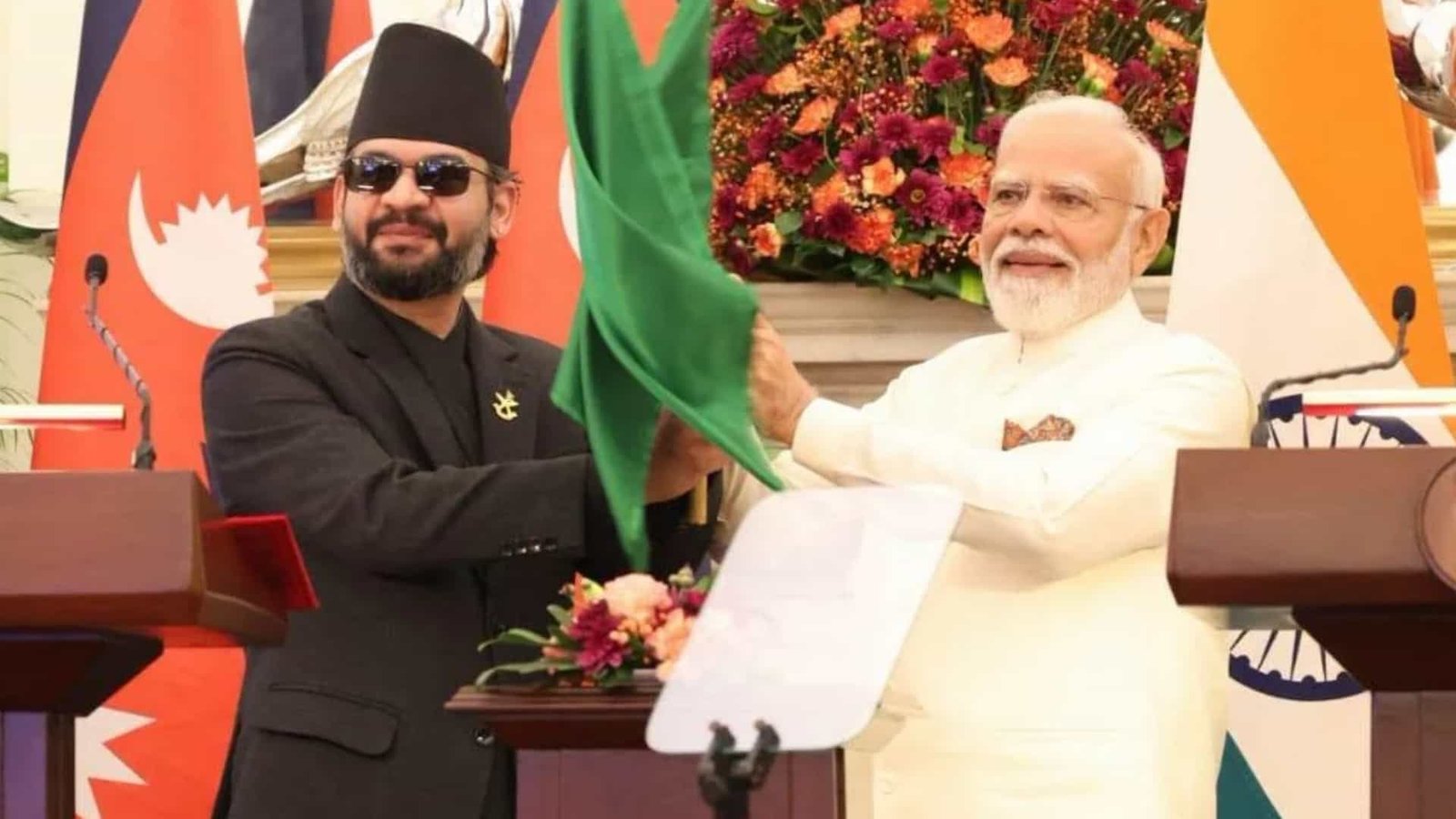
New Delhi – In a landmark state visit that signals a robust strengthening of regional ties, Prime Minister Balendra Shah of Nepal concluded a two-day official trip to India on November 23. The visit, held at the invitation of Prime Minister Narendra Modi, culminated in a substantial development assistance package of NRs 240 billion and the signing of eight Memoranda of Understanding (MoUs) aimed at deepening bilateral cooperation across energy, infrastructure, and technology sectors.
A Massive Economic Commitment
The centerpiece of the visit was the financial assistance package announced by New Delhi. The commitment, totaling NRs 240 billion, is bifurcated into two primary strategic areas: NRs 56 billion earmarked for post-disaster reconstruction and infrastructure development, and NRs 184 billion provided as lines of credit specifically for Nepal’s burgeoning energy sector. This infusion of capital is expected to catalyze long-term growth and modernize Nepal’s power grid while reinforcing its capacity for regional trade.
Enhancing Connectivity and Energy Security
Connectivity remained a priority throughout the discussions. The two leaders inaugurated the Sarayu–Kamala Express, a vital rail link connecting the cultural centers of Ayodhya and Janakpur, fostering deeper people-to-people connections. Furthermore, progress on the Raxaul–Kathmandu electrified railway has reached a milestone with the completion of the Field Location Survey, marking a significant step toward transforming land-locked Nepal’s logistical landscape.
In the energy domain, Prime Minister Modi and Prime Minister Shah virtually laid the foundation stone for the 669 MW Lower Arun Hydroelectric Project. The focus on energy security was further highlighted by the handover of the second phase of the Motihari–Amlekhgunj petroleum pipeline and the announcement of a new petroleum terminal in Jhapa. These initiatives, alongside planned cross-border gas pipelines, aim to secure Nepal’s fuel supply and stabilize energy costs.
Expanding Institutional and Cultural Ties
Beyond heavy infrastructure, the visit emphasized human capital and innovation. A significant announcement was the agreement to establish an offshore Indian Institute of Technology (IIT) campus in Nepal, a move designed to elevate higher education and research. Additionally, the planned Agro-Industrial Park in Chitwan, supported by Indian grant assistance, is set to modernize agricultural practices and generate local employment.
The two nations also deepened their cooperation in governance and public safety through eight MoUs. These agreements span diverse fields, including criminal investigation, forensic science, police training, civil service capacity-building, and traditional medicine—specifically Ayurveda.
Shared Vision for the Future
The leaders adopted the “Viksit Bharat and Samunnat Nepal” Joint Vision, an ambitious framework aimed at aligning their economic trajectories through technology, climate resilience, and innovation. The discussions also addressed long-standing administrative concerns, such as the maintenance of boundary pillars and the enhancement of cross-border banking and telecommunications services to better support citizens living in either country.
Prime Minister Shah expressed gratitude for India’s humanitarian support following recent floods in Nepal. As the visit concluded, the two Prime Ministers reiterated their commitment to regional stability and inclusive development. Prime Minister Modi has accepted an invitation to visit Nepal, with specific dates for the return visit to be finalized via diplomatic channels in the coming months. This state visit marks a turning point in bilateral relations, setting a collaborative roadmap that prioritizes modernization, infrastructure integration, and sustainable prosperity for both nations.
Disclaimer: This content is auto-generated for informational purposes only.
Source: Read Original News