







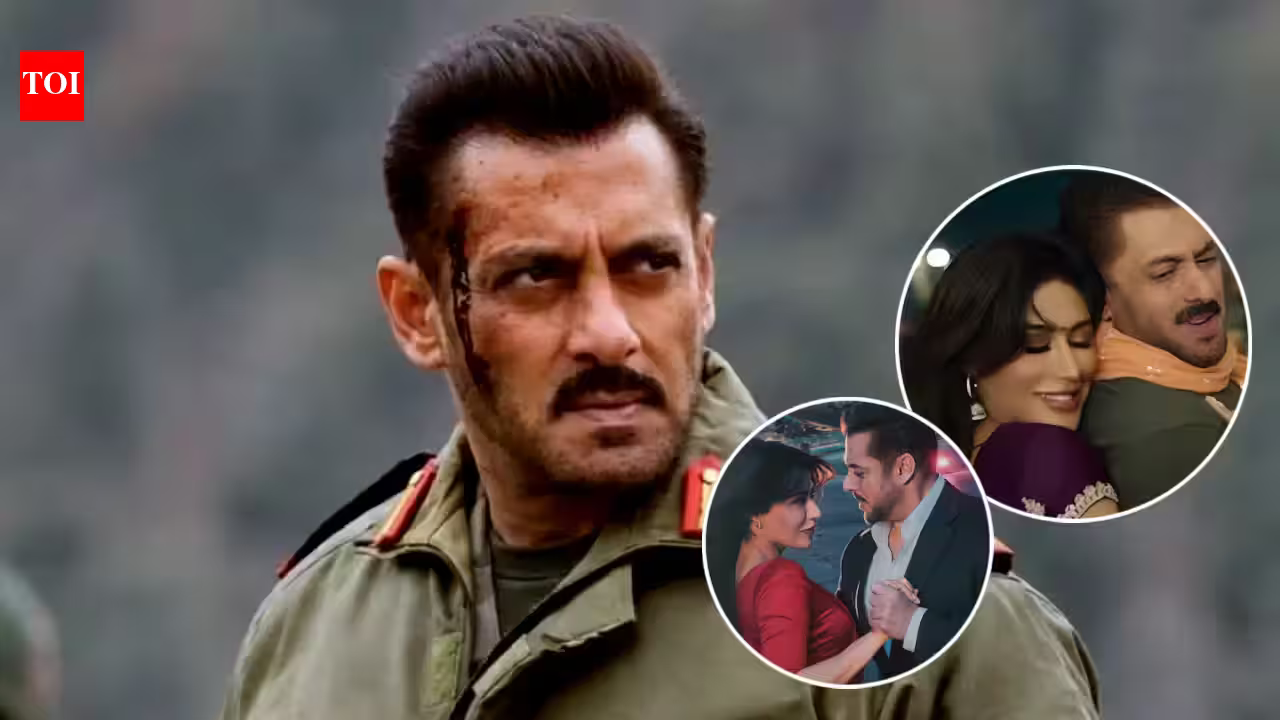
In the high-stakes, high-octane world of Bollywood, few names command as much immediate attention—and polarized reaction—as Salman Khan. As the industry gears up for the release of the upcoming Apoorva Lakhia-directed drama Maatrubhumi: May War Rest in Peace, the conversation has pivoted away from the film’s plot and toward its musical choices. Specifically, the inclusion of tracks like “Teri Sexy Beauty” and “Madirapan” has ignited a firestorm of debate, pitting the superstar’s vision of humanizing the soldier against the critics’ desire for a more solemn portrayal of national duty.
Challenging the “Boring” Soldier Trope
The backlash began almost as soon as the film’s promotional assets were unveiled, with audiences questioning the tonal dissonance between a war-themed movie and high-energy, commercial dance numbers. Salman Khan, never one to shy away from direct confrontation, chose the stage of the ABP Rising Summit 2026 to address these concerns head-on.
His rebuttal was blunt and characteristically provocative: “Why are our soldiers considered so boring?” The superstar questioned the rigid archetype often projected onto military personnel in Indian cinema. For Khan, the narrow focus on battlefield heroics ignores the flesh-and-blood reality of the men and women in uniform. “Is the narrative of our film industry supposed to be only about war?” he challenged. “Don’t they have personal lives? Are they all so stern, boring and unromantic, and yet they have children afterwards?”
By injecting the levity of “Teri Sexy Beauty” into the project, Khan argues he is attempting to round out the human experience. He posits that even those tasked with the heaviest responsibilities deserve—and experience—the same joy, romance, and celebration as any other citizen.
The Cultural Divide of “Masala” Music
Khan’s defense hinges on the idea that the “masala” aesthetic—the hallmark of his decades-long career—is not a sign of disrespect, but a realistic mirror of the festive, community-centric lives soldiers lead when they are off-duty. He invoked his own iconic hits, asking, “Wouldn’t ‘Tan Tana Tan Tan Tan Tara’ work? Wouldn’t ‘Main Hoon Dabangg’ work? These too are a part of their lives.”
In his view, the industry’s tendency to sanitize the soldier is a form of exclusion. By providing space for musical ceremonies and lighthearted tracks, he believes Maatrubhumi is providing a more holistic look at the life of a soldier—a life that isn’t lived in monochrome, but in color.
Sona Mohapatra’s Sharp Critique
However, not everyone is buying the justification. Singer and activist Sona Mohapatra, who has frequently locked horns with the industry’s heavyweights, used the occasion of her 20th anniversary in music to deliver a stinging retort. In a reflective video charting her two decades in the business, Mohapatra didn’t hold back regarding the song in question.
Recalling her history of standing up to Khan—a move she claims led to harassment, threats, and morphed images back in 2016—Mohapatra noted that she has often been told by industry peers that she “lost” a thriving Bollywood career by choosing to challenge the status quo. Viewing the release of “Teri Sexy Beauty,” she turned the narrative on its head. With a mix of sarcasm and conviction, she questioned exactly what she had lost, implying that the creative values represented by such songs are precisely what she feels proud to have bypassed. Her message was clear: she has built her career on her own terms, and the controversy surrounding Maatrubhumi only reaffirms her decision to remain an outsider to that specific brand of mainstream filmmaking.
The Apoorva Lakhia Factor
While the musical controversy dominates the headlines, the film itself remains a massive undertaking. Directed by Apoorva Lakhia, Maatrubhumi: May War Rest in Peace is a project that has navigated a treacherous path to the screen. Originally slated for release much earlier, the film has faced a series of delays, only heightening the stakes for its final arrival on December 4.
The film boasts an eclectic ensemble cast, featuring Salman Khan alongside Chitrangda Singh. The supporting lineup is equally expansive, including Anoop Bikram Shahi, Prashant Tamang, Mukesh Rishi, Zeyn Shaw, Abhilash Chaudhary, and several others. Lakhia, known for his gritty, stylized approach to action, is tasked with balancing these massive commercial elements with a script that promises to tackle the weight of war. The question remains: will the audience accept the “Sexy Beauty” alongside the war-torn narrative, or will the tonal shift cause the project to stumble?
The December 4th Reckoning
As the release date looms, the industry is watching closely. The debate over Maatrubhumi is, in many ways, a proxy war for the soul of modern Bollywood. Is there still a place for the traditional, larger-than-life hero who dances between battle scenes? Or has the audience’s demand for “serious” and “realistic” cinema moved past the era of the classic superstar vehicle?
Salman Khan has staked his reputation on the idea that audiences crave both—the grit of the uniform and the glitz of the dance floor. If the film succeeds, it will solidify his argument that a hero’s humanity is expressed through his ability to celebrate life, even under the shadow of war. If it fails, it may be seen as a sign that the industry’s reliance on old-school tropes is losing its grip on a generation of viewers who crave a different kind of heroism. Regardless of the outcome, one thing is certain: the conversation surrounding Maatrubhumi has ensured that when the curtain rises on December 4, all eyes will be on the screen—if only to see whether the music fits the mission.
Disclaimer: This content is auto-generated for informational purposes only.
Source: Read Original News