







The Strategic Significance of the Mumbai-Ahmedabad Corridor
The Mumbai-Ahmedabad High-Speed Rail (MAHSR) corridor represents a pivotal shift in India’s approach to transportation infrastructure. As the nation’s maiden bullet train project, it serves as a pilot for modernizing the passenger rail experience through technological integration and accelerated transit times. The decision to commence trial runs in May 2027 on the 50-kilometre Surat-Bilimora stretch is a calculated step in a broader, phased rollout strategy. By prioritizing a manageable segment, the Indian Railways aims to validate complex electrification and signalling systems, ensuring that the 2×25 kV traction system functions reliably before scaling operations.
From a business perspective, the corridor is designed to bridge the economic productivity gap between two of India’s most industrialised states—Maharashtra and Gujarat. By significantly reducing travel time, the project is expected to create a unified economic zone, allowing for easier mobility of skilled labour and business professionals. The phased implementation—targeting Ahmedabad-Vapi by the end of 2027 and extension to Thane by 2029—illustrates a risk-mitigation approach, allowing authorities to iron out operational challenges in smaller increments rather than gambling on a singular, high-pressure launch date for the entire route.
Engineering Challenges and Technological Adaptation
Operating high-speed rail in the Indian subcontinent presents unique engineering hurdles, primarily due to the country’s diverse climatic conditions. Unlike the European or Japanese models, which are often engineered to counter extreme cold and snowfall, the Indian high-speed rail rolling stock must be resilient against intense heat and heavy dust. These environmental factors significantly impact the wear and tear of electrical components, cooling systems, and air-filtration mechanisms.
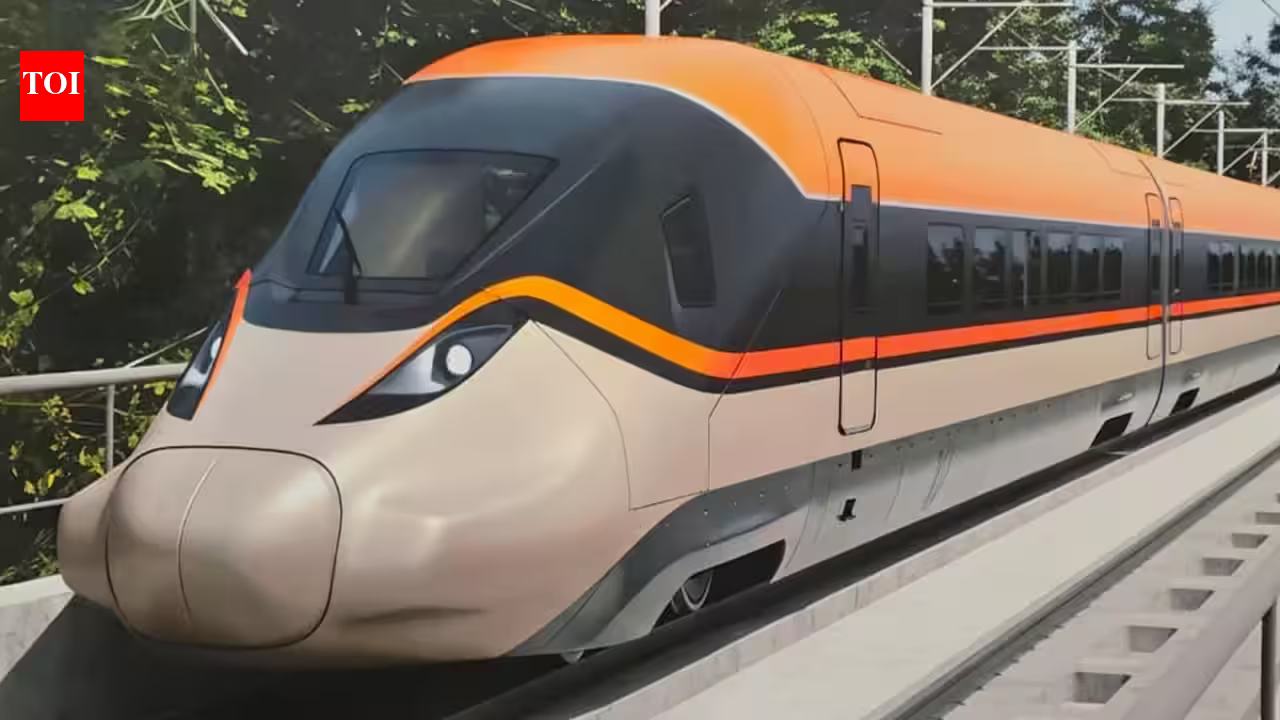
The development of the B-28 train sets, which boast a design speed of 280 kmph, highlights the necessity for specialized structural integrity. At speeds exceeding 240 kmph, pressure forces become a critical factor. The successful completion of a “squeeze test,” where the coach structures withstood twice the atmospheric pressure expected in normal operations, serves as a testament to the rigorous safety standards being implemented. This focus on domestic manufacturing—specifically through the contract awarded to BEML Limited—demonstrates a shift towards “Make in India” in the high-tech rail sector. By establishing the ‘Aditya’ High-Speed Rail Complex in Bengaluru, India is not merely importing technology but is working toward localizing the entire high-speed value chain, from design to commissioning.
The Rise of Indigenous Manufacturing Capabilities
The contract awarded to BEML for the manufacturing of two prototype train sets worth Rs 866.87 crore is a milestone in India’s industrial evolution. This move reduces reliance on foreign suppliers and develops a domestic ecosystem capable of handling high-precision engineering. These eight-coach train sets are designed to integrate global standards with passenger-centric amenities, including reclining, rotatable seats and specialized facilities for passengers with disabilities.
Building indigenous capacity is essential for the long-term sustainability of the high-speed rail network. As India plans to roll out more corridors, the local manufacturing base provides a cost-effective alternative to importing rolling stock. Furthermore, it fosters technical collaboration and skill development within the Indian engineering sector. By transitioning from maintenance-heavy traditional rail to high-tech, computer-controlled systems, India is upgrading its workforce skills, ensuring that the personnel operating these trains are as technologically advanced as the equipment they manage. This creates a spillover effect that benefits other sectors, including aerospace and advanced manufacturing, which require similar precision-driven assembly techniques.
Expansion Potential and the Future of High-Speed Rail
Beyond the Mumbai-Ahmedabad corridor, the central government has outlined plans for seven additional high-speed rail projects. These include critical links such as Mumbai-Pune, Delhi-Varanasi, and Hyderabad-Bengaluru. The economic rationale for these routes is clear: they connect key urban hubs where the demand for rapid, efficient, and reliable transit is at an all-time high. For instance, the proposed 48-minute journey time between Mumbai and Pune could redefine the commuter landscape, effectively turning these cities into a combined metropolitan region.
The announcement of these seven corridors signals a long-term commitment by Indian Railways to shift a portion of the passenger load from short-haul aviation and congested highways to rail. This strategy has positive implications for carbon emissions and road congestion. However, the success of these future projects will depend heavily on the lessons learned from the MAHSR. Managing land acquisition, maintaining operational safety at high velocities, and ensuring the cost-effectiveness of these projects will be the primary metrics for success. As the trial runs approach, the data collected from the Surat-Bilimora segment will likely influence the engineering specifications and safety protocols for all subsequent high-speed rail development across the country.
Economic and Socio-Economic Implications
The introduction of high-speed rail in India is more than an infrastructure upgrade; it is an economic catalyst. The corridor acts as an artery for trade and investment. Cities located along the route, such as Surat and Vapi, are already seeing heightened interest in real estate and commercial development in anticipation of the enhanced connectivity. This is a recurring trend in global high-speed rail history, where towns served by such lines experience a “condensation” effect, drawing in businesses that prioritize speed and efficiency.
Additionally, the project emphasizes social inclusion. By designing the trains with dedicated amenities for passengers with disabilities and incorporating advanced infotainment, the Indian Railways is positioning high-speed rail as a premium, yet accessible, public service. The focus is to transform rail travel from a purely functional utility into a high-efficiency logistical experience. As India moves closer to its first trial run in 2027, the focus remains on synchronizing the complex elements of power supply, signaling, and track stability. Should these phases proceed according to the current schedule, India will firmly establish itself as a significant player in the global high-speed rail market, setting a precedent for other developing nations looking to modernize their transit networks through local innovation and phased, strategic implementation.
Disclaimer: This content is auto-generated for informational purposes only.
Source: Read Original News